 by
by Shared Design, Different Roots
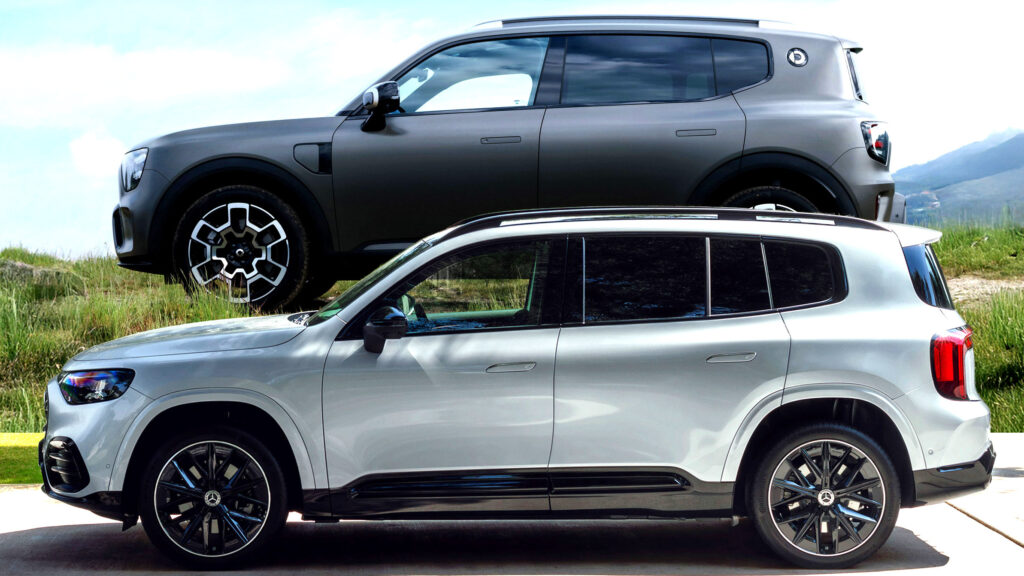
A new generation of the Mercedes GLB has hit the market, bringing sharper lines, updated technology, and a new multi-energy platform. At the same time, many have noticed something else: this SUV bears more than a passing resemblance to the Smart #5, raising questions about the degree of their kinship.
These suspicions are not unfounded. After all, both models were created under one design roof. But beyond shared stylistic techniques, the connection ends. They are based on different platforms, have different powertrains, and share no common components. However, the visual overlap makes a deeper comparison inevitable.
Technical Differences
The Smart #5 debuted in 2024 as the largest model in the brand’s lineup, but this status will soon pass to the upcoming #6 sedan. While the exterior design was developed by Mercedes, which owns a 50% stake in the Smart joint venture, the engineering part was handled by Geely, the other half of the partnership. Built on Geely’s SEA platform, the Smart #5 is offered as both a fully electric version and with a range-extender engine.
The second-generation GLB, in contrast, uses the Mercedes MMA platform, which it shares with the new CLA. It will be offered in electric and mild-hybrid versions, reflecting Mercedes’ shift to more flexible powertrain options.
This architectural difference leads to clear distinctions in performance. The Smart #5 leads in power, especially in the Brabus version, which remains the most powerful of the two. Mercedes has not yet introduced an AMG variant of the new GLB, leaving a gap in the lineup of performance models.
Size and Practicality Comparison


In terms of dimensions, the Mercedes is slightly longer by 37 mm, but its wheelbase is 11 mm shorter. It is also the only model of the pair to offer seven seats, while the Smart is limited to a five-seat layout with a focus on maximum legroom for rear passengers and trunk space.
Visually, the family resemblance is undeniable. Shared features include a boxy silhouette with soft rounded edges, a similar window profile, sturdy D-pillars, and a vertical rear end. Even the full-width rear taillights share the same contour, although each brand uses its own LED graphics.
Exterior Details
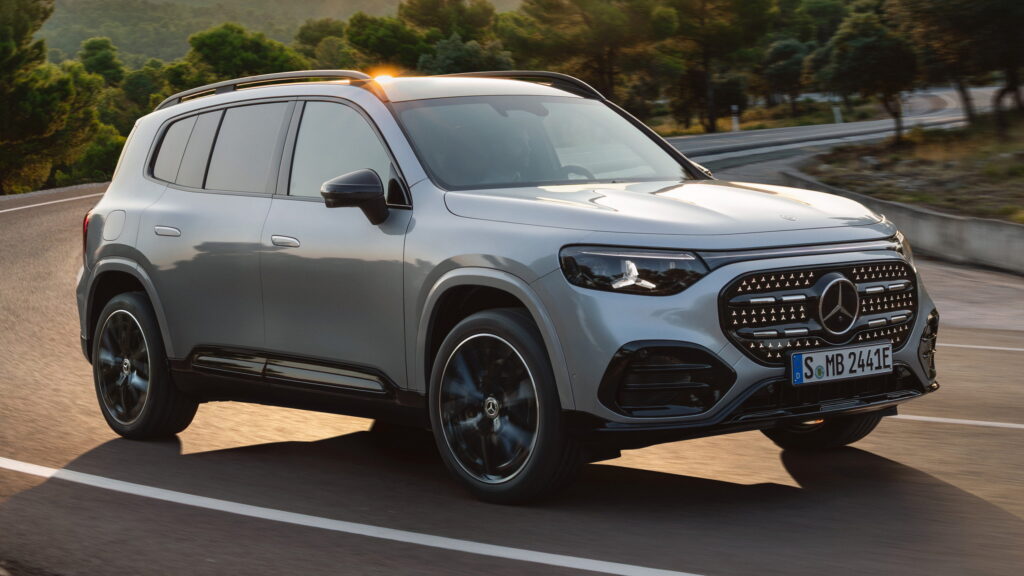
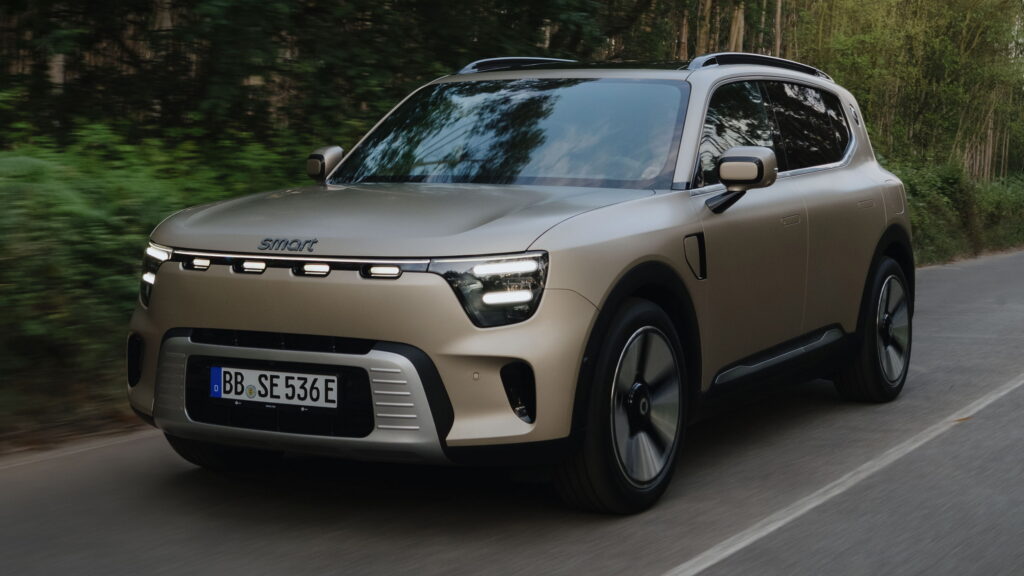
At the front, the Mercedes is distinguished by a larger radiator grille, which, frankly, looks somewhat forced and detached from the overall design. The Smart, on the contrary, emphasizes the lower bumper air intake, which also serves a protective function. Again, the headlights have a similar shape with a connecting LED strip, although only one of them received the signature star graphics.
Other external differences are noticeable upon closer inspection. For example, the GLB’s wheel arches are more squared-off, and the Smart has unique mirror housings.
Shared Design Language in the Interior
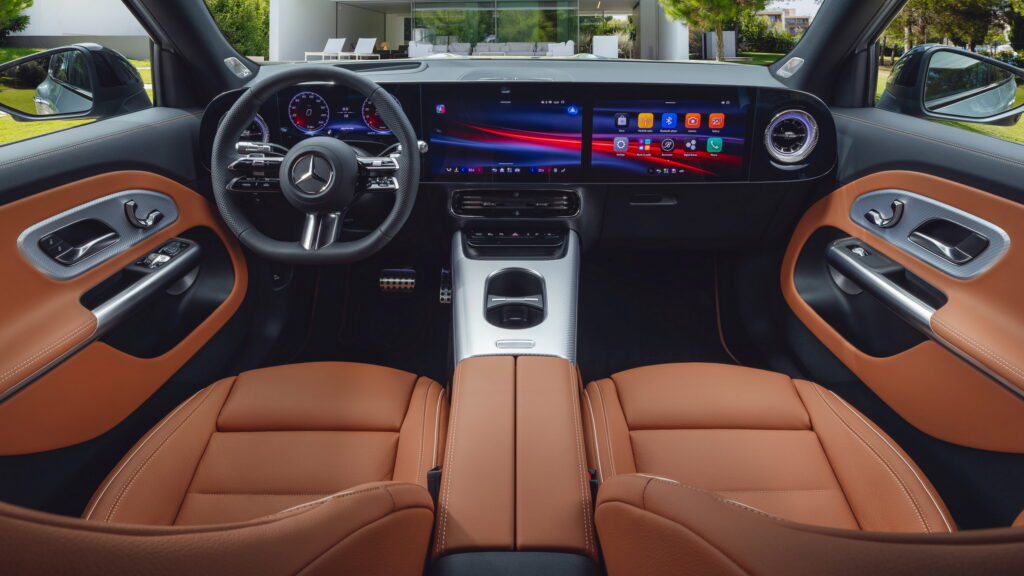
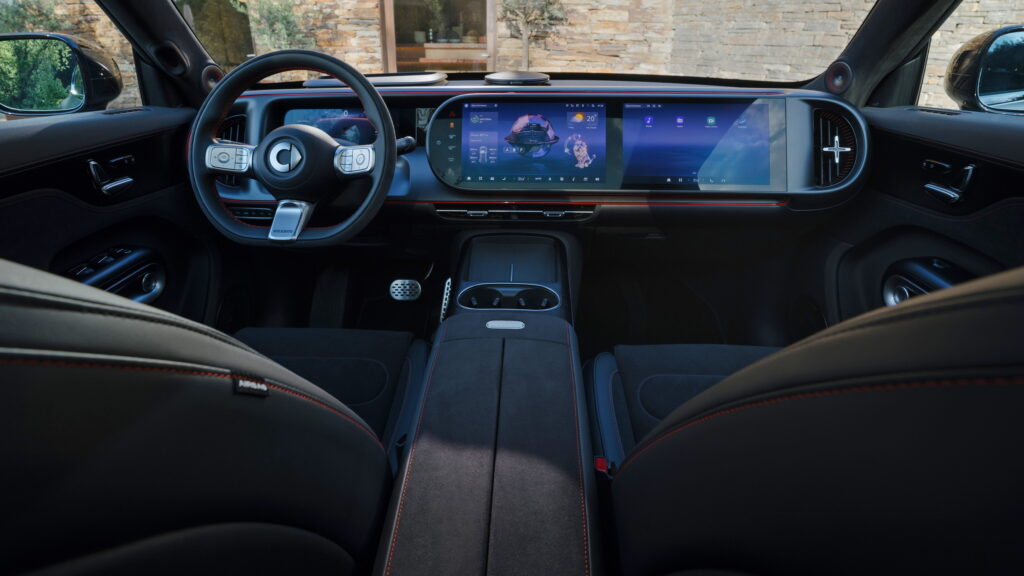
Inside, the dashboard adheres to the same general design principles, although the technical implementation differs. Both models feature a three-screen layout with a 10.25-inch digital instrument cluster. However, the infotainment and passenger displays differ: in the Mercedes they are 14 inches, while in the Smart they are 13 inches, where they are combined into an oval panel.
The air vents, center console, cup holders, door trim, and controls are also different, but in reality, no one would notice if they were swapped from one model to the other.


Even the steering wheels have a familiar shape, although the Mercedes version has dual spokes that help distinguish it. The seats are one of the few areas where they clearly diverge: the GLB offers three rows of seats, while the Smart is limited to two.
One Chief Designer
A significant part of the similarity can be traced back to Gorden Wagener, the chief designer responsible for all products of the Mercedes group. With oversight functions for the style of both Mercedes and Smart, his influence on shaping the family look is undeniable. Given the large design teams that worked on both projects, the overlap is more likely a result of conscious strategic alignment rather than a lack of creativity.
The question remains open: will buyers find them too similar, or will the different emblems and mechanical underpinnings be enough to clearly distinguish them in the market?
The similarity between these two cars is a vivid example of modern trends in the automotive industry, where design often becomes a transnational asset, and the technical core is shaped by global partnerships. The difference in platforms—Mercedes’ MMA and Geely’s SEA—highlights how deep collaboration can be between competitors working together on an electric future. It also demonstrates how brands can maintain their individuality through engineering solutions and market positioning, even when their exterior appearance seems to speak of close kinship. The buyer’s choice will likely be determined not so much by appearance, but by factors such as model availability in a specific market, service support, and, of course, emotional connection to the brand.