 by
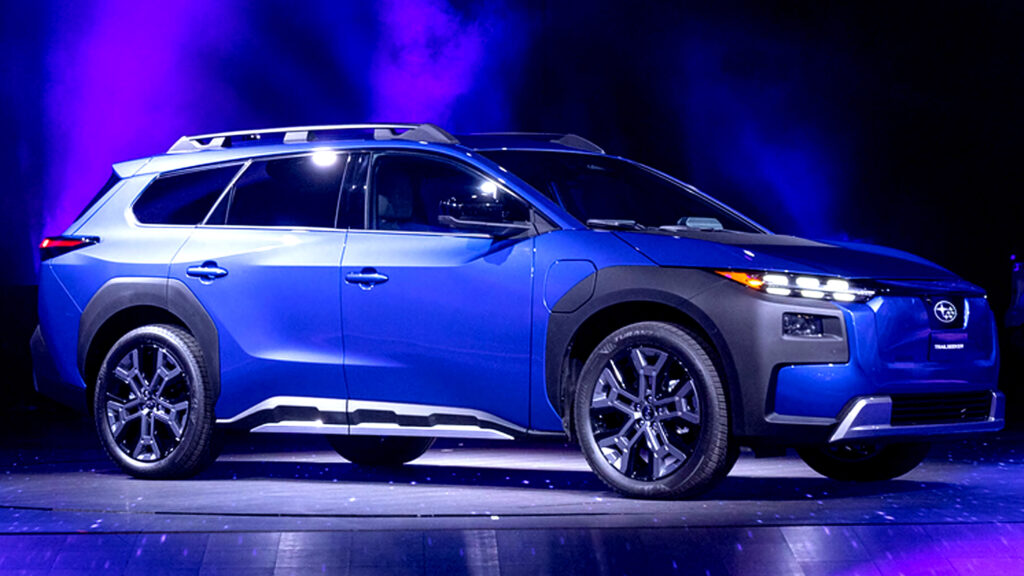
by Subaru has announced the starting price for its new 2026 Trailseeker electric crossover. The vehicle will go on sale early next year, and its base version will cost $39,995. This is five thousand dollars more than the updated Outback.
Key Features and Equipment
The new Trailseeker is a fully electric crossover with a power output of 375 horsepower and a range of approximately 280 miles (about 451 kilometers). Standard equipment includes:
The crossover also has significant ground clearance — 8.3 inches (211 mm), which is more than the new Jeep Cherokee.
Trims and Their Features
The base Premium trim includes LED lighting, automatic wipers, a power liftgate, and 18-inch alloy wheels. The EyeSight Driver Assistance safety system is also standard.
The Limited trim, priced at $43,995, gets 20-inch wheels, a more luxurious interior with a heated leather-wrapped steering wheel, heated rear seats, a Harman Kardon audio system, and a panoramic camera.

The top Touring trim, priced at $46,555, features a panoramic glass roof, ventilated front seats, a digital rearview mirror, and an optional two-tone paint scheme.
Technical Specifications and Charging Speed
All Trailseeker versions are equipped with a 74.7 kWh battery and all-wheel drive. Acceleration from 0 to 60 mph (0-96 km/h) takes just 4.4 seconds, making it the fastest Subaru on the American market.
The model supports fast charging at 150 kW, allowing the battery to be charged to 80% in 28 minutes. The vehicle is also equipped with an NACS standard charging port.
Price Table
Model
Trailseeker Premium: $39,995
Trailseeker Limited: $43,995
Trailseeker Touring: $46,555
Prices do not include the destination fee, which ranges from $1,450 to $1,600.
The arrival of the Trailseeker is an important step for Subaru on its path to electrifying its model lineup. The price, although higher than the Outback, appears competitive for the segment of electric crossovers with similar performance and range characteristics. It is especially worth noting the emphasis on ground clearance and all-wheel-drive capabilities, which have traditionally been the brand’s strengths and are now carried over into the electric era. The success of this model may largely depend on the development of fast-charging infrastructure and customer reception of the brand’s new design language.