


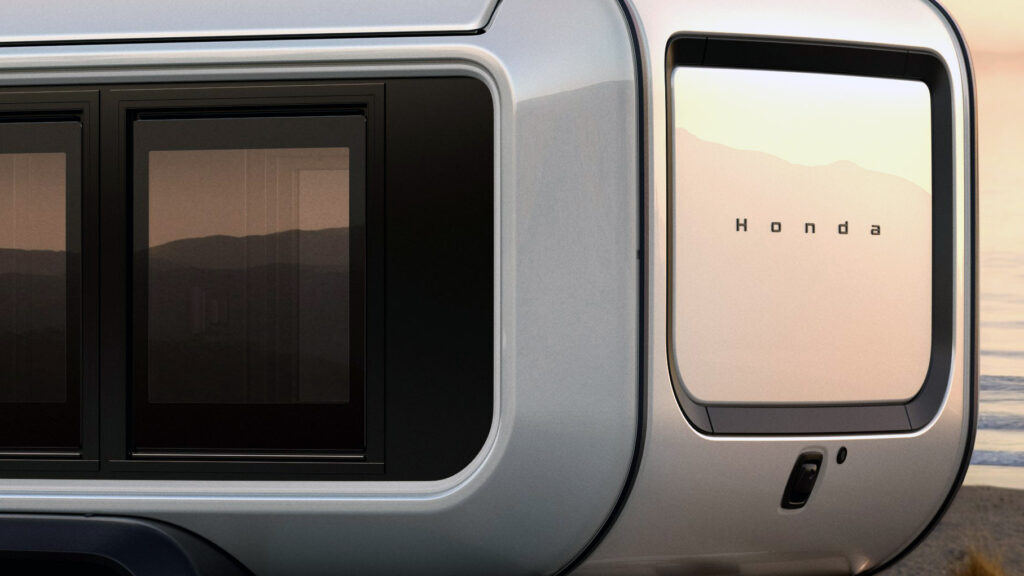
Honda has introduced its prototype camper called Base Station for the US market. This lightweight and compact travel trailer features a modular interior and smart layout, and will soon go on sale.
Philosophy and Target Audience
The camper is developed under the philosophy of “Maximum for the human, minimum for the machine,” aimed at democratizing outdoor adventures. As the manufacturer notes, it is designed for both experienced travelers and those going camping for the first time.
Compactness and Towing Capabilities
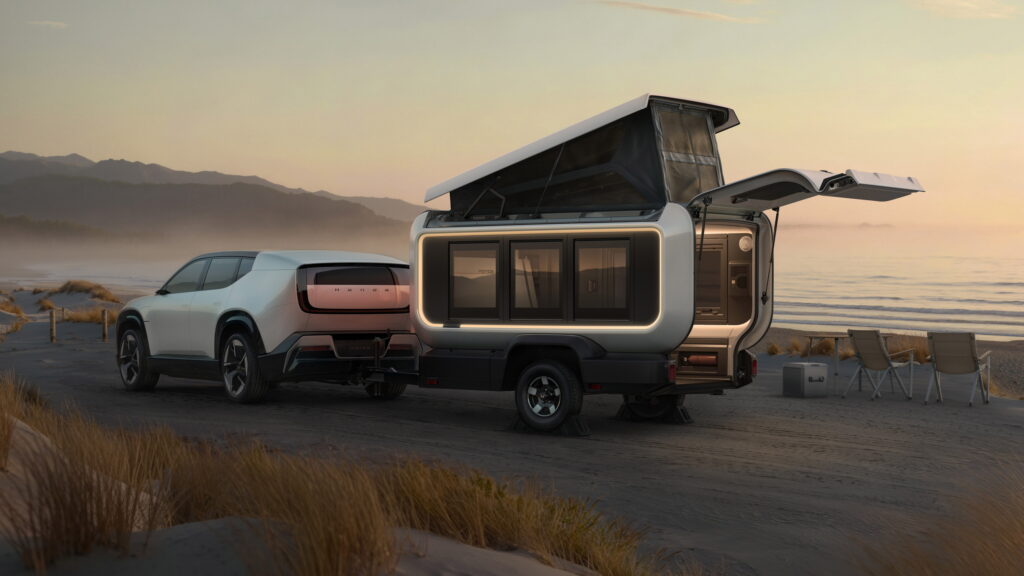
The small dimensions of the Base Station allow it to be stored in a standard garage or parking space. Its weight is low enough to be towed by compact SUVs like the Honda CR-V or Toyota RAV4, as well as fully electric vehicles, such as the Honda Prologue or future 0 Series SUVs.

Exterior and Interior
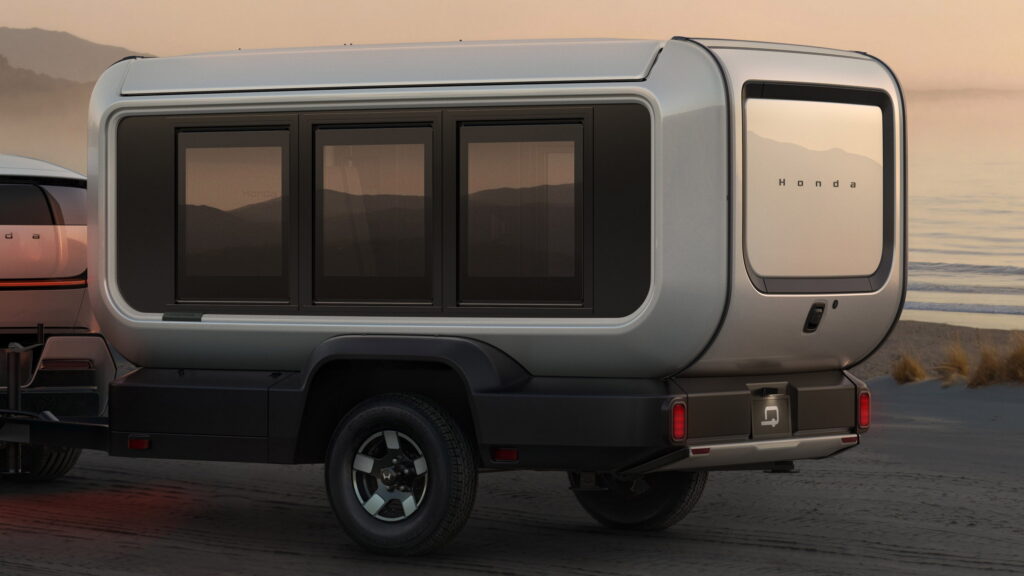
Externally, the camper resembles a box on wheels with clean surfaces, large windows, and rounded edges. The LED strip on the profile can be adjusted for brightness and color, creating a cozy atmosphere and improving visibility at the campsite. Honda describes the interior as “open, spacious, airy, and bright.” Thanks to the pop-up roof and low floor, the cabin height is over 2 meters. Entry is through large rear doors, and the five side windows are removable and can be replaced with various accessories.
Capacity and Comfort Options
The camper can accommodate a family of four thanks to a futon-style sofa that converts into a double bed for adults and an optional bunk bed for children. An air conditioning unit is also available as an option for comfortable living regardless of weather conditions.
Differences from Competitors and Equipment
Unlike competitors such as the Airstream Basecamp or Jayco Jay Feather Micro, the Honda Base Station does not have a built-in kitchen or toilet inside. Instead, it can be equipped with an external kitchen area with running water and an induction cooktop, as well as an external shower. The camper does not have its own traction motors, but comes standard with a lithium battery, inverter, and solar panels, allowing for autonomous use. For extended stays, it can be connected to external power sources or a Honda generator.
Price and Positioning
The automaker has not yet announced a sales start date or pricing policy for the camper but has promised it will be “competitive in the lightweight travel trailer segment.” Overall, it is positioned between teardrop trailers and conventional campers.
Jane Nakagawa, Vice President of the American Honda R&D division, stated: “Base Station is a perfect example of what can happen when you allow a team of researchers, designers, and engineers to realize bold new ideas to create new value for our customers. Just like the Motocompacto, Base Station is a product of fresh, innovative thinking. We designed it to make camping more accessible and enjoyable for families across America.”
The appearance of such a product from a major automaker like Honda could significantly revitalize the lightweight camper market, making car travel with a travel trailer more accessible to a wider range of people. The emphasis on electromobility and autonomy also aligns with modern trends. The success of this model may depend on the final price and how convenient the lack of built-in bathroom and kitchen proves to be for potential buyers accustomed to more traditional solutions.