


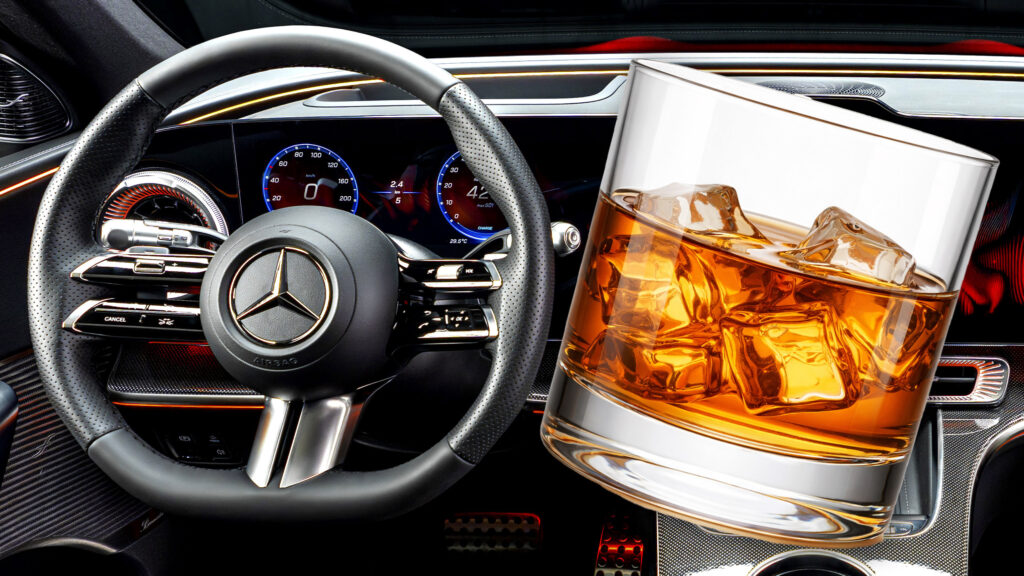
The Drunk Driving Prevention Act
The U.S. government is considering a bill that could completely prohibit intoxicated individuals from driving a car. This act, known as the “Stop Drunk Driving Act,” will require automakers to install passive devices in vehicles to detect intoxication. If the system detects a violation, the car will be disabled.
The program recently avoided having its funding canceled, yet calls for its termination persist. Opponents argue that the system could leave completely sober drivers without transportation at the most inopportune moment.
Detection Technologies and Concerns
Under the law, the National Highway Traffic Safety Administration (NHTSA) must create a new safety standard requiring passive intoxication detection technology in all new cars. This does not mean every car will have a breathalyzer built in. Instead, regulators may approve systems ranging from cabin air monitors to eye-tracking or touch sensors that assess blood alcohol levels.
Political debates around so-called “government kill switches” have gained wide publicity. However, this discussion seems largely unnecessary. Even Chris Swonger, President and CEO of the Distilled Spirits Council of the United States, believes the concerns are exaggerated.
“There is no switch, no government control, no data sharing. It’s just a failed scare tactic.”
A more practical concern is simpler. Technologies break. And when it happens in a car, the consequences can be immediate. A sober driver trying to get to work, pick up a child, or escape a dangerous situation might suddenly find their vehicle refusing to move because an algorithm decided something was wrong.
Congressman Thomas Massie even gave an example of a person who swerved to avoid hitting an animal during a snowstorm, after which their car deemed the driver intoxicated and shut down.
Federal law says new cars after 2026 must monitor drivers and shut down if the car disapproves. Your dashboard should not be judge, jury, and executioner.@RepScottPerry @RepChipRoy offered an amendment to defund the automobile kill switch mandate. Here’s our debate: pic.twitter.com/ZYvAHCs5e7 — Thomas Massie (@RepThomasMassie) January 22, 2026
This sounds a bit far-fetched and unlikely, considering how modern algorithms work. Systems combining driver-monitoring cameras, behavioral analysis, and alcohol detection sensors have already been demonstrated by several companies. But this viewpoint is not detached from reality. The core point remains valid: if the technology fails for even one in ten thousand drivers a day, that’s still thousands of sober people who could find themselves in a difficult situation.
Implementation Issues and System Circumvention
Critics also point out a second problem. Motivated intoxicated drivers often find ways to bypass preventive measures. History shows that enforcement technologies are rarely flawless: from circumventing ignition interlocks to simply switching to another vehicle.
For now, we are waiting for NHTSA to report the final rule to Congress, but this may not happen before 2027. This means any new car purchased in the next few years will most likely not have any form of intoxication detection.
The implementation of such large-scale technological solutions is always accompanied by a period of adaptation and refinement. The success of the initiative will depend not only on sensor accuracy but also on public trust in them. It is important for developers to prioritize resolving data privacy issues and minimizing false activations, as each case of a car becoming inoperable due to a system failure can undermine trust in the very idea. Furthermore, the question of how the technology will account for drivers’ medical conditions or medication use that may affect indicators similar to alcohol intoxication remains open.