


New speed cameras in Oakland: 82,000 fines in 40 days
It took only 40 days to turn traffic calming measures into a real revenue generator. New speed cameras installed in various areas of Oakland have started fining drivers, and the first numbers are impressive: thousands of violators and millions of dollars in potential revenue. If you drive in Oakland, keep an eye on your speedometer.
How the system works and first results
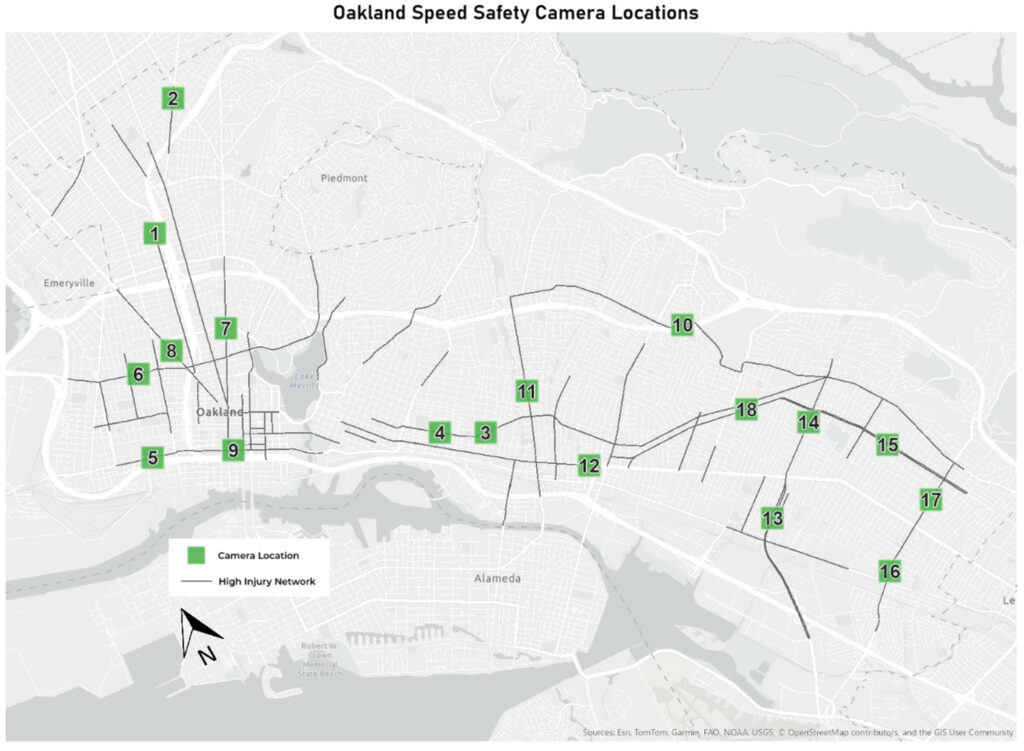
The system launched in January when 35 automatic cameras began operating at 18 locations. Initially, from January 15 to March 14, they only issued warnings. After that, the rules became stricter, and repeat offenders caught on camera began receiving actual fines.
Those caught speeding for the first time at 11-15 mph (17-24 km/h) over the limit will only receive a written warning. As OakDOT information officer Kent Bravo told The Oaklandside, from March 15 to April 25, the city issued 82,000 fines and 69,000 warnings.
According to a May 7 presentation, the program is now generating over 2,000 fines per day, averaging 60 fines and 50 warnings per camera daily, as noted by OakDOT speed safety camera program manager Craig Raphael.
Fine amounts and potential revenue
As expected, local authorities are not quick to disclose the exact amount of revenue generated by the cameras. The minimum fine is $50, which at 82,000 tickets issued could amount to $4.1 million. However, as The Oaklandside notes, this $50 fine only applies to speeding at 11-15 mph over the limit. The actual amount may be lower, as fines for low-income drivers and those receiving government benefits can be reduced to $25 or even $10.
Amounts then increase. The fine rises to $100 for speeding at 16-25 mph over the limit, to $200 for exceeding the limit by more than 26 mph, and to $500 for those speeding at 100 mph. If drivers meet certain low-income criteria, fines can be reduced to $10.
Most “profitable” locations
The camera generating the most revenue is located on southbound 2345 73rd Avenue. In the first 40 days of operation, it issued 8,127 fines and 5,500 warnings. Drivers were caught at an average speed of 44.7 mph in a 30 mph zone.
Other busiest sections show a similar picture. On southbound Hegenberger Road and Spencer Street, 6,902 fines were issued at an average speed of 55.3 mph in a 40 mph zone; at 2206 73rd Avenue (northbound) – 6,147 fines; and a camera at 2710 Broadway recorded 6,118 violations in an area where the limit was recently lowered from 25 to 20 mph, which locals consider a trap for drivers.
Overall, this initiative elicits mixed reactions: on one hand, it aims to improve road safety, and on the other, it is quickly turning into a powerful tool for replenishing the city budget, raising questions about its true purpose. Given that first-time offenders receive only a warning and fines for low-income individuals are significantly reduced, it can be assumed that authorities are trying to find a balance between punishment and social justice, although the scale of collections indicates the system’s high efficiency as a source of revenue.