


Large-Scale Implementation of New Technology
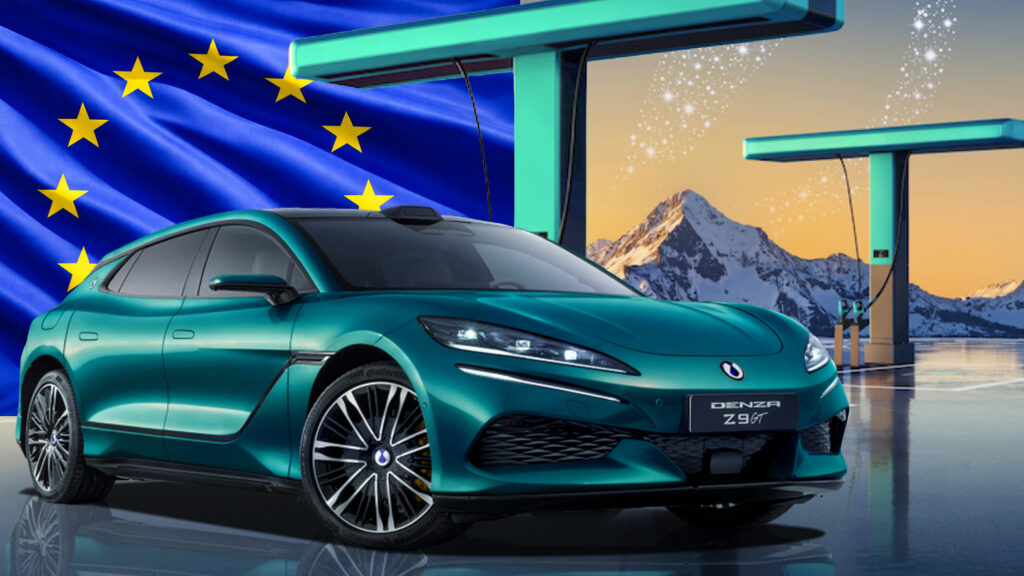
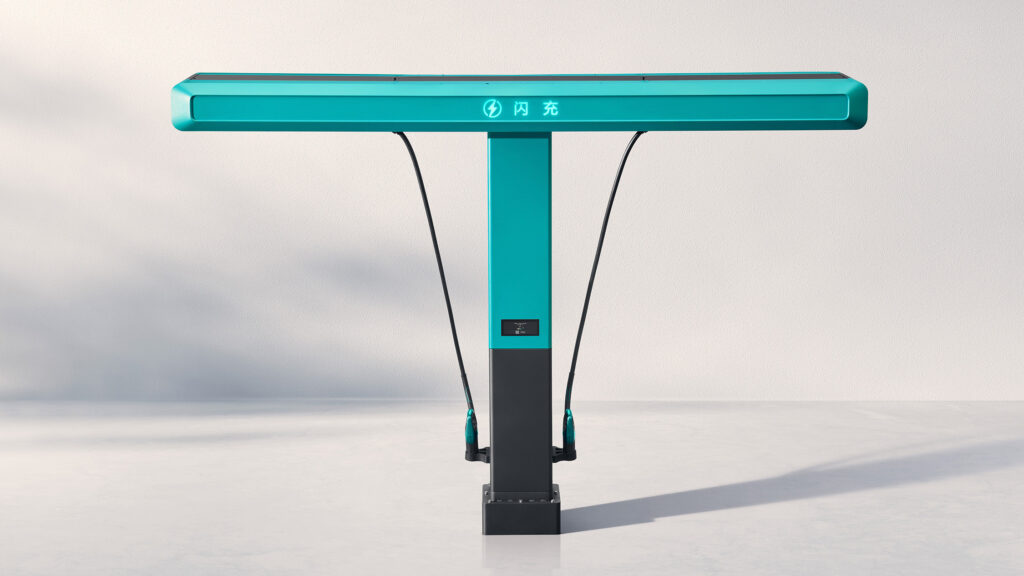
BYD has officially confirmed that its new ultra-high-power charging is heading to Europe, which may force a revision of the definition of the term “fast charging.” In the next 12 months, the company plans to install 6000 Flash Charging stations outside China, 3000 of which will be located in Europe.
Although Europe already has thousands of electric vehicle charging stations, the new BYD Flash Charge devices are not just slightly ahead of the current fastest public chargers, but surpass them by a wide margin. According to BYD, the new equipment is capable of delivering up to 1500 kW, making it the fastest charging announced for Europe to date.
Openness and Cooperation
What’s even better is that it won’t be a closed club for BYD owners only. The charging stations will use CCS2 connectors and are intended to be open to vehicles of other brands. Dealerships selling premium Denza vehicles will receive their own branded versions, while public stations in other locations will be simply called Flash. BYD also plans to cooperate with existing charging locations rather than starting from scratch each time.
The stated specifications are impressive. BYD claims that its latest battery technology allows compatible vehicles to charge from 10 to 70 percent in five minutes, and from 10 to 97 percent in nine. This is no longer a charging stop, but rather a short break.
First Beneficiaries in Europe
The first to benefit in Europe will be the Denza Z9GT and D9 DM-i. The Z9GT is a striking tri-motor all-electric shooting brake with a 123 kWh battery, capable of accelerating from 0 to 100 km/h in 2.7 seconds.
The D9 DM-i minivan, in turn, proves that plug-in hybrids can also join the “party.” Its 58.5 kWh battery can accept up to 559 kW, allowing for the same five-minute charge from 10 to 70 percent and a nine-minute charge from 10 to 97. This is especially convenient for a large seven-seat minivan with an electric range of 130 miles (209 km) and a total range of 590 miles (950 km) on a full tank. In contrast, some PHEVs from other brands still do not support DC fast charging.
Competitor Reaction and Skepticism
Of course, BYD is not the only one trying to get ahead. Earlier this week, Geely stated that its latest charging devices and Golden Brick battery technology are even faster, as if the industry has decided that the best way to sell electric vehicles is a speed competition.
However, BMW is not embracing this race. The company’s head of battery production, Markus Fallböhmer, recently stated that such announcements should be treated with caution, as battery longevity and reliability could be at stake.
You can optimize one specific performance indicator, but you will have to make compromises in other aspects. We could also increase the charging speed, but then we would have to lower other important battery factors.

The implementation of such technologies is not only a matter of technical excellence but also of infrastructure readiness. A power of 1500 kW is a serious load for power grids, especially when several such stations are operating simultaneously. The success of this initiative will depend on how synchronously companies and cities can modernize energy systems to support the new generation of electric vehicles. Furthermore, the openness of the standard to all brands could become a key factor in accelerating the mass transition to electric transport, making long charging a thing of the past for a much wider range of drivers.