


BMW Begins Collecting Driving Data from Customers in Germany
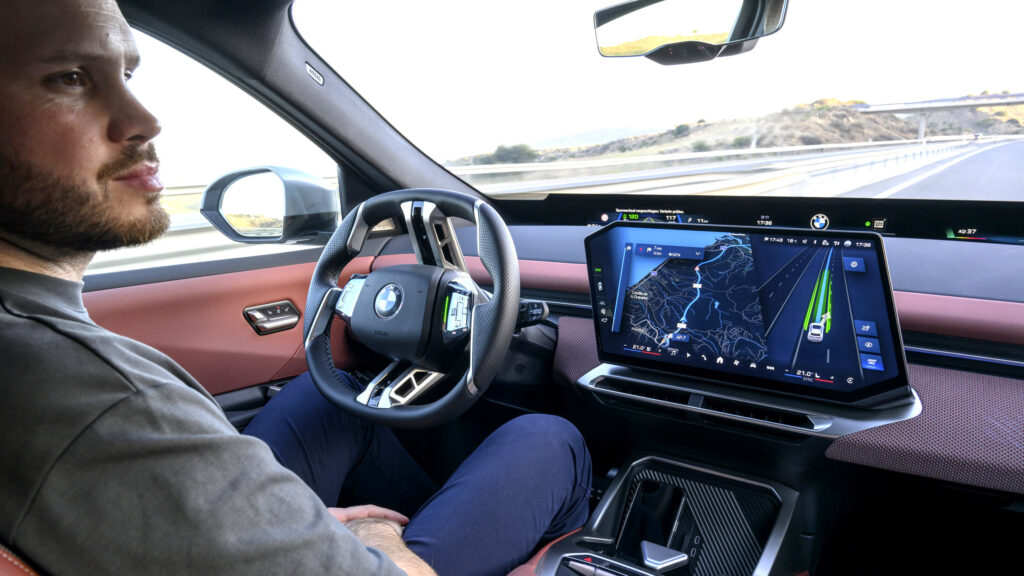
Autonomous systems are designed to make drivers’ lives easier, but first they must learn from people. BMW is using new technologies so that its semi-autonomous systems can learn directly from car owners.
Starting April 1 in Germany, the company will begin collecting images, videos, and sensor data from customers’ cars. The first will be the new BMW iX3, followed later by the i3 and other future models. BMW emphasizes that customer consent is required for the collection of any visual data and that the company complies with all data protection regulations.
If the owner agrees, their BMW will record what happens inside and around the car when something almost goes wrong.
Which Systems Will the Collected Information Improve?
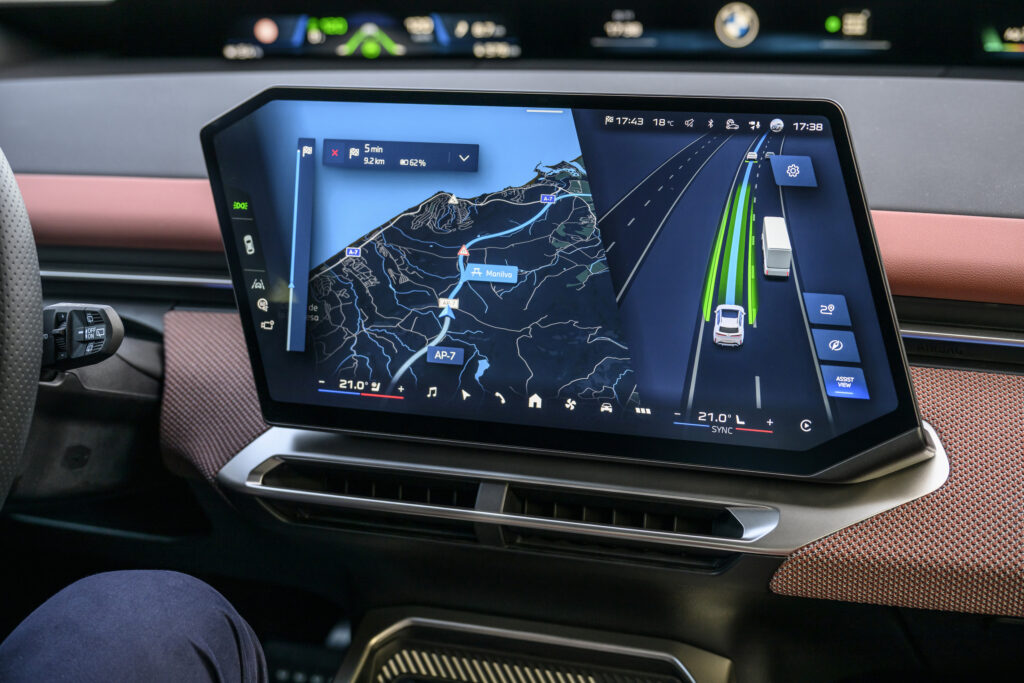
The company states that this feature is designed to enhance systems such as automatic emergency braking, lane change assist, cross-traffic warning, as well as highway and city assistant functions. They are intended to protect not only passengers but also pedestrians, cyclists, and other road users.

How Does the Recording System Work?
Instead of constantly uploading video, the system saves data only during specific events. These include:
In such cases, the car may capture frames from external cameras along with data on speed, steering wheel angle, direction of travel, and readings from other sensors. BMW claims that such real-life incidents are far more useful than simulations or testing, as they show how people actually drive and how systems react in real-world conditions.
Privacy Protection Measures
It is worth noting that Tesla has been using a similar practice for years. At one point, a scandal even arose because employees could see intimate moments in customers’ cars. BMW emphasizes that in their case, faces are blurred, the system by default requires consent confirmation, and recording is not continuous but only during specific events on the road.
License plates are anonymized before any data leaves the car, at least where technically possible, and the company insists that its systems are not used to identify individual road users.
After the data reaches BMW’s servers, the vehicle identification number is automatically deleted, making it practically impossible to trace any recordings back to a specific car.
The Future of the System
Currently, the rollout is limited to Germany, but BMW plans to gradually expand the system to the rest of the European Economic Area. Any improvements developed based on this data can later be sent to customers via over-the-air software updates.
The question of whether this data collection system will be available in the USA with the arrival of the iX3 and i3 remains open. Company representatives have received a corresponding inquiry for clarification.
This step by BMW can be seen as part of a broader trend in the automotive industry, where data is becoming a key resource for development. On one hand, it promises faster improvement of safety systems adapted to real conditions. On the other hand, it once again sharpens the question of the balance between technological progress, safety, and private life. The success of such initiatives will depend not only on technical excellence but also on consumer trust, which companies still need to earn through transparent rules and reliable information protection.