 by
by New Visual Identification on the Roads
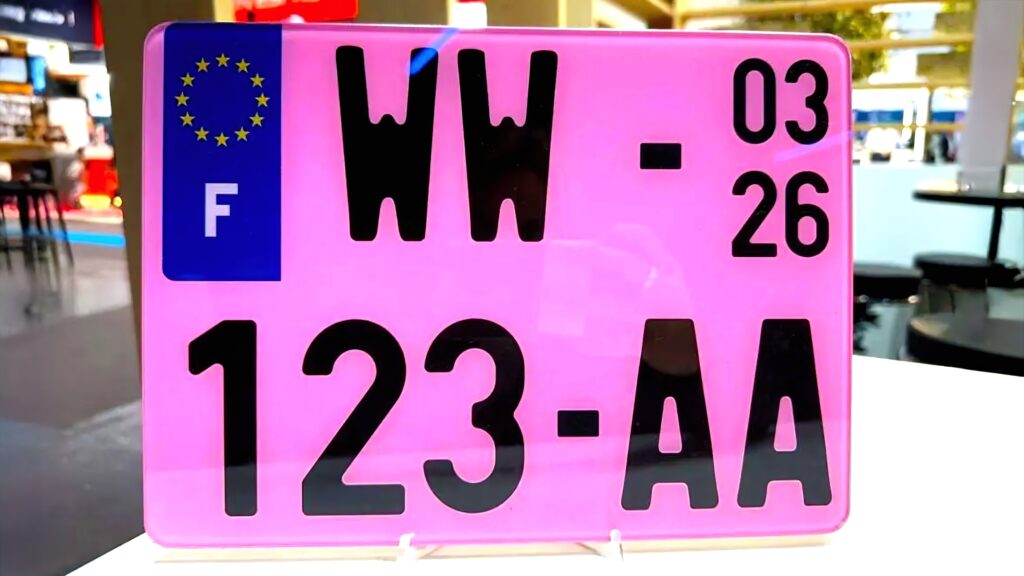
If this year, while driving through France, you notice a sharp flash of pink in the oncoming lane, don’t worry—it’s not an optical illusion. The country has officially introduced bright pink license plates for vehicles with temporary registration.
While the visual appearance might appeal to Barbie fans, the logic behind the changes is based on more down-to-earth considerations. The French government wants to give police a quick way to detect cars that are in transit. This applies to vehicles awaiting permanent plates, recently imported cars, and dealer vehicles used for test drives.
Until now, such temporary vehicles had plates with the prefix “WW,” but with the same black-and-white color scheme as regular registrations. Starting January 1, 2026, temporary plates are switching to a bright background.
Technical Features of the New Plates
In addition to the color update, the new license plate design includes a clearly printed expiration date in the right corner. This is intended to reduce the need for officers to manually check validity through a central database.
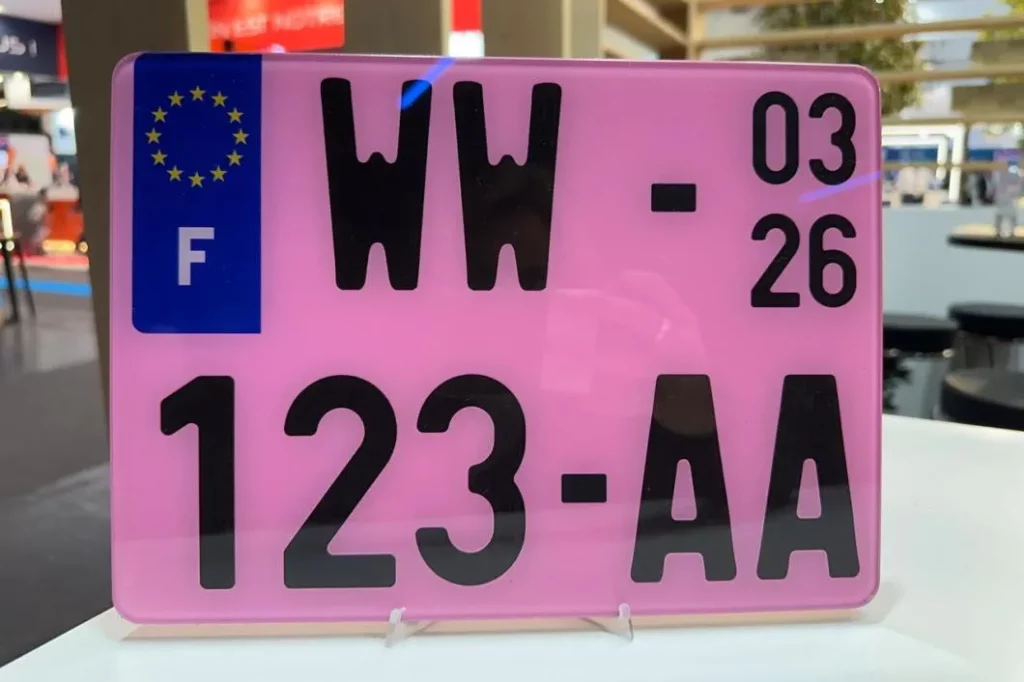
Only plates issued from 2026 will have the pink background, while existing ones will remain in circulation until their expiration date. The updated plates will be valid for a maximum of four months with no possibility of extension. According to the French government, about 400,000 vehicles use temporary license plates each year.
Reasons for Color Choice and International Context
If you’re wondering why the French authorities chose this particular shade, the explanation is simple. The color pink is rarely found in nature or on road signs, making it instantly noticeable. The high-visibility design also serves a practical purpose, discouraging drivers from exceeding the temporary registration period, as the expiration date becomes much harder to ignore.
Other countries have their own approaches to marking temporary registrations. In Germany, short-term plates have a bright yellow stripe on the right side, while red text on a white background is used for export or dealer transfers that last a bit longer.
Monaco uses bright blue plates for temporary vehicles, and in Poland, a yellow background is used in certain cases.

As for the USA, the system is much less consistent. Some states still use temporary plates made of paper or cardboard, which has opened the door to widespread abuse. Counterfeit plates are often sold to avoid paying road tolls, insurance, or registration altogether. In response, several states have begun transitioning to more durable materials or linking temporary plates to digital systems to close loopholes.
The introduction of pink license plates in France is part of a larger global trend towards enhanced road control and safety through standardization and improved identification. This step not only simplifies the work of law enforcement but may also serve as an example for other countries trying to combat issues related to temporary registration. The effectiveness of such visual solutions often depends on public perception and drivers’ willingness to follow the rules, making such initiatives an interesting subject for observation in the coming years.