 by
by Audi’s premier electric sports car, the RS e-tron GT Performance, is already showing significant price drops in the American market, despite its recent facelift. Here are the key facts:
Market Reality for the Powerful Electric Car
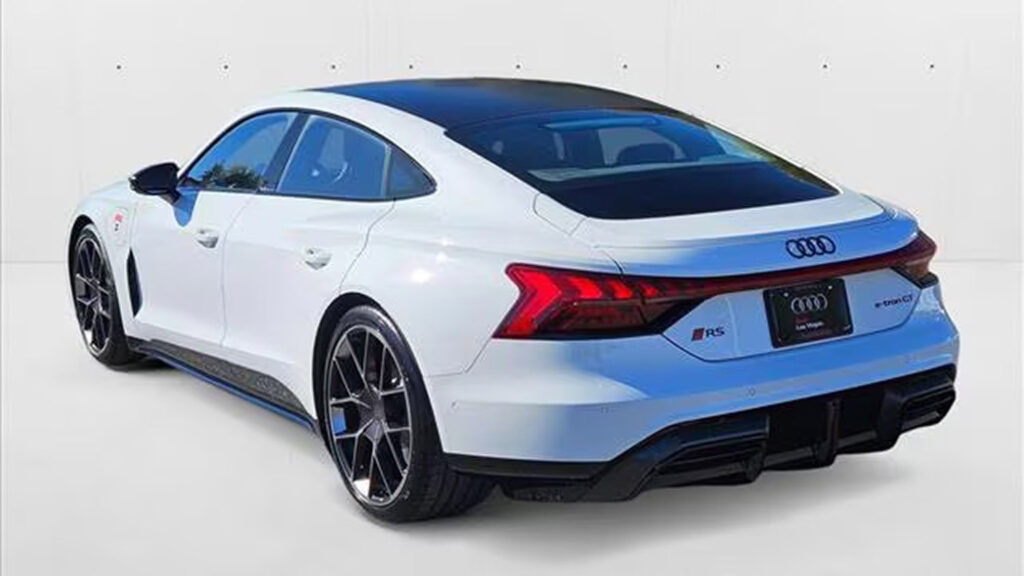
The new Audi RS e-tron GT Performance combines hypercar-level acceleration with comfort for long journeys. Despite impressive specifications—912 horsepower and 1027 Nm of torque—the market deems its initial price too high for a luxury electric vehicle. After adding options, the cost easily exceeds $180,000, which, as listings show, does not find sufficient support among buyers.
Examples of Sharp Depreciation
A quick search of listings reveals dozens of 2025 and 2026 models across the United States with minimal mileage, already being sold below the recommended price. The most affordable unit found is a 2025 model with 1,930 miles, listed by Audi Beverly Hills.
Audi Beverly Hills
This car, which would have cost at least $180,000 new with a $5,900 forged carbon package, is now offered for just $123,993.
For those seeking a brand-new car, it’s worth noting a 2025 model at Audi Las Vegas. Its price is $124,590 instead of the original $178,595. With only 13 miles on the odometer (delivery mileage), this electric car has already lost $54,005 in value, without even being registered.
Audi Las Vegas
Despite all the updates of the refreshed RS e-tron GT, it seems destined for the same fate as the previous model: a sharp drop in value immediately after leaving the dealership. Some examples of the pre-facelift RS e-tron GT (with up to 637 hp) are already being offered for under $50,000, and the updated model is heading in the same direction.
Such price dynamics may be caused by several factors, including the general trend in the premium electric vehicle market, high competition, and possibly buyers’ expectations of further technological progress in the electric vehicle sector. Rapid depreciation creates a unique opportunity for car enthusiasts to acquire a high-performance technological car at a significantly more attractive price than the manufacturer planned. This situation also raises questions about pricing strategies and the long-term cost of ownership even for the newest and most powerful representatives of the electric vehicle world.