


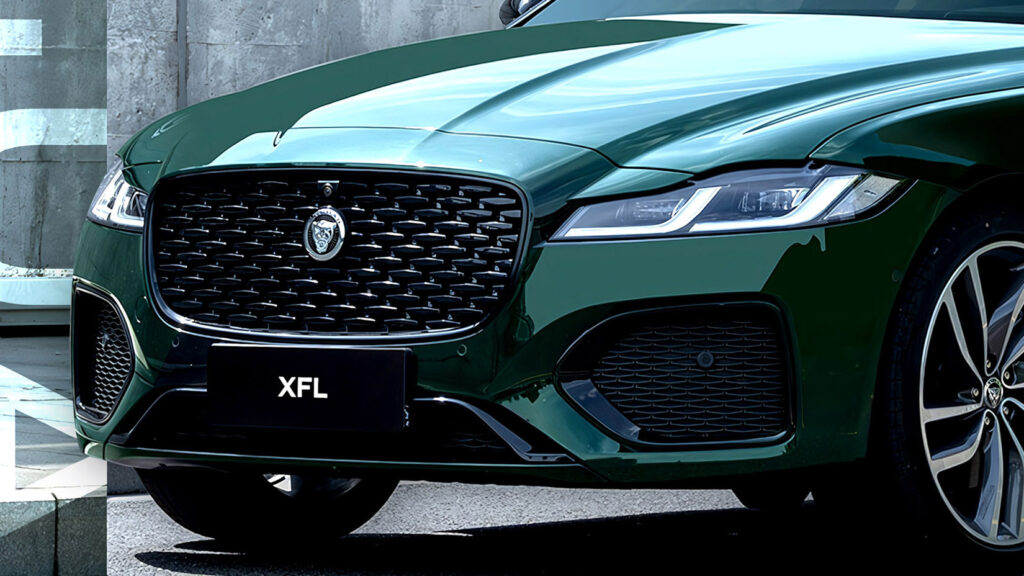
Jaguar’s Last Stronghold of Internal Combustion Engines is in China
While Jaguar is transforming into a fully electric brand aiming to compete with Bentley, it has discontinued production of all its old ICE models. At least, that’s what most people think. However, the company continues to assemble three models in China through the Chery-Jaguar Land Rover joint venture. Who would have thought that China would become the last refuge for Jaguar with gasoline engines?
Not only that, but the brand has managed to recapture some of its lost sales ground thanks to massive discounts from dealers across the country. In many cases, prices have been slashed by more than 50 percent, as Jaguar does everything possible to remain visible in a market where domestic brands have already pushed many long-established automakers into the background.
Automotive journalist Tycho de Feijter noted in his post:
Discounts exceeding 50 percent revived sales after months of decline.
Models and Their Incredible Discounts
One of the models sold in China but not offered in other regions is the XEL. This is a version of the mid-size XE sedan with a lengthened wheelbase, equipped with a 2.0-liter turbocharged four-cylinder engine producing 250 hp. Its wheelbase is 10 centimeters longer than the standard XE.
Temporary Sales Recovery
According to de Feijter, Jaguar sold 18,326 cars in China last year, giving it only a 0.08 percent market share. By the end of October this year, sales had fallen to 11,600 units, and the market share had shrunk to 0.06 percent. However, the situation changed after the introduction of discounts.
In May, a month before the start of the promotions, Jaguar managed to sell only 759 cars. Then steady growth began: 1,455 units in June, 1,566 in July, reaching a peak of 1,925 in August. After that, sales slightly fell to 1,866 in September and 1,782 in October, but still remained significantly higher than pre-promotion levels.
The initial jump seems to be fading, indicating that Jaguar is approaching the maximum demand for these outdated ICE models, even at sharply reduced prices. This strategy has temporarily revived interest, but the brand’s long-term prospects in the Chinese market, dominated by local manufacturers of electric and technologically advanced cars, remain uncertain. The future fate of these models will depend on whether the company can offer something new when the potential for discounts is exhausted.