


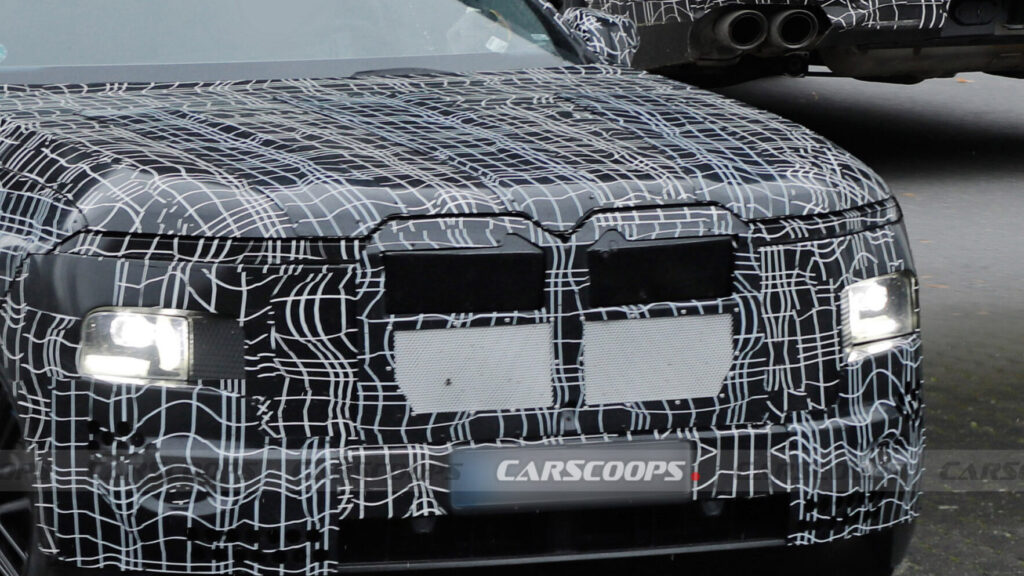
New generation BMW X7 appears in spy photos
BMW engineers are actively working on a whole wave of 40 new or updated “Neue Klasse” models, which are set to appear by the end of 2027. Among them is the next generation of the flagship X7 SUV, which was recently captured by spy lenses in Germany.
At first glance, the camouflaged prototype might seem like another facelift, but the changes are much deeper and clearly point to a full generational change. The current X7, introduced in 2018, already underwent a mid-lifecycle update in 2022, so this next step is happening according to plan.
BMW engineers are burning the midnight oil to prepare a wave of 40 new or refreshed “Neue Klasse” models by the close of 2027.
Exterior: Evolution of iconic design
Unlike other Neue Klasse models, the X7 will retain its characteristic split LED headlights, which will now frame what appears to be an even larger “kidney” grille. The headlights themselves have become smaller and are positioned lower on the redesigned bumper with more square air intakes.
In profile, the new X7 gets cleaner surface lines along the pronounced wheel arches, and conventional door handles give way to thin fins, which likely improve aerodynamics. The greenhouse silhouette remains largely familiar, although the D-pillar seems to get a more expressive interpretation of the Hofmeister kink.
At the rear, heavy camouflage hides the design, and the prototype still wears temporary tail lights. On production cars, these will almost certainly be replaced by full-width LED strips, borrowing ideas from the smaller iX3 Neue Klasse and future X5 and iX5 models.
Technological updates and a completely redesigned interior
Inside, BMW is expected to introduce a Panoramic Vision display that will stretch along the lower part of the windshield. It will be accompanied by a larger central touchscreen, updated artificial intelligence as an assistant, and a new steering wheel with a more concept-car-like aesthetic.
Computing power will receive a serious upgrade thanks to BMW’s new central computing module architecture, which acts as the vehicle’s digital backbone.
Processing capabilities will get a serious upgrade courtesy of BMW’s new “Superbrains,” the central computing architecture that acts as the vehicle’s digital backbone.
The X7 will continue to offer a three-row, seven-seat layout, which is one of the key factors that distinguishes it from other BMW SUVs and puts it in direct competition with the Mercedes-Benz GLS, as well as the Volvo EX90 and XC90.
Electric and gasoline together
The latest prototype spotted on the road has four round exhaust pipes and is mounted on large alloy wheels, indicating a V8 hybrid powertrain, likely in an M-badged variant. At the same time, earlier prototypes confirmed that the new generation will for the first time also include a fully electric iX7 model.
Unlike smaller BMW models, where ICE and EV versions use different platforms, the X7 and iX7 will share a single architecture. Reportedly, it will be an evolved version of the current CLAR platform, adapted to support both traditional and electric powertrains.
The lineup is also expected to include high-performance variants from both BMW M and Alpina, with electric versions, according to sources, potentially developing up to 900 horsepower.
BMW has not yet set a release date for the new X7 and iX7, but the roadmap points to a launch in 2027. Both models will be produced at BMW’s plant in Spartanburg, South Carolina, alongside the X3, X5, X6, XM, and a brand-new SUV aimed directly at the Mercedes G-Class.
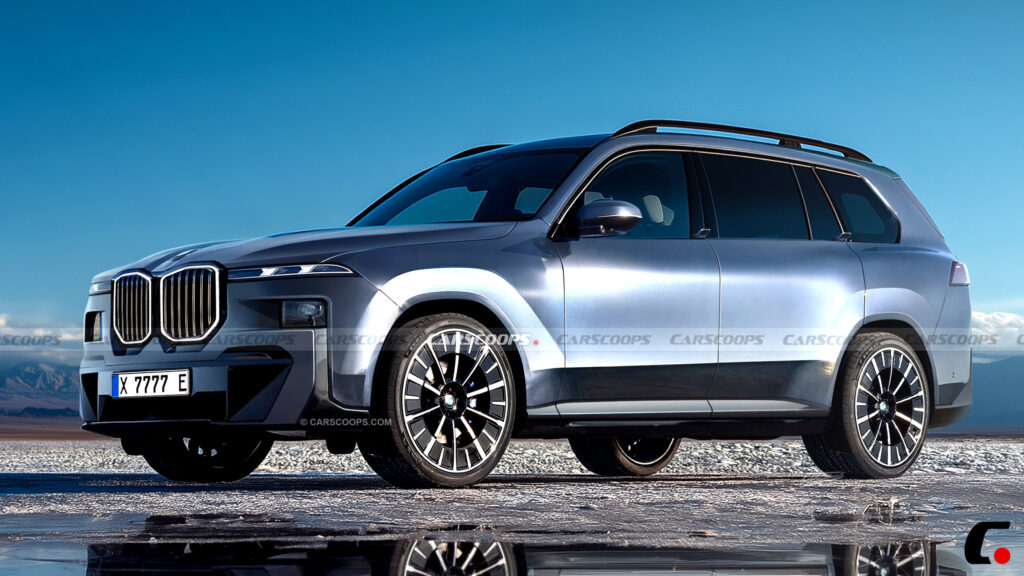

BMW’s approach to developing the new X7 demonstrates a balance between preserving successful, recognizable features and integrating cutting-edge technologies. The decision to use an adapted platform for both types of powertrains could be a strategic move, allowing flexibility in responding to market demand, especially for large premium SUVs where electrification has not yet become dominant. Competition in this segment is intensifying, and the arrival of the fully electric iX7 will be an important response to models like the Mercedes EQS SUV and Audi Q8 e-tron. The success of the new model will largely depend on how successfully it manages to combine traditional BMW dynamics, luxurious interior space, and a new level of digital integration, without losing the brand’s identity.