 by
by Official Premiere of the Updated Taurus
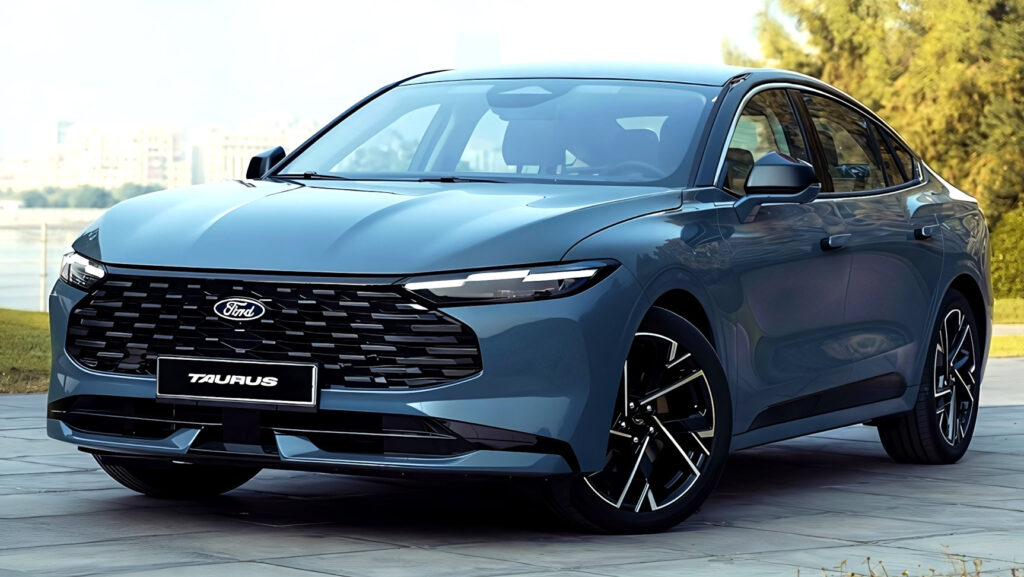
Following a series of teasers earlier this year, Ford has officially unveiled the updated Taurus for the Middle East and some other regional markets. The exterior changes are virtually identical to those presented for the Chinese-market 2026 model year Mondeo in November. However, the Middle East version did not receive the massive screen that spans almost the entire width of the dashboard in the Chinese modification.
Furthermore, while the Chinese Ford Mondeo received a slight power increase as part of the facelift, the Taurus continues to use the existing powertrain lineup.
In the Middle East, the sedan is offered with a 2.0-liter gasoline turbo engine producing 239 horsepower and 382 Nm of torque, paired with an eight-speed automatic transmission.
A hybrid version is also available, combining a 1.5-liter turbo engine with 185 hp with a 64 hp electric motor and a continuously variable transmission. Front-wheel drive remains standard for all modifications.
Continued Life of the Sedan in Select Markets
Although Ford discontinued production of traditional sedans for North America in 2019, the Taurus name hasn’t completely disappeared. The brand ended the sedan era in its home market, but China and some other world regions seem to have missed that memo.
The Mondeo, introduced in China in 2022, is receiving a mid-lifecycle update that brings a sharper design, new software, and somewhat more powerful engines. These updates will soon be reflected in the Taurus offered in the Middle East.
What’s New in the Design?
The most noticeable visual updates are focused on the front and rear. The new headlights have cleaner shapes and modern LED graphics, giving the car a stronger resemblance to a four-door Mustang.
The light units frame a wider grille, connected to a more sporty lower bumper. The sculpted body profile is largely preserved, although buyers will have access to updated wheel designs and additional color options.
At the rear, the redesigned tail features more modern taillight graphics and a modified bumper with black trim and a body-colored diffuser. Dimensions remain unchanged: length 4935 mm and wheelbase 2945 mm.
Interior Updates
At first glance, the interior seems the same: the same 12.3-inch digital instrument cluster and 27-inch multimedia system proudly positioned on the dashboard.
However, the cabin now runs on the next generation of SYNC+ software and a more powerful Snapdragon 8155 chip. Ford promises a new interface, smoother operation, and an improved voice assistant.
The floating center console has also been redesigned: dual wireless chargers and new cup holders have appeared. Physical buttons have been relocated beneath the climate control vents.
Slightly More Power
The updated Mondeo remains available in gasoline and hybrid variants. However, the engines have been modernized, providing a slight increase in power.
The base 1.5-liter turbo engine now develops 193 hp, the 2.0-liter EcoBoost produces 257 hp, while the hybrid option generates a combined output of 284 hp. All Mondeo configurations have front-wheel drive, with gasoline versions using an eight-speed automatic and the hybrid using a continuously variable transmission.
The updated Mondeo is produced in China by the Changan Ford joint venture. Prices will be announced soon. It remains unclear whether Ford will extend these same updates to the Mondeo Sport — the mechanically related five-door crossover fastback, previously known as the Evos.
Previously shown teasers also showcased the updated Taurus for the Middle East, which differs mainly in different rear emblems and smaller screens inside.
This presentation highlights Ford’s different approaches to global markets. A model that has lost relevance in some regions continues to live and evolve in others, adapting to local preferences. Particularly interesting is the gap in technological equipment between the Chinese and Middle Eastern versions, which may indicate different marketing strategies and target audiences. The preservation of the sedan in the lineup of certain markets, despite the global trend towards crossovers, shows that demand for this body type still exists. The future of the Mondeo Sport model remains in question, which may indicate internal competition or a reassessment of the company’s product portfolio in the region.