


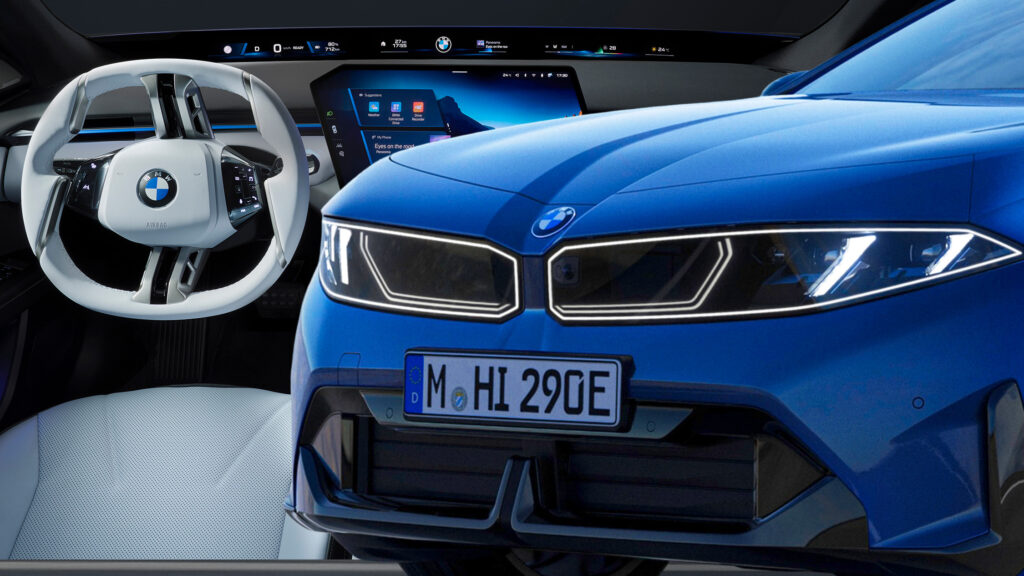
After more than a decade since the debut of the original i3 hatchback that started BMW’s electric journey, the company is reviving this name for a completely new and important electric vehicle. The new i3 is the first electric version of the 3 Series to be offered outside of China. It is built on the all-new Neue Klasse platform and offers completely new design, technology, and performance.
New Look and Architecture
Fans of gasoline engines will have to wait a few more months for the new G50 series, which will look very similar but will be built on an updated version of the current CLAR platform. The electric version with the NA0 index, introduced today, is based on the Neue Klasse architecture, but much of its design and interior will also be used in ICE vehicles.
The next ICE version of the 3 Series will inherit BMW’s future look but will not share the same technical foundations.
Bigger, Wider, Lower, More Powerful
Externally, the new i3 looks like a balance between familiar and futuristic. It is not as sleek as the concept cars that previewed this style, but it looks fresh and modern, with angles reminiscent of the E36 model from the 1990s.
The front features a new visor-like grille and integrated headlights, like the iX3 SUV. The side view shows clean surfaces with flush door handles and muscular fenders. At the rear, horizontal taillights emphasize the car’s width.
The new i3 is 187.4 inches (4,760 mm) long, which is 1.8 inches more than the current gasoline 3 Series in the 330i xDrive version. It is also wider, taller, and has a longer wheelbase. The short distance between the front wheel and the driver’s door indicates that something very different is happening under the hood.
Size Comparison: 2027 BMW i3 vs 2026 3-Series Sedan
| Parameter | New i3 | 330i xDrive | Difference |
| Length | 187.4 in (4,760 mm) | 185.6 in (4,713 mm) | +1.8 in (47 mm) |
| Width | 73.4 in (1,864 mm) | 71.9 in (1,827 mm) | +1.5 in (37 mm) |
| Height | 58.3 in (1,481 mm) | 56.9 in (1,445 mm) | +1.4 in (36 mm) |
| Wheelbase | 114.1 in (2,898 mm) | 112.2 in (2,851 mm) | +1.9 in (47 mm) |
Panoramic Dashboard
Inside, BMW aims to create the feeling of a concept car that accidentally made it into series production. The cabin, largely borrowed from the iX3, features a wraparound dashboard that flows into the door panels, large glass areas, and a standard panoramic roof.
The controversial multi-spoke steering wheel from the iX3 is also present, and the central display is tilted towards the driver, a nice nod to the 3 Series history. The seats, even the standard ones, offer good support and comfort.
Practicality was also considered: the center console has a storage compartment, wireless charging, and physical buttons for the hazard lights and parking brake. Recycled materials are used for wheels, bumpers, and upholstery fabrics.
Infotainment System and Technology
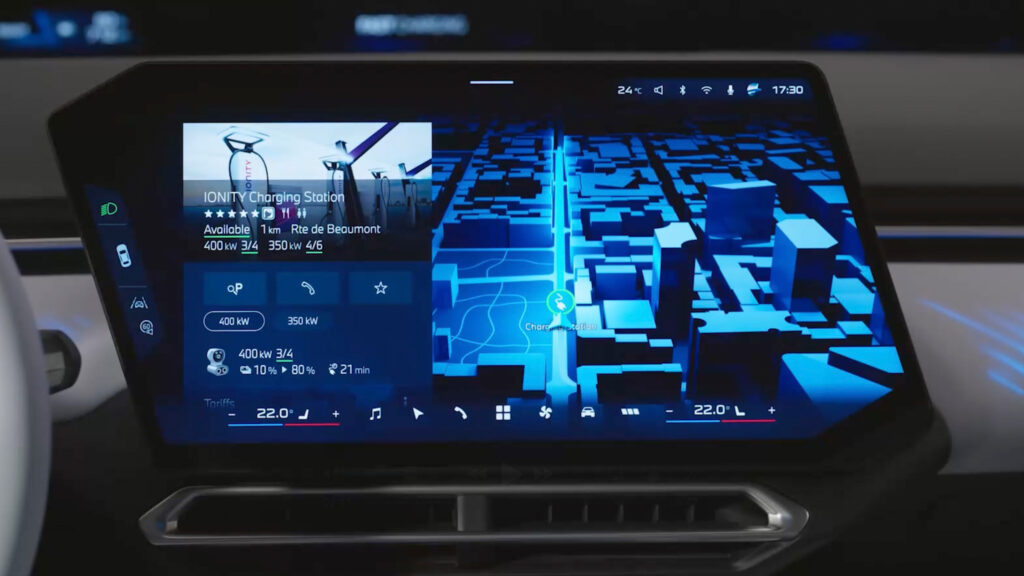

The new Panoramic iDrive system combines a full-width head-up display projected onto the windshield, a massive 17.9-inch diagonal central screen, an optional 3D HUD, and a new multifunction steering wheel with illumination.
BMW claims this reduces driver distraction as key information is in the line of sight. Widgets can be dragged between displays. Voice control has received a significant update thanks to Amazon Alexa+ technology. Up to seven users can store their profiles via BMW ID.
Powertrain
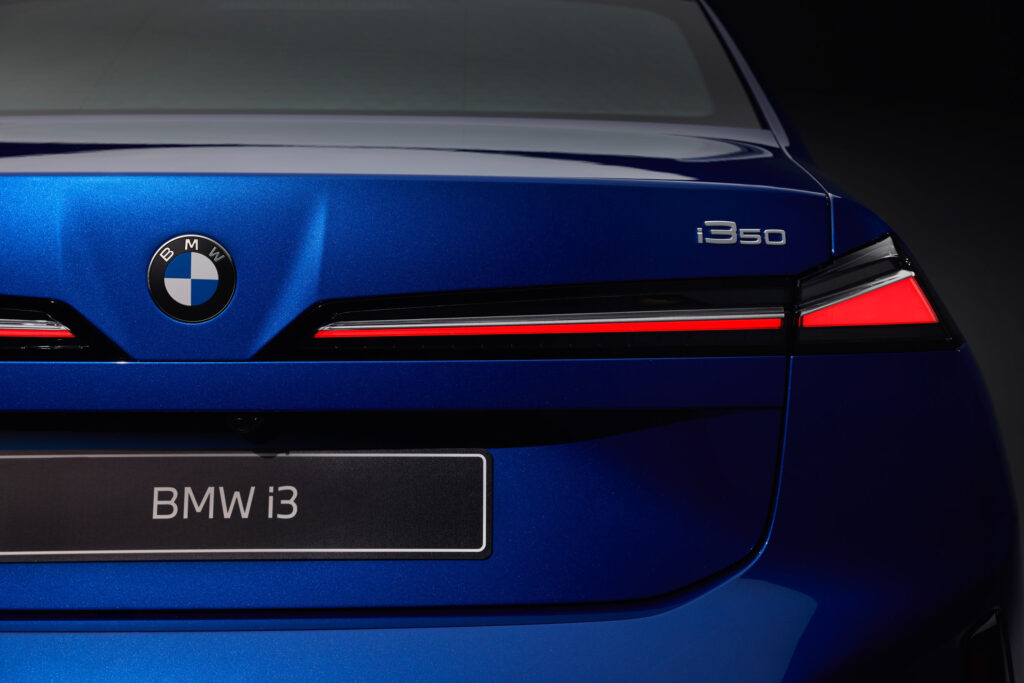

At launch, one model will be available — the i3 50 xDrive with two motors (one on each axle), delivering a combined 463 hp and 645 Nm of torque. The main load is carried by an electrically excited synchronous motor on the rear axle, while the front asynchronous motor improves traction and efficiency.
BMW confirms the arrival of an i3 Touring to make station wagons popular again.
The new Heart of Joy control system, which manages the drive, brakes, and recuperation, reacts ten times faster than previous systems. There is also a new five-link rear suspension, standard dampers, and an optional adaptive suspension.
Battery, Range, and Charging
The i3 uses the sixth-generation eDrive system with an 800-volt architecture, cylindrical cells, and a cell-to-pack design. This provides up to 440 miles of range according to EPA estimates. DC fast charging at up to 400 kW can add 249 miles of range in 10 minutes.
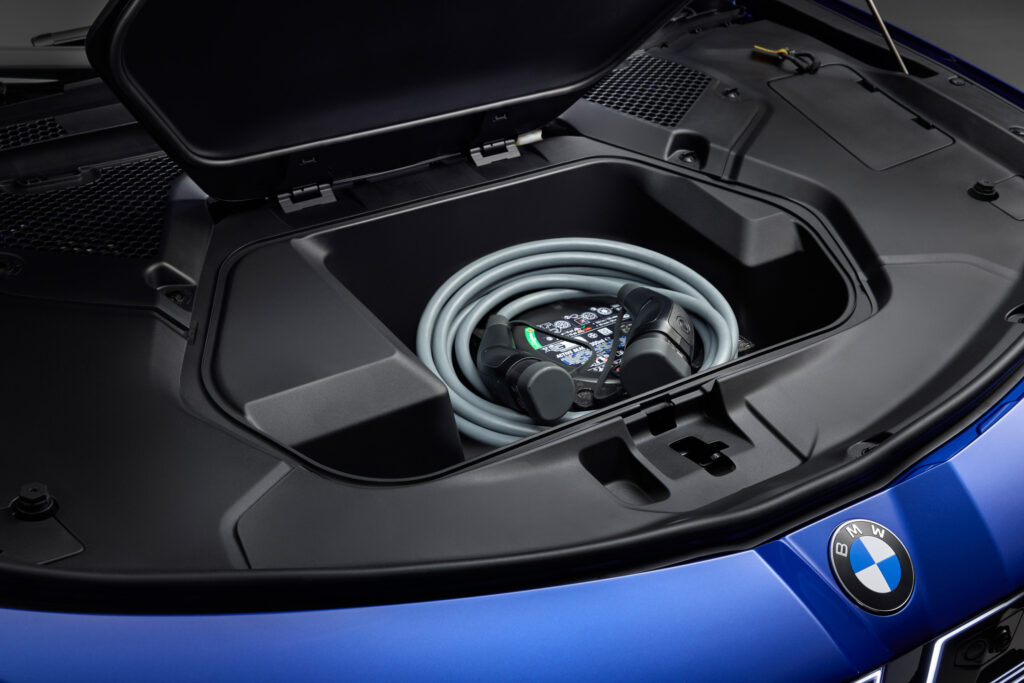
The car supports bidirectional charging for powering devices or a home. The charging port flap opens automatically when approaching a charger. The route planner takes into account charging stops, station availability, and their cost. The front trunk (frunk) is small and intended only for the charging cable.
When Will It Go on Sale?
Production of the i3 will begin in Munich in August, with the first deliveries of the 2027 model year cars starting in the fall. This is one of BMW’s most important launches, as it is the first true electric version of one of the brand’s key models.
The new electric M3 misses the gasoline engine so much that it borrows a V10 sound.
More affordable single-motor models, more powerful M Performance versions, Touring station wagons, and gasoline versions will appear later. BMW is also working on the first electric M3. The 3 Series has never undergone such a radical transformation, and this eighth-generation model will undoubtedly evoke both admiration and criticism.
The revival of the i3 name for a sedan that is the electric variant of the 3 Series is a symbolic step for BMW. It indicates that the company is serious about electrifying its most important, “core” models, not just creating separate electric lineups. The success of this model on the global market, especially compared to Chinese versions, may be an indicator of how ready the general public is to accept electric analogues of classic cars. The technical specifications, especially range and charging speed, look competitive, but the real test will be how this technological package combines with the handling qualities and “road feel” for which the 3 Series has traditionally been valued.