


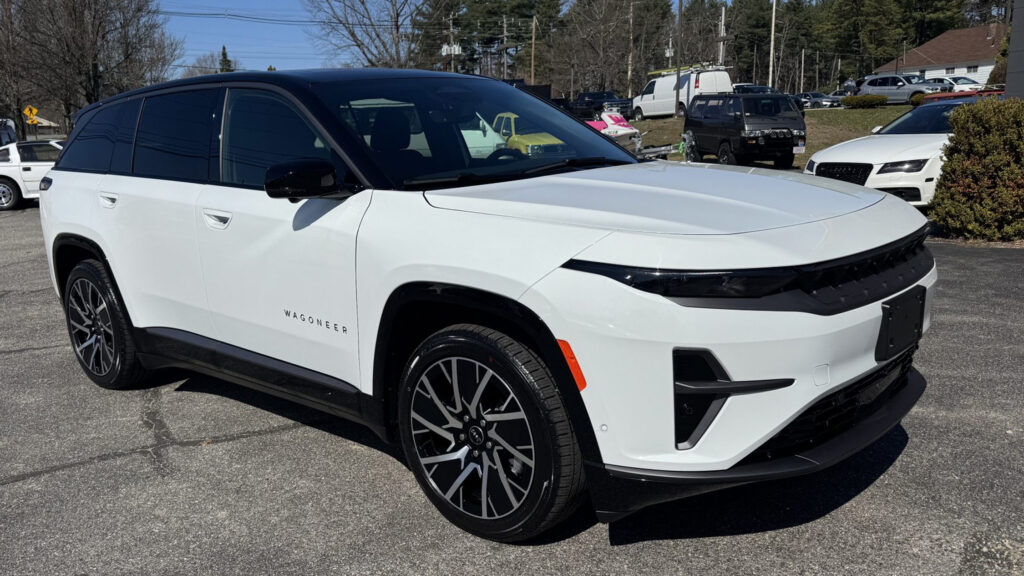
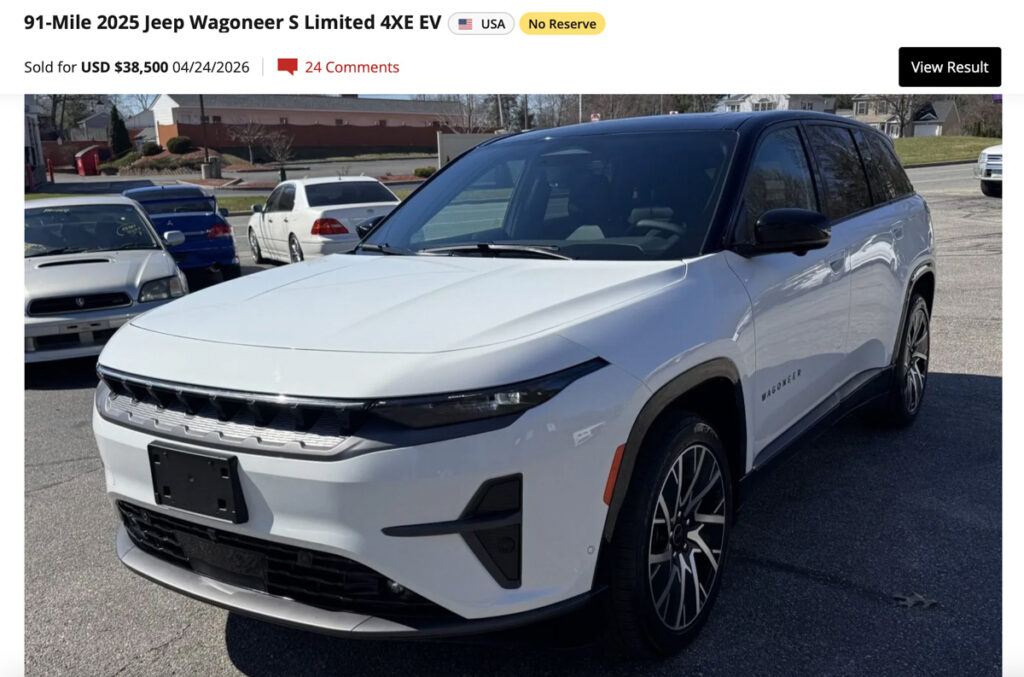
An almost new Wagoneer S Limited 4xe was sold at a Bring a Trailer auction for $38,500, despite having only 91 miles (147 km) on the odometer. This is roughly $30,000 below the original price, serving as a stark reminder of how brutal electric vehicle depreciation can be.
Why Did the Price Drop So Much?
On paper, this deal looks fantastic. The Wagoneer S is equipped with two electric motors, all-wheel drive, and factory-rated power of 500 hp (507 PS) and 524 lb-ft (710 Nm) of torque. The claimed range of 294 miles (473 km) from a 100 kWh battery isn’t impressive, but it’s perfectly acceptable. This EV is spacious enough for family needs and well-equipped, making the auction result a genuine steal for those seeking a bargain.
This example was a Limited trim, finished in white, with the Jeep Dark Appearance package. The starting price for the Limited was $67,195, including delivery, but without accounting for additional options. This vehicle featured a panoramic roof, heated front seats and steering wheel, surround-view cameras, adaptive cruise control, wireless smartphone mirroring, a 12.3-inch touchscreen, and a nine-speaker Alpine audio system. So it’s not just a base version, though it falls short of the Launch Edition with 600 hp (608 PS) at $72,195.
Reasons for the Value Collapse
Why did such a massive price drop occur? The Wagoneer S has faced serious issues since its launch. It arrived on the market when manufacturers believed demand for premium EVs in the US would continue to grow. Instead, the market cooled, incentives shifted, and buyers became more selective regarding price, charging access, and brand trust.
Lack of Tax Incentives
The biggest blow was the cancellation of the $7,500 federal EV tax credit in September last year. Before that, Jeep reportedly sold over 10,000 Wagoneer S units over three quarters, using heavy discounts. In the two quarters following the incentive cancellation, sales plummeted to 613 units.

Jeep’s Response and the Model’s Future
Jeep’s response has been telling. The brand is not releasing a 2026 Wagoneer S at all, instead jumping straight to the 2027 model year. Stellantis states that this pause will allow for updates to battery performance, software, capabilities, and interior quality. Additionally, the vehicle will gain a NACS charging port, providing easier access to Tesla’s Supercharger network.
A better Wagoneer S is on the way, but the person who bought this example got an absolute bargain. If they can come to terms with uncertain resale value and the model’s status as one about to receive an update, they’ve gotten an almost untouched, 500-horsepower electric SUV with generous equipment for $38,500. That’s hard to ignore, even if the first owner is probably regretting their decision.
This situation with the Wagoneer S is a stark example of how quickly EVs can depreciate, especially when market conditions change and government incentives disappear. For the auction buyer, it could become a smart investment if they plan to use the vehicle for a long time, disregarding potential resale difficulties. At the same time, it’s a serious signal for manufacturers about the need for a more balanced approach to pricing and strategies for launching new EVs on the market.