


New Hyundai i20: Radical Design and Hybrid Revolution
It has been over six years since the current generation of the Hyundai i20 hit the market. Despite all its advantages, especially in the powerful N version, the model has started to look somewhat dated. Fortunately, the Korean manufacturer is actively working on an entirely new generation of the i20, which promises to retain the same compact charm as its predecessor.
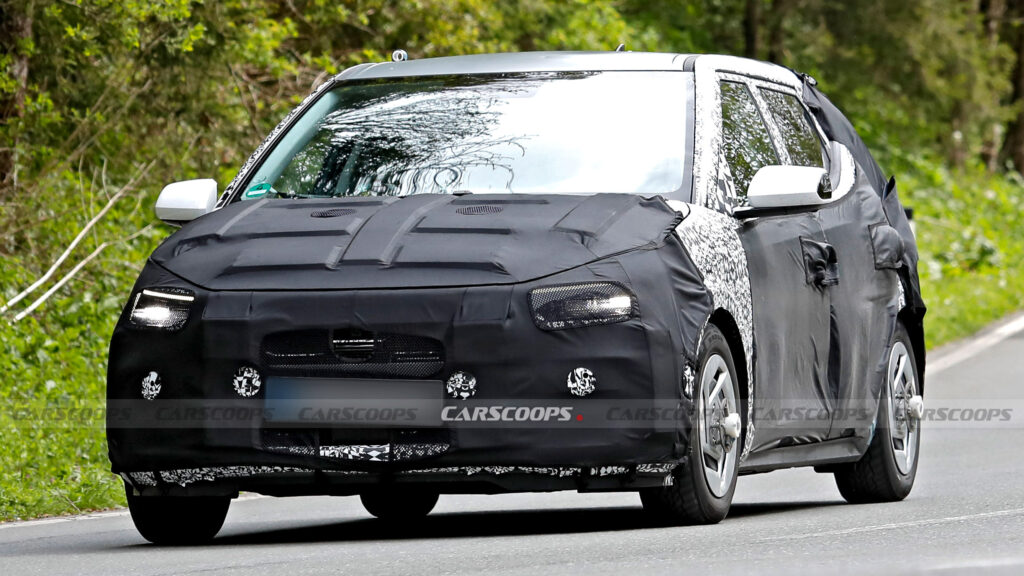
Our spy photographers recently captured a heavily camouflaged prototype of the new i20 in Europe. Although most of the hatchback’s design details are hidden, several important elements can be discerned from these images.
Key Exterior Changes
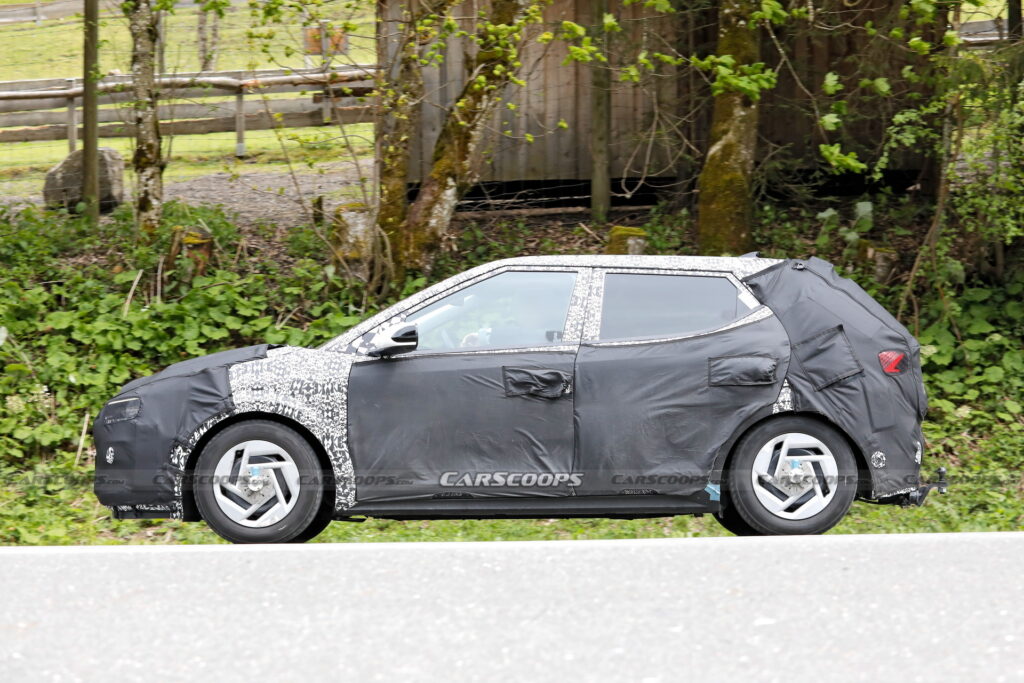
The most obvious change is the shape of the windshield, roof, pillars, and side windows. Following the styling of the Santa Fe and the tiny Casper/Inster, the front pillars and side windows converge to a sharp edge. The sloping roof continues, tapering towards the rear of the car. The prototype also shows widened front wheel arches.
Unfortunately, the entire front end is hidden by black camouflage, concealing important design details. However, a prototype spotted last year featured a large darkened radiator grille and an LED light bar. Bright daytime running lights and completely new headlights were also visible.
Rear End and Interior
Like the front, most of the car’s rear is hidden from view. Nevertheless, part of the rear lights can be seen, which also differ significantly from those on the current i20. A tow hitch is also visible. Although it is unlikely that many i20 owners will use their compact hatchbacks for towing, Hyundai is apparently testing and verifying what weight the car can safely pull.
There are no clear images of the new i20 interior yet. Therefore, it is difficult to say whether it will retain the fairly traditional layout of the current i20 or switch to Hyundai’s latest generation of interiors with the Pleos Connect infotainment system, as seen in the fully electric Ioniq 3, with a Tesla-inspired central display.

Powertrains: Petrol, Hybrid, and Electric
Regarding powertrains, the new i20 will continue to offer several internal combustion engine options, and for the first time, it will also be available with fully electric powertrains. It is unclear whether the electric model will use the E-GMP platform like the Ioniq models, but this seems unlikely since those models are positioned in a more premium segment than the i20. In any case, a 400-volt system and relatively slow charging speed are expected, meaning that even in its electric version, the i20 should remain affordable.
Changes will also affect the i20 N version. It is expected to retain the familiar 1.6-liter turbocharged four-cylinder engine but will be supplemented by a small electric motor and battery pack, helping to increase power and reduce emissions. Unfortunately, the introduction of a hybrid system will likely force Hyundai to abandon the six-speed manual gearbox.
Thus, the new generation of the Hyundai i20 is becoming significantly more technological, borrowing design solutions from older models in the lineup. The transition to a hybrid powertrain for the N version is a logical step in the face of strict environmental regulations, although fans will undoubtedly miss the manual gearbox. The arrival of a fully electric version expands the model’s audience, making it competitive in the rapidly growing compact electric vehicle market. Overall, the new i20 looks like a very balanced and promising product that has every chance of repeating the success of its predecessor.