


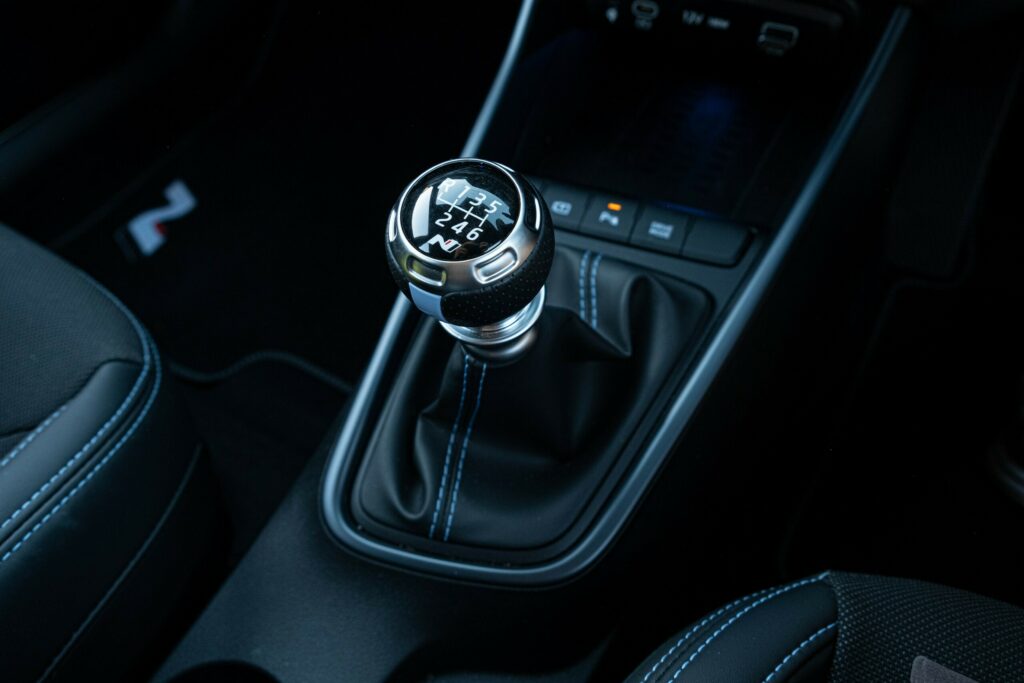
Hyundai has patented a new transmission that combines the functions of a manual and an automatic gearbox. This solution could appear on both electric vehicles and models with internal combustion engines.
New transmission from Hyundai: a blend of manual and automatic
For some automakers, the idea of creating a car that appeals to driving enthusiasts is foreign. However, this does not apply to Hyundai, which continues to produce some of the most exciting vehicles in their segments thanks to the N division.
Hyundai N set a new standard for driver engagement in electric vehicles with the Ioniq 5 N and Ioniq 6 N. Now, the company appears to be working on a new type of transmission ideal for car enthusiasts. According to recent patents filed with the United States Patent and Trademark Office, Hyundai is developing a manual transmission with a gate mechanism that can also operate as an automatic.
How does it work?
Koenigsegg was the first to apply a transmission that functions both as an automatic and a manual, with a clutch pedal, in the CC850 model a few years ago. A recent patent application also suggests that Porsche is exploring a similar transmission for its own use, combining the convenience of an automatic with the engagement of a manual gearbox.
The patents, filed with the USPTO and discovered by CarBuzz, describe a gearshift lever that has no physical connection to the transmission. It uses shift-by-wire technology to operate as an automatic most of the time. Next to it is a gate mechanism linked to the clutch pedal, which allows the driver to shift through first to sixth gear and reverse, as if working with a conventional manual.
When the driver is stuck in traffic or simply wants to drive home without worrying about shifting gears, the lever can be moved to the Drive position, and it will function in automatic mode. A sequential shifting mode is also provided, where the driver can push the lever forward or backward to shift gears while driving.
Prospects and challenges
The patent does not limit the type of powertrain with which this transmission can work, which likely means it could be added to both future Hyundai electric vehicles and models with internal combustion engines. The problem lies in economic feasibility. Creating such a complex transmission is one thing. Finding enough buyers willing to choose it over a conventional automatic to justify the engineering costs is quite another.
This approach by Hyundai demonstrates the company’s commitment to maintaining an emotional connection with the driver, even in the era of electrification. If this technology reaches mass production, it could become a compromise between the convenience of modern automatics and the pleasure of driving a manual, which is especially important for the younger generation that may lack experience driving cars with a ‘manual.’ However, the success of such a solution will depend not only on technical implementation but also on the market’s willingness to pay for this complex engineering, as such systems are usually significantly more expensive than traditional transmissions.