


Experiments with gear shifting: not just Porsche
Porsche is not the first automaker to experiment with unusual ways of shifting gears. Long before engineers began programming artificial shift points into software, Oldsmobile and Hurst offered a much more literal solution: simply give the driver more levers to control.
That is precisely what makes the 1984 Oldsmobile Hurst/Olds based on the Cutlass, now listed for sale, such a vivid reminder of how history repeats itself. At first glance, the silver-red coupe looks like a fairly clean example of an Oldsmobile G-body. According to the listing from Gateway Classic Cars, it features a V8 engine, automatic transmission, red leather upholstery, special wheels, power windows, and power brakes. The real highlight, however, lies between the front seats.
Three levers where there should be one
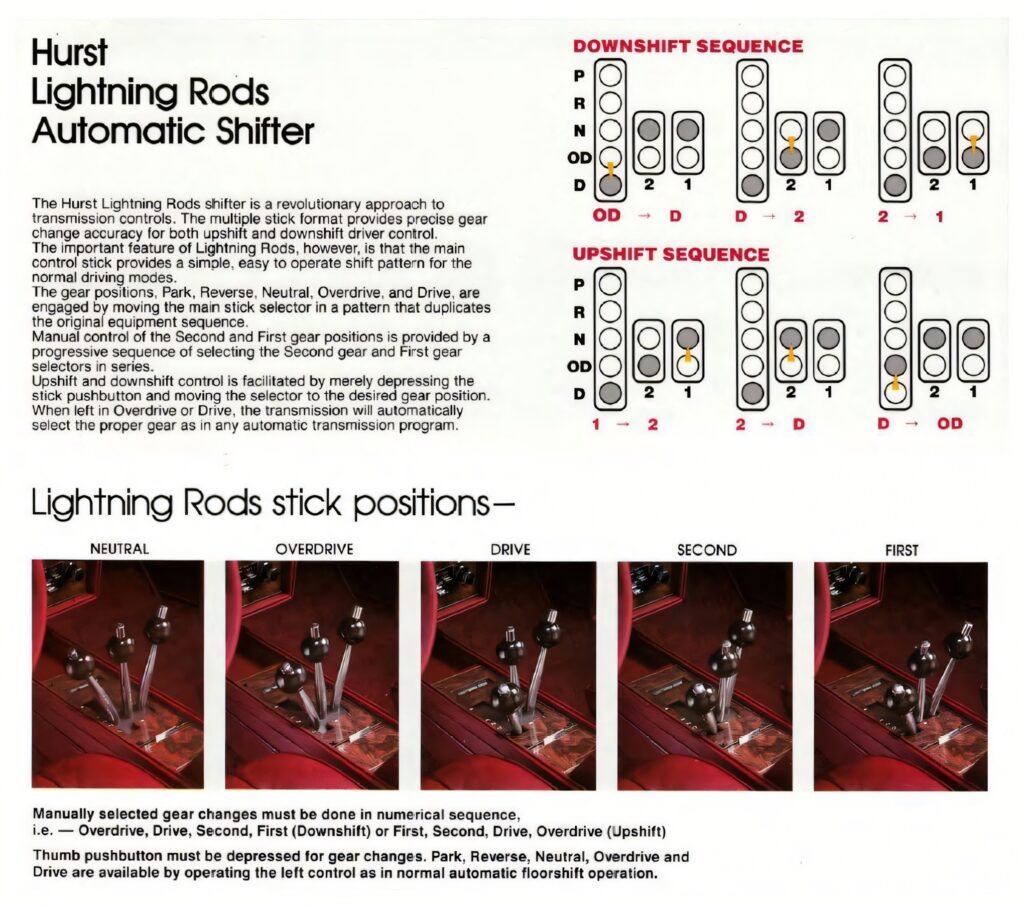
Known as the Hurst Lightning Rods, this system consists of three separate shift levers protruding from the center console. One functions as the main selector, while the other two allow the driver to manually command upshifts in the automatic transmission. The design was intentionally aimed at increasing driver engagement without the need for a true manual gearbox.
The idea was not entirely new. Hurst had previously experimented with driver-controlled automatic shifting through its “Dual Gate” system on Hurst/Olds models of the late 1960s, allowing drivers to manually go through the first three gears of the automatic via a special, drag-racing-inspired selector. And, despite all its visual complexity, the Lightning Rods still worked with a standard GM automatic transmission through the factory shift linkage, not some specialized sequential gearbox.
How the Lightning Rods actually worked
Drivers were not required to use the two additional levers but could do so at will. According to Drivingline, the transmission behaved like a regular automatic when the auxiliary levers were in the forward position and the main selector was in Overdrive mode. For manual shifting, drivers would start with all three levers pulled back into first gear, then move the farthest lever forward for second, and the middle lever forward for third. On four-speed models, moving the main selector to the Overdrive position engaged fourth gear. The system also prevented shifting out of order, as all three levers ultimately moved the same factory linkage.
The Lightning Rods appeared on Hurst/Olds models only for a brief period in the early 1980s, but Hurst also offered conversion kits for other GM performance cars, including the Camaro and Firebird.
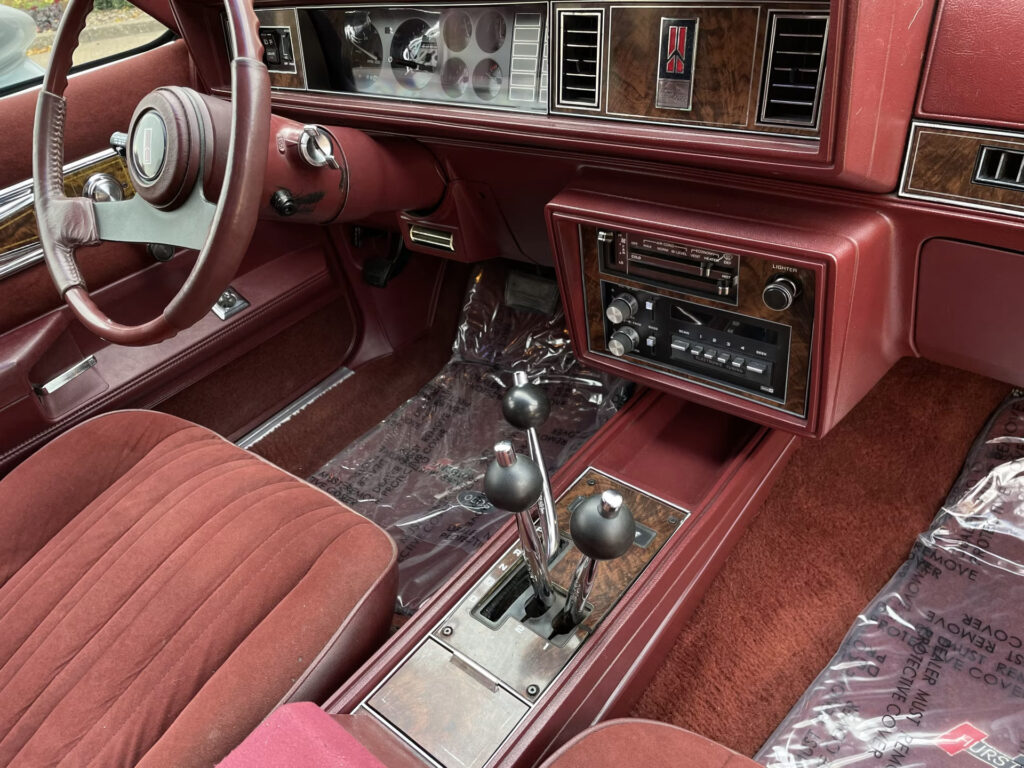

Even by the standards of the early 1980s, the Lightning Rods system looked audacious. Today, it looks more like an AI hallucination than a real gearshift system. At least back then, it somewhat resembled what some actual drag-racing cars with sequential gearboxes used. Ultimately, it is a reminder of what enthusiasts value.
One goal, opposite approach
Engagement is often more important than absolute speed. Porsche acknowledges that the Taycan is slower with its simulated gear shifting. The Cutlass is likely not faster with the Lightning Rods. Porsche’s new simulated shift experience relies on software, programming, and carefully engineered feedback to mimic what drivers already like.
The special 1984 Oldsmobile Hurst/Olds approached the same problem from the opposite side, bolting three chrome “sticks” to the console and letting the driver figure it out. No algorithms, no simulation, just extra hardware and a willingness to look absolutely insane from the driver’s seat.
Interestingly, both approaches — the modern software one from Porsche and the mechanical one from Hurst — pursue the same goal: to make driving more exciting. However, while Porsche tries to deceive the driver’s senses, Oldsmobile simply provided him with more tools to play with. It is the difference between simulation and reality, and it shows how the perception of “sportiness” in cars has changed over the last forty years. Today we have complex algorithms that imitate the work of mechanics, but once we had simple, yet visually impressive mechanics that required active participation from the driver. It is a great example of how technology can take different paths to achieve a similar result.