


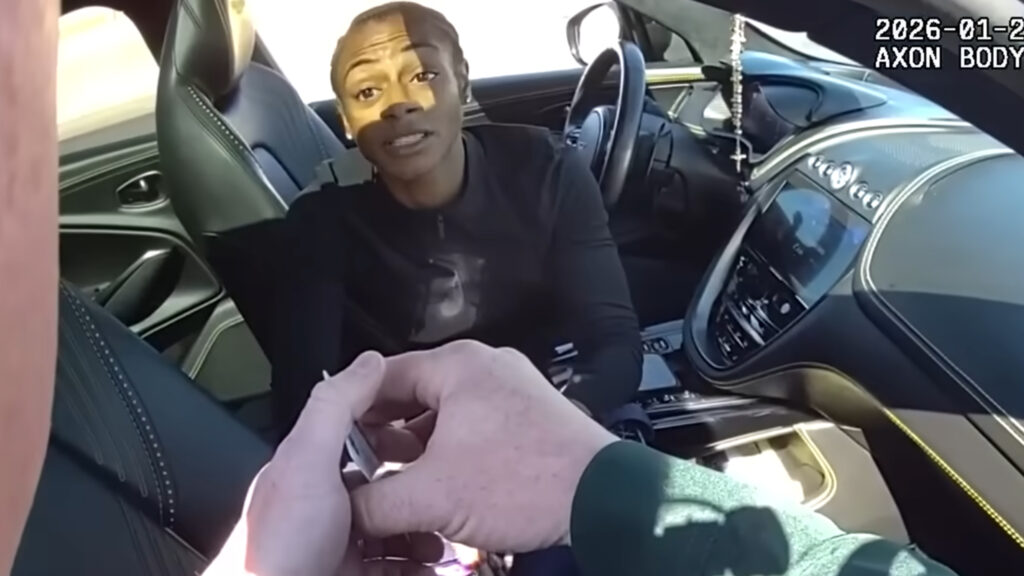
Olympic sprinter Sha’Carri Richardson learned firsthand that money and a luxury car do not exempt one from responsibility for dangerous driving. Florida police detained her after she sped her Aston Martin DBX SUV up to 104 miles per hour (167 km/h) on the highway.
Details of the Pursuit and Arrest
Body camera footage from January 29 shows Richardson initially passing an unmarked police car at about 80 mph, then accelerating to 104 mph on a section of SR 429. The officer, who pursued her in an unmarked Ford Mustang GT, immediately stopped the violator.
The athlete was detained under Florida’s strict “super speeder” law, which carries heavy fines and potential jail time for those exceeding speeds over 100 mph or driving more than 50 mph over the posted limit.
Attempt to Avoid Responsibility
In video published by local media, Richardson can be seen begging the officer not to send her to jail. She initially claimed she accelerated due to low pressure in one of her rear tires (29 psi). Later, she admitted to being distracted by her phone but emphasized her Aston Martin was in normal mode. To which the officer replied:
“mode has nothing to do with your gas pedal”
.
The officer did not negotiate, informing the athlete she was headed to jail and her car would be towed. She was booked into the Orange County pre-trial detention facility on a charge of reckless speeding, with bail set at $500. She quickly posted bail and was released but is now required to appear in court on February 26.


Arrest of Olympic Partner
Reportedly, another Olympian, Christian Coleman, who is Richardson’s partner, arrived at the scene in his own car shortly after her stop. Police claim he interfered with the traffic stop procedure, leading to his arrest as well. Officers have information that a “glass smoking device” was found in his car’s center console.
This incident serves as another reminder that celebrity status or athletic achievements do not grant immunity from the law, especially when it comes to road safety. Similar cases in Florida, which has enhanced legislation, often receive widespread publicity, highlighting zero tolerance for extreme speeding. For professional athletes, whose careers depend on physical readiness and public image, such offenses can have serious consequences far beyond fines or court hearings.