 by
by Ohio: Violation Cameras Bring in Millions Despite Laws
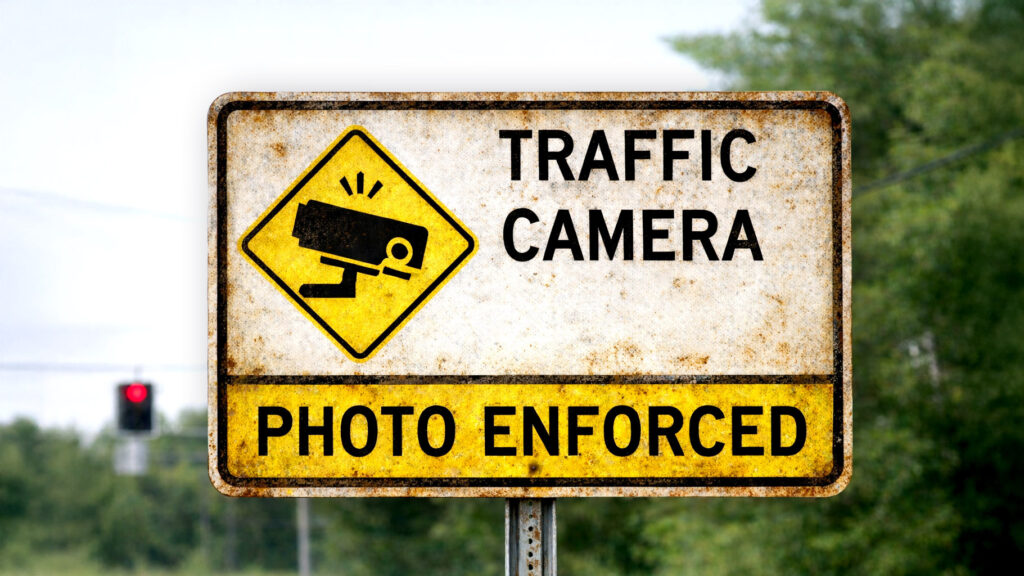
Ohio legislators have made efforts to eliminate financial interest from automated driver fines, but many cities nonetheless continue to reap significant profits. New data shows that 15 communities in the state operate traffic cameras and receive millions of dollars annually, even though the law was meant to make this financially pointless.
For every dollar a city receives from camera fines, the state deducts a dollar from its local government fund. Theoretically, this should turn cameras into a zero-sum game.
School Zones as a Revenue Source
However, in practice, many cities still keep them. The main loophole is stationary cameras in school zones, which are exempt from this financial penalty and have become the primary target for automated enforcement.
Obtained documents reveal just how uneven the “camera economy” is. At the top of the list is Newburgh Heights, a small village with only two cameras on Harvard Road. These two poles brought in a staggering $4.3 million in one year.
Records obtained by Cleveland reveal just how uneven the camera economy is.
Following it is East Cleveland with approximately $2.9 million from about a dozen locations, while Dayton received $2.4 million from 15 sites across the city.

Large Profits and Minimal Revenue
Next comes Linndale, a village of roughly 100 residents, which somehow squeezed nearly $2.3 million from a single camera on Memphis Road. Parma installs cameras only in school zones but still received over $1.5 million, while five cameras in Parma Heights, also located near schools, brought in $841 thousand.
With such an ability to “print money,” it’s surprising that Ohio’s cameras aren’t advertising their own $997 “just copy me!” course on Instagram to teach other boxes on poles how to boost their revenue.
But not every city was so lucky. Some cameras barely covered their electricity costs. Higginsport, with a population of 215, collected about $87 thousand, while Liverpool Township received only $370 from two fines, earning the dubious honor of being Ohio’s least profitable trap. Somewhere a printer sat idle for a whole year, while others worked overtime.
The situation in Ohio vividly demonstrates how legislative initiatives aimed at protecting citizens can have unforeseen consequences due to the creation of exceptions. The school zone loophole, initially intended to enhance child safety, has de facto turned into a stable source of funding for certain municipalities. This raises questions about real priorities: is traffic safety the primary motive, or does economic benefit still play a decisive role? The disparity in revenue between communities also points to differences in approaches to implementing and using the technology, which may require additional regulation at the state level to ensure uniform standards and transparency.