 by
by Pros: Excellent design, hides its weight well, superb handling.
Cons: Cheap interior trim, muted V6 sound, harsh gear shifts.
Model Evolution
The Audi S5 has undergone an almost two-decade-long journey of development, transforming from a powerful V8 coupe into a technological grand tourer with a hybrid powertrain. During this time, the model has changed several body styles and powertrains, expanding its role in the Audi lineup.
The first generation debuted in 2007 with a 4.2-liter naturally aspirated V8, initially as a coupe, followed later by Sportback and cabriolet versions. This engine was later replaced by a 3.0-liter supercharged V6.
The second-generation S5, released in 2017, received a new 3.0-liter twin-turbo V6, abandoning the supercharger.
2026 Technical Specifications
The third-generation S5, introduced last year, received an updated engine with a 48-volt mild hybrid system. The model is now offered in sedan, Sportback, and wagon (Avant) body styles, effectively replacing the A4, while the coupe and cabriolet have temporarily disappeared from the lineup. The S5’s core mission remains unchanged: to combine high performance with comfort for long journeys and daily driving.
Variants and Trims
The new Audi S5 is already on sale in Australia in sedan and wagon versions. The tested Edition One sedan is a more affordable launch version. The regular S5 sedan and Avant versions cost significantly more, making the Edition One an attractive option for budget-conscious buyers.
All versions are equipped with the same 3.0-liter turbocharged gasoline V6 with mild hybrid technology, which includes an 18 kW electric motor and a 1.7 kWh battery. The total output is 362 hp and 550 Nm, which is only slightly more than the previous generation’s figures.
Exterior and Interior

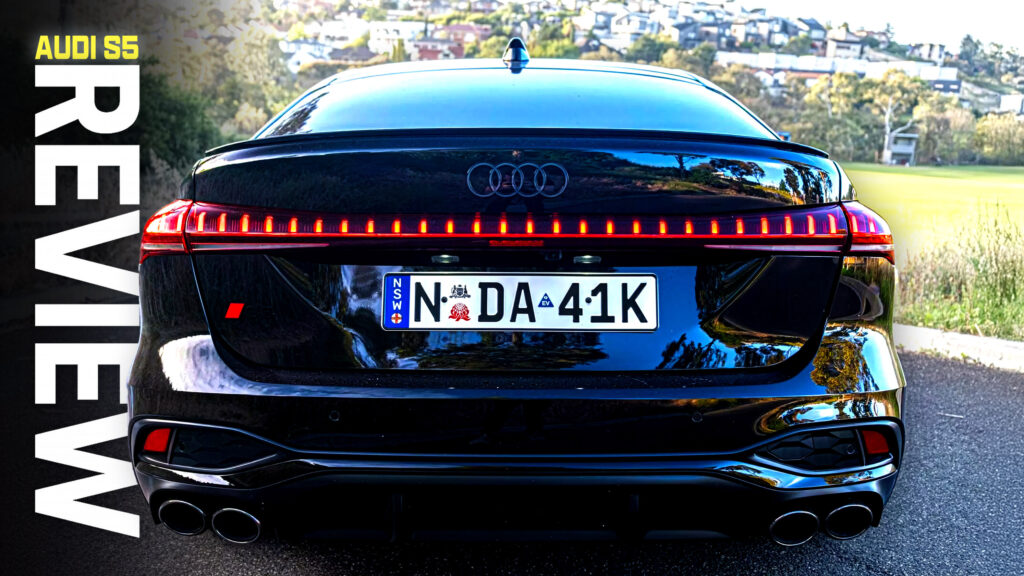
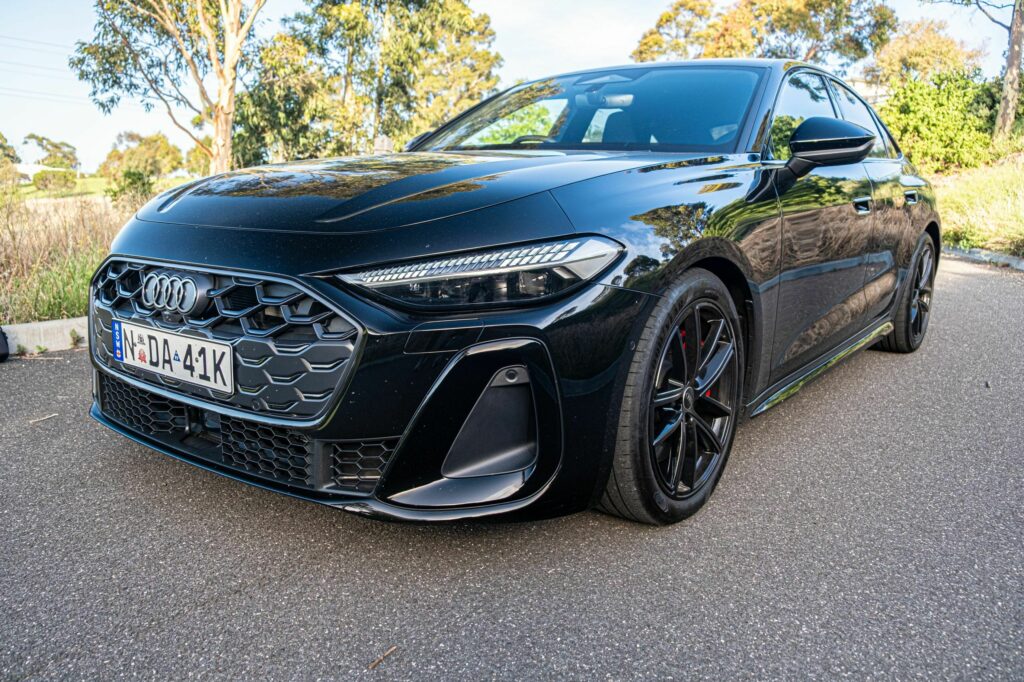
The exterior of the new S5 and the entire A5 family looks almost perfect. Compared to its predecessor, which looked somewhat bulky, the new model has become more refined and stylish. The latest S5 interior also has many advantages, although it doesn’t feel as premium as in some of Audi’s more senior models.
The cabin, like in other new Audis, is dominated by three screens on the dashboard: an 11.9-inch digital instrument cluster, a 14.5-inch media screen, and a 10.9-inch display for the passenger. All three screens are excellent, and it’s nice that Audi is sticking with the curved display concept. Wireless Apple CarPlay and Android Auto are standard.
However, some interior elements raise questions. Audi continues to use glossy black plastic on the center console tunnel, which easily gets dirty. The steering wheel’s touch-type buttons are also inconvenient to use. Fortunately, for the 2026 European market, Audi is updating the steering wheel, bringing back physical switches.
The interior also has too many areas finished with cheap black plastic, which somewhat diminishes the overall sense of premium quality. On the other hand, the soft leather on the dashboard and door panels, along with Alcantara elements, create a pleasant atmosphere.
Front seat space is excellent, and the driver’s seat can be lowered quite low. However, the sloping roofline limits headroom in the rear seats. The trunk volume is 417 liters, which is an average figure. Overall, the cabin is a pleasant place to be, although its premium feel could be higher.
Driving Experience
Despite the lack of an RS badge, the new S5 is a very fast and engaging car to drive. It demonstrates excellent performance and is the most agile S5 in history.
The mild hybrid system is quite active. At low speeds, for example when parking, the S5 can move on electric power alone. While driving, the V6 works flawlessly in tandem with the battery and electric motor. However, the engine sound is quite muted, even during spirited driving, which may be disappointing. One also needs to get used to the sound of the electric motor during hard acceleration.

The claimed 0-100 km/h acceleration time of 4.5 seconds was surpassed during testing—GPS confirmed a result of 4.3 seconds. Users of the launch control function should warn their passengers, as the shifts into 2nd and 3rd gear are very harsh and noticeable.
Despite its significant weight of over 2 tons, which is 200 kg more than its predecessor, the car behaves excellently on the road. Many all-wheel-drive Audis of the past were prone to understeer, but the new S5 is free from this flaw. Audi engineers have achieved neutral handling, and when exceeding the grip limit, the rear axle loses control first, which is easily corrected by adding throttle.
The standard suspension on the Edition One version (adaptive suspension is available on regular S5 models) provides excellent handling and comfort, despite its firmness. The dual-clutch transmission works smoothly and precisely at high speeds and also has no issues with jerkiness at low speeds.
The claimed average fuel consumption is 7.2 L/100 km, but such a figure is only achievable on the highway. Over a week of testing, the average consumption was 13.1 L/100 km.
Verdict
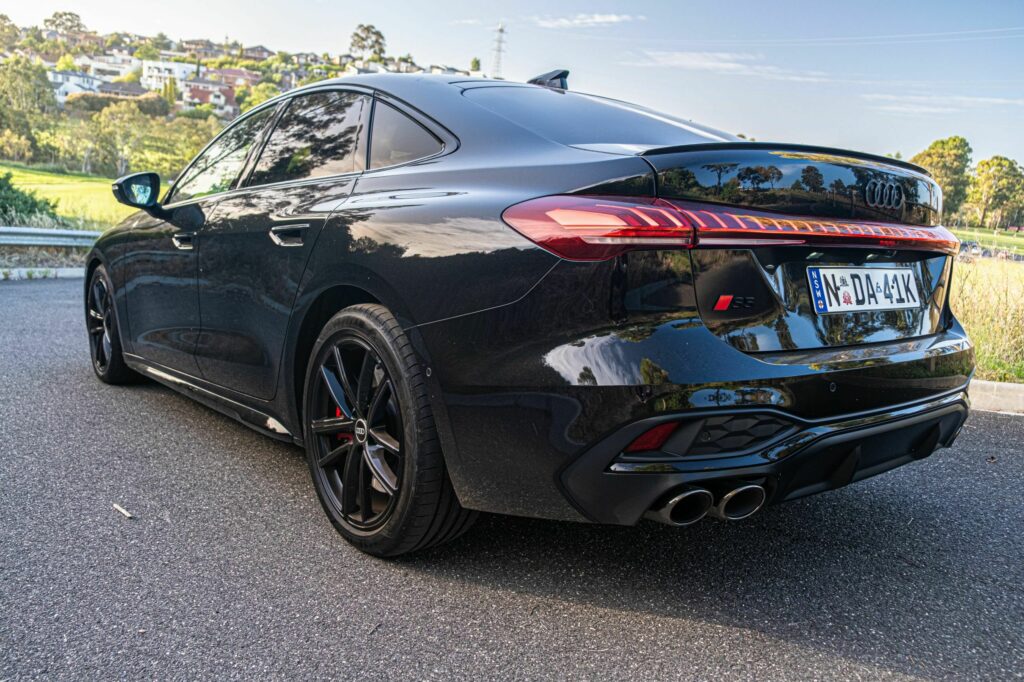
The new Audi S5 sedan is significantly different from previous versions, but that doesn’t make it any less appealing. The hybrid powertrain requires some getting used to, but its efficiency and performance are beyond doubt. The model’s main advantage has become its refined and engaging handling. Although some aspects of the interior leave something to be desired, the S5 successfully fulfills its core task.
The transition to hybrid technology and new body styles reflects the overall trend in the automotive industry towards electrification and the universalization of model lineups. The loss of options like the coupe and cabriolet may disappoint brand enthusiasts, but the arrival of the sedan and wagon makes the model more accessible to a wider range of families seeking a combination of sportiness and practicality. The car’s significant weight is compensated by intelligent weight distribution and an improved all-wheel-drive system, making it an example of how modern technology can enhance the driving experience, even in heavy cars.