


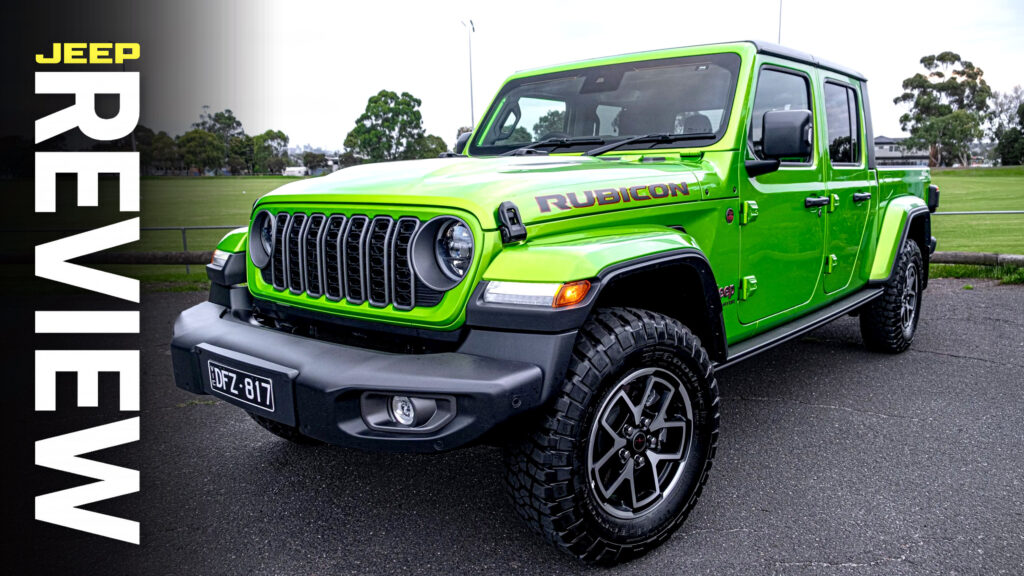
Advantages: A true off-roader, bold design, removable body panels.
Disadvantages: High cost, very long, insufficient towing capacity.
A Unique Pickup for Adventure
Few pickups on the market so actively encourage owners to head into the wilderness as the Jeep Gladiator. Equipped with the same removable panels as the smaller Wrangler and in Rubicon trim—with powerful tires—it is perfectly suited to disappear into the mountains and conquer challenging off-road trails.
The reality for most owners is different. The Jeep Gladiator, like most other off-roaders, spends more time in traffic jams than on rocky passes. It needs to be comfortable on the highway, practical enough for daily trips, and maneuverable enough for parking near stores.
The powerful Jeep Wrangler with a V8 engine just got cheaper by $10,000.
After spending a week with the 2026 Gladiator, it became clear that it excels at the tasks it was created for but has compromises in other areas. However, it provides a unique pickup ownership experience with no direct competitors.
Quick Facts About the Model
As in the USA, the Gladiator was previously sold in Australia in several different variants. In 2026, the situation has changed. It is now available exclusively in the Rubicon configuration and equipped with the familiar 3.6-liter Pentastar V6 naturally aspirated engine.

Price and Competitors
Priced at 82,990 Australian dollars (about 56,800 US dollars) before on-road costs, the Gladiator stands out among other mid-size pickups. Its most logical competitor is probably the Ford Ranger Raptor, but it costs approximately 8,000 Australian dollars (5,500 US dollars) more, has a significantly more powerful engine, and more advanced suspension.
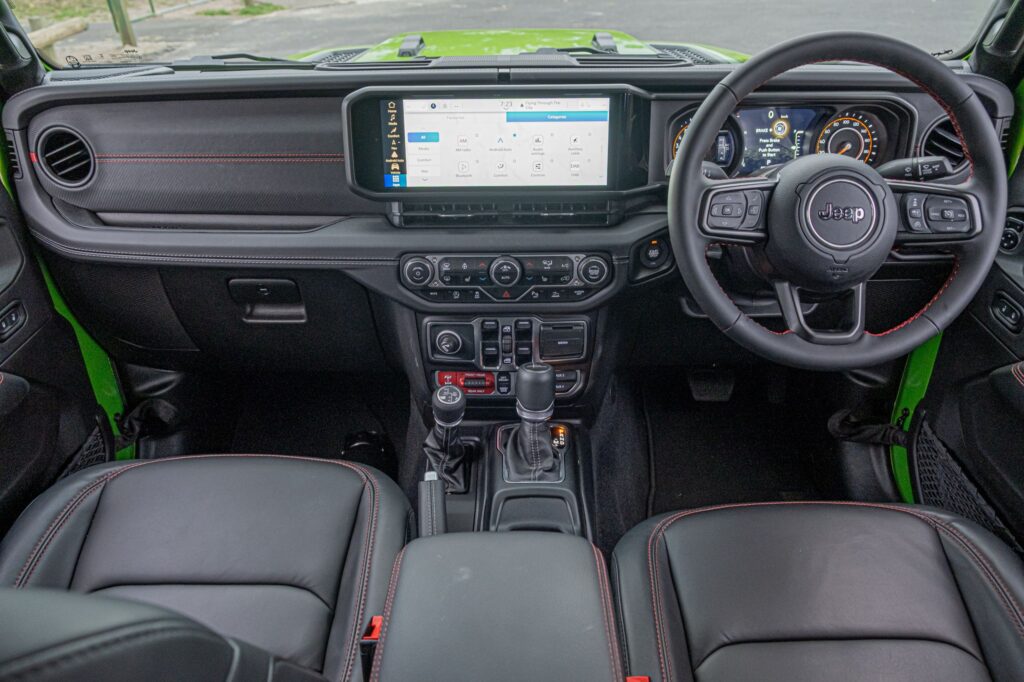
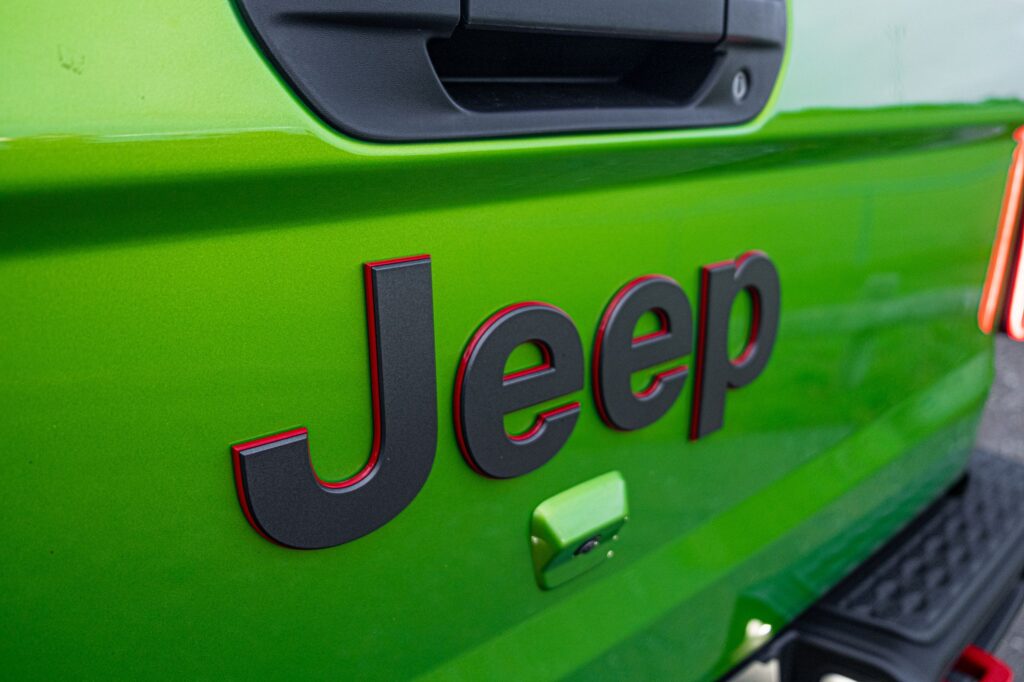
The test model was painted in Mojito! Green, a color Jeep introduced for the Gladiator only in 2025 but which has long been available in Australia. Equipped with Rubicon graphics, 17-inch wheels, and off-road tires, it is seriously set up for work.
Familiar Cabin with Updates
Inside, the Gladiator’s cabin has changed very little since its debut. The most obvious update from Jeep was the installation of a larger 12.3-inch multimedia system screen.
This screen is excellent, using the company’s latest software with a deep menu system, numerous dedicated pages for off-road driving, and wireless Apple CarPlay and Android Auto. It contrasts with the rest of the interior, which is very traditional and old-fashioned but has its own special charm. The only other screen is a small display located between two analog gauges.
Recent experience driving modern electric vehicles with minimalist interiors, where you can barely find a button, makes switching to the Gladiator a bit of a shock.
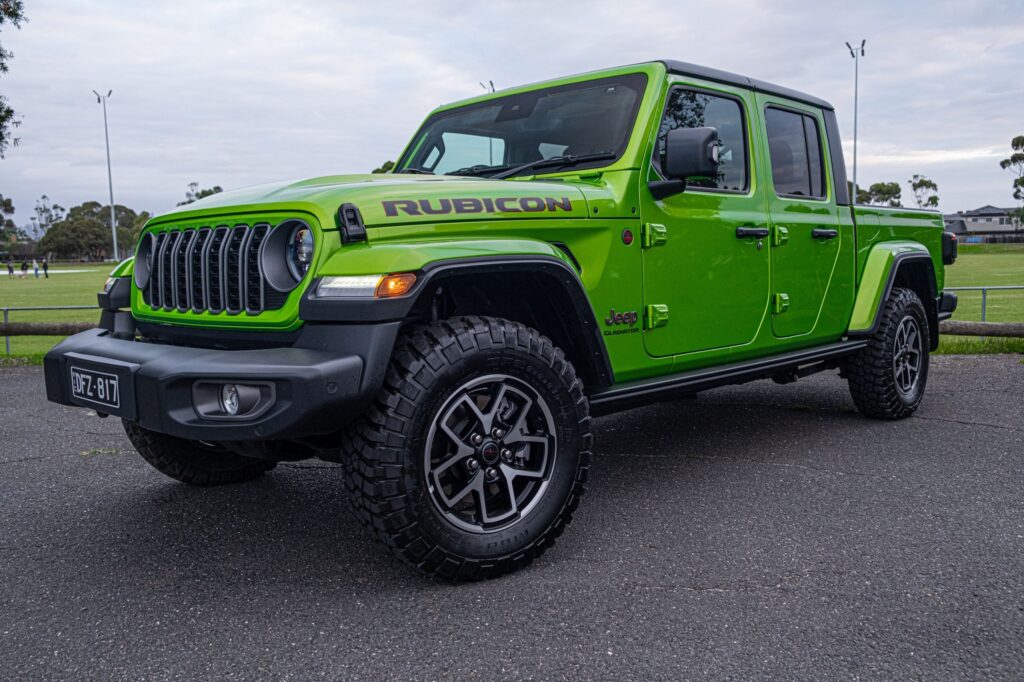
The dashboard and console are replete with physical buttons for climate control and various off-road settings. While it may seem excessive at first, you quickly get used to them, and using them is a pleasure, especially compared to modern screen-dominated interiors.
As in the Wrangler, getting into the Gladiator requires taller drivers to tilt their heads to avoid hitting the roof pillar. It’s a bit annoying but quickly becomes a habit. Overall, the interior quality is high, but the seats leave something to be desired and do not provide sufficient support.
Space and Practicality
Given the impressive dimensions of the Gladiator (over 5.5 meters long and a wheelbase of almost 3.5 meters), it’s no surprise that the rear row is simply palatial. Legroom is excellent, and there is even a small sliding rear window, although it cannot be operated from the front like in the old Nissan Navara.
The cargo bed has modest dimensions and is smaller than that of more traditional competitors in this segment. The payload capacity of 693 kg and maximum braked towing capacity of 2721 kg also fall short of competitors, where this figure is usually closer to 3500 kg.
An Off-Roader, But What About the Road?
The driving and daily use experience of the Gladiator turned out to be interesting, with obvious advantages and disadvantages.
The 3.6-liter V6 engine produces 280 hp and 347 Nm of torque—respectable figures but not impressive, considering the pickup’s size and weight of over 2.2 tons. The engine has a rather raspy, bassy growl and feels more powerful than the newer 2.0-liter turbocharged engine, even despite having less torque. However, it is not particularly thrilling and obviously cannot compete with the crazy twin-turbo V6 from the Ranger Raptor.
In the city and on the highway, its power is sufficient; drivers will never have difficulty merging into traffic. The engine is paired with an eight-speed automatic transmission that handles its tasks but is not particularly quick to shift.
Fuel efficiency is not this engine’s strong suit. The manufacturer claims an average consumption of 12.4 L/100 km, but test results showed 14.7 L/100 km.
Compromises in Road Manners
Partly due to the massive 33-inch BFGoodrich tires and solid axles, the Gladiator is not as comfortable or refined on the road as some competitors—which, however, should not be surprising. The steering feels imprecise, almost devoid of feedback, and tire roar at speed quickly becomes tiresome.
The Jeep Wrangler Rubicon 392 is a muscle car that can climb rocks.
It’s a bit disappointing that Jeep Australia no longer sells versions of the Gladiator other than the Rubicon, with more road-oriented tires. After all, I’ve seen many Gladiators on the roads but haven’t seen a single one on an off-road trail, unlike numerous Wranglers.
King of Off-Road
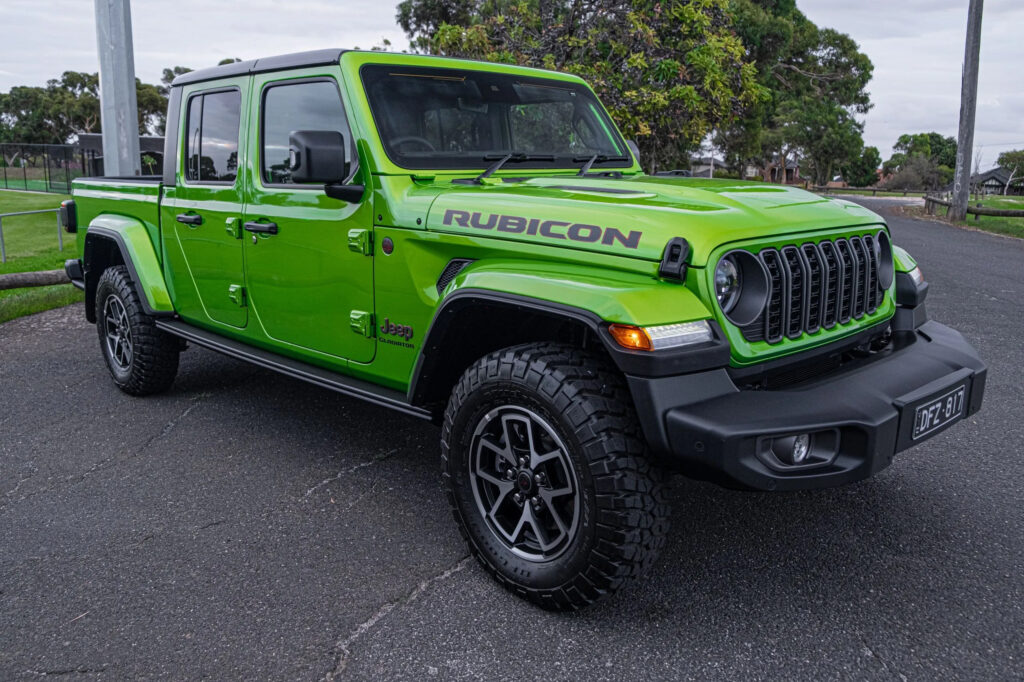
Off the asphalt, the Gladiator feels at home. Like the Wrangler Rubicon, it is equipped with the Jeep Rock-Trac 4×4 system with a 4:1 low-range gear ratio, electronic locking differentials on both axles, and an electronic disconnecting front sway bar. It also offers excellent suspension articulation and up to 281 mm of ground clearance.
As Jeep describes in its materials, the Gladiator is “ready for the impossible,” and that’s exactly how it feels on the trail. It seems there is no obstacle it cannot overcome: massive boulders, fallen trees, rough dirt roads, or steep climbs and descents. It can also ford water up to 800 mm deep straight from the dealer’s showroom.
One not-so-great thing when heading off-road in the Gladiator is its enormous length, which complicates navigation on narrow, winding trails.
However, all the off-road prowess of the Gladiator affects its on-road behavior, and it does not handle basic tasks like towing or carrying heavy loads as well as competitors. Buying a Gladiator is not a rational decision but a decision of the heart.
Sales and Daily Use
Sales statistics from the USA show that many people do exactly that, even despite the model’s age. Last year, over 56,000 units were sold, more than the 42,125 in 2024 and 55,187 in 2023. Although sales have declined from the peak of 89,712 units in 2021, the Gladiator still meets the needs of many buyers.
On the road, the driving experience turned out to be surprisingly pleasant, and some of the harshness typical for vehicles in this segment was avoided. The ability to remove the roof panels with a few latches and unscrew the door panels with a special key is another nice feature that no other pickup can boast.
Conclusion
The Jeep Gladiator may be a bit outdated, but, like the Wrangler, it has a timeless appeal that guarantees its desirability, even if some technical solutions and technologies are starting to seem outdated.
Selling it in only one high-spec configuration in Australia seems like a mistake and perhaps explains the fact that only a few hundred units were sold on the local market last year, easily making it the least-selling pickup. However, if you need a