


Pros: Design, legroom, handling
Cons: Comfort, trunk, control elements, price
Update for Tough Competition
The European compact SUV market is oversaturated and extremely competitive, leaving no room for missteps. This is likely why Renault didn’t wait long and presented the updated Austral, aiming to strengthen its appeal among numerous rivals.
We recently had the chance to test the top-of-the-line Esprit Alpine version, equipped with the most powerful hybrid setup in the lineup, to understand whether this updated French contender can hold its ground.
Place in the Lineup and Dimensions
Renault’s European lineup includes nine SUVs and crossovers, many of which have similar sizes. The Austral is 4,532 mm long, placing it slightly above the Symbioz (based on the Captur) and slightly below the mechanically similar Espace.
Quick Facts
Model: 2026 Renault Austral Hybrid E-Tech 200
Powertrain: Self-charging hybrid, turbocharged 1.2-liter three-cylinder engine, two electric motors
Total Power: 197 hp (146 kW / 200 PS)
0-100 km/h Acceleration: 8.4 seconds*
Top Speed: 180 km/h*
Fuel Consumption (during test): 6.5 l/100 km*
Length: 4,533 mm
Width: 1,830 mm
Height: 1,645 mm
Wheelbase: 2,667 mm
Weight: 1,538 kg*
Price (Greece): from €42,000
Sportier and More Aggressive Look
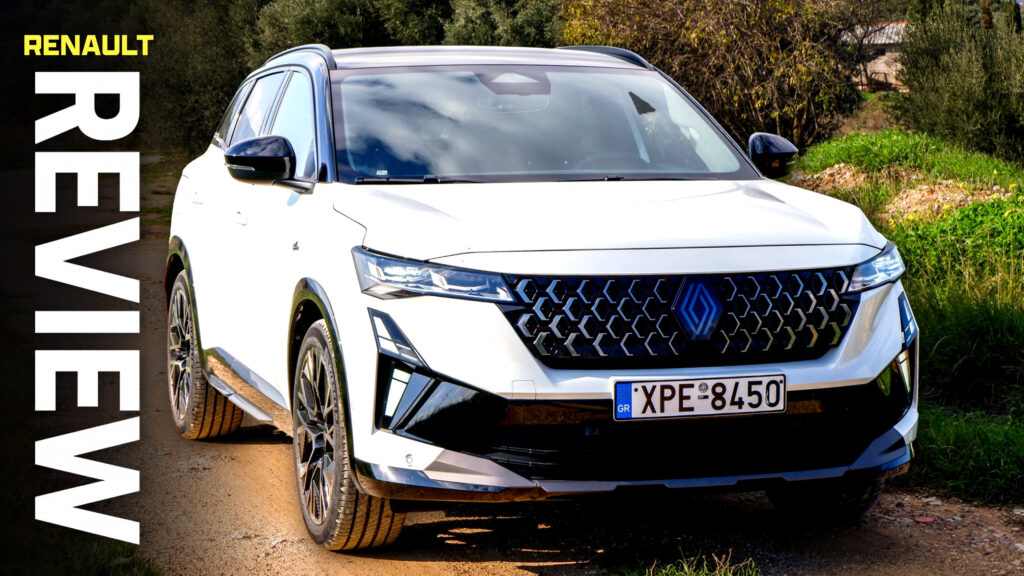
Since its debut in 2022, the Austral replaced the soft contours of the discontinued Kadjar with a more angular and sharp design. The updated model, presented three years later, has sharpened these features even further with a more aggressive front end featuring sleek LEDs and a sportier bumper reminiscent of the flagship Rafale.
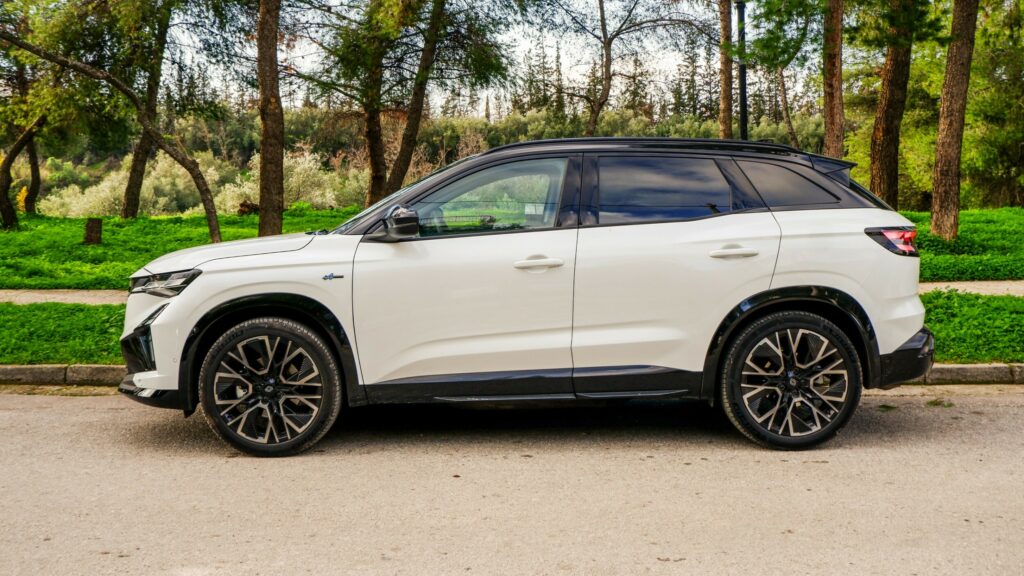
The side view is almost unchanged, but the new rear lights are smaller and spaced further apart. The 20-inch alloy wheels, black roof, and special Esprit Alpine badging complete the sporty and premium image.
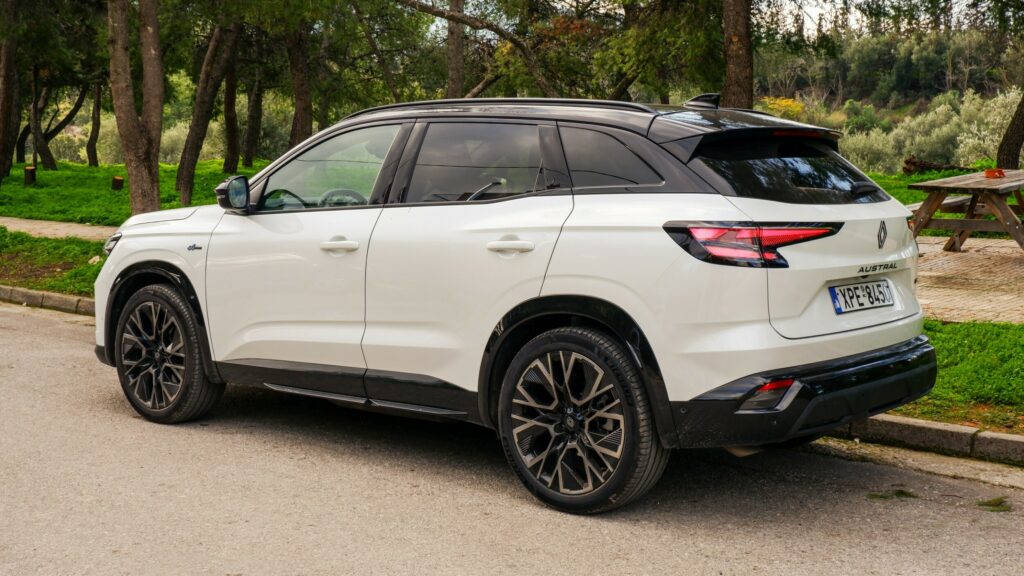

Many believe that certain Peugeot traits are evident in the updated model. This is a result of the work by Renault’s current design chief, Gilles Vidal, who spent many years shaping the image of the rival brand with the lion emblem.
Class-Leading Legroom and Plenty of Tech
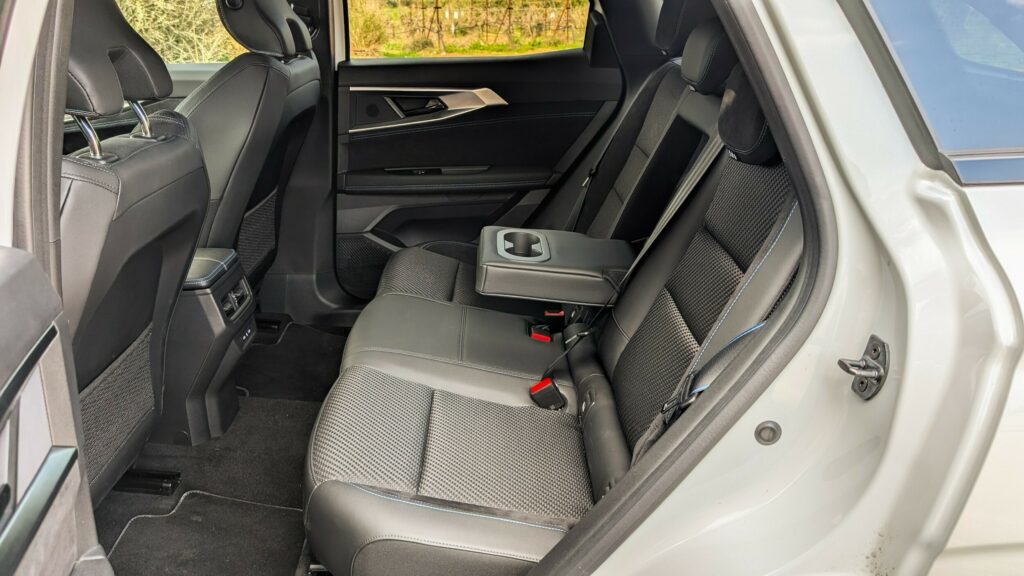
Inside, the Austral immediately showcases its advantages as a family SUV. Rear legroom is among the best in its class, aided by a sliding rear bench that allows for increasing either passenger space or trunk volume. This flexibility might be needed, as the trunk isn’t particularly large. In hybrid versions, it starts at 418 liters, while in the mild-hybrid version it increases to 657 liters.
The OpenR digital panel remains virtually unchanged compared to the pre-facelift model. It includes a 12.3-inch driver’s display, a 12-inch multimedia screen, and an optional head-up display. The Google-based software runs smoothly, has clear graphics, and an intuitive menu. More importantly, Renault hasn’t gone down the path of completely eliminating physical buttons, retaining a row of climate control keys below the screen, making daily use much more convenient.
Unfortunately, the same cannot be said for the volume controls. They are touch-sensitive and confusingly organized, making simple adjustments much more irritating than they could be. The system also separates different audio types, including media, navigation, and calls, requiring constant switching and distracting attention.
The perceived quality of materials approaches a premium level, especially in the Esprit Alpine trim, where Alcantara inserts on the seats, door panels, and dashboard create a more refined feel. Ambient lighting that changes depending on the driving mode adds to the atmosphere. Standard equipment includes a full suite of driver assistance systems, although the lack of a 360-degree camera seems a noticeable omission at this price point.
Compact but Potent Powertrain
Every Austral is equipped with some form of electrified powertrain and front-wheel drive. The base configuration is a mild-hybrid 1.3-liter turbocharged four-cylinder engine with 148 or 158 hp. However, our test car had the flagship E-Tech 200 hybrid, which offers the most powerful available powertrain.
This system combines a 1.2-liter turbocharged three-cylinder engine with two electric motors, a compact 2 kWh battery, and a multi-mode automatic transmission. Total power is 197 hp, which on paper provides a 0-100 km/h acceleration in 8.4 seconds.
In everyday use, the Austral feels more dynamic than the numbers might suggest. The electric motors provide good low-end torque, helping the SUV move smoothly around town, often even without the internal combustion engine. At highway speeds, the cabin remains well-insulated, and the powertrain operates smoothly and unobtrusively.
With calm driving, the hybrid Austral can be surprisingly economical, averaging less than 6.5 l/100 km in a mixed cycle. Renault claims it can travel up to 1100 km between refueling stops, a significant plus for long trips.
Driving Impressions
Handling is one of the Austral’s strong points, aided by the CMF-C/D platform, confident braking, and fairly direct steering response. The latter could benefit from a greater difference between driving modes, which mainly change the cabin visuals and throttle response rather than steering feel.
Ride comfort suffers due to a stiff suspension, especially on uneven Athenian streets. The 20-inch wheels and low-profile tires on the Esprit Alpine trim only amplify the discomfort, and even the base model’s 19-inch setup doesn’t seem an ideal solution for family duties. At the same time, drivers in European regions with smoother roads might not notice serious issues.
The Austral is available with four-wheel steering and a multi-link rear suspension, although the standard configuration we tested is more than sufficient for most usage scenarios. To keep prices in check, Renault did not offer the option of an adaptive suspension, which is available on the larger and more expensive Rafale.
Pricing and Competitors
Our test took place in Greece, where the base mild-hybrid Austral starts from €34,900. This is several thousand euros more expensive than competitors like the Citroën C5 Aircross, Kia Sportage, Peugeot 3008, and Ford Kuga, which typically start around €31,000–32,000. The Austral’s price aligns more with the Mini Countryman and is slightly lower than the new Volkswagen Tiguan, which starts from €35,980.
The more powerful and economical Austral Hybrid E-Tech 200 starts from €42,000 and reaches €45,900 in the Esprit Alpine version. Adding a few options, it’s easy to approach the €50,000 mark. At this level, it already encroaches on the premium segment, overlapping with models like the BMW X1, Mercedes-Benz GLA, and Volvo XC40, which is serious competition for buyers who value brand image and high residual value.
Verdict
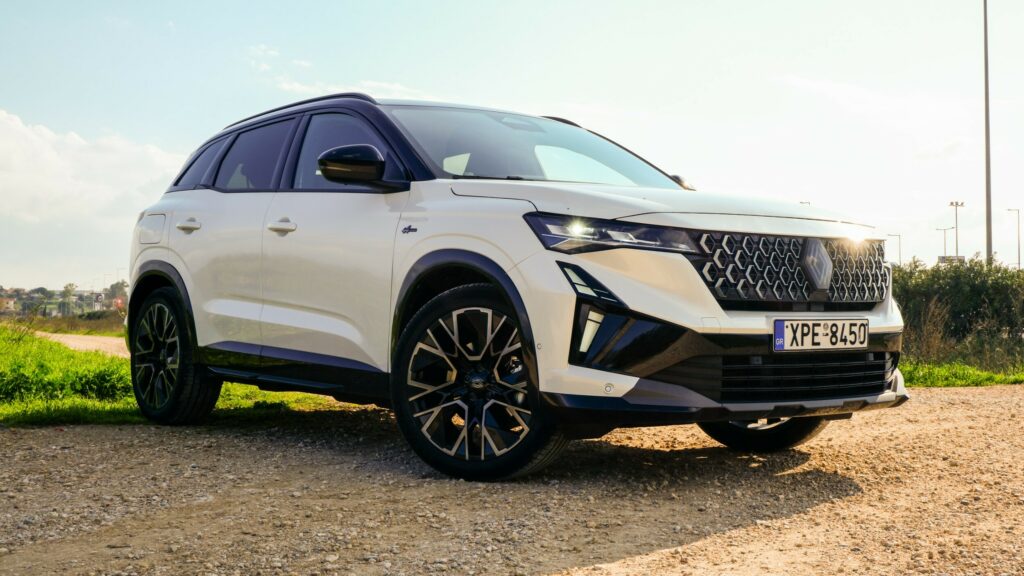
The Renault Austral E-Tech 200 is a harmonious all-rounder that successfully distances itself from its ‘relative’ the Nissan Qashqai and significantly surpasses the previous-generation Kadjar.
The updated model has received a more expressive and refined design, a spacious cabin, and a multimedia system that is genuinely pleasant to use. The hybrid powertrain performs better than its displacement might suggest, and the handling is worthy of its segment, giving real substance to its sporty exterior.
Some compromises prevent it from becoming a class leader, including the stiff suspension, certain ergonomic shortcomings, and, most importantly, the price, which approaches the premium segment. Nevertheless, for buyers seeking more individuality and refinement in a family SUV, the Austral is a compelling proposition.
The Austral update clearly demonstrates Renault’s strategy to elevate the model’s status and compete at a higher level. The focus on design, cabin quality, and hybrid technology is a response to modern market demands. However, the key challenge remains balancing ambitions with real value for money, especially when the cost of high-end trims begins to compete with established premium brands. The model’s success may largely depend on how willing buyers are to appreciate Renault’s technical advantages and design over the traditional prestige of other brands.