


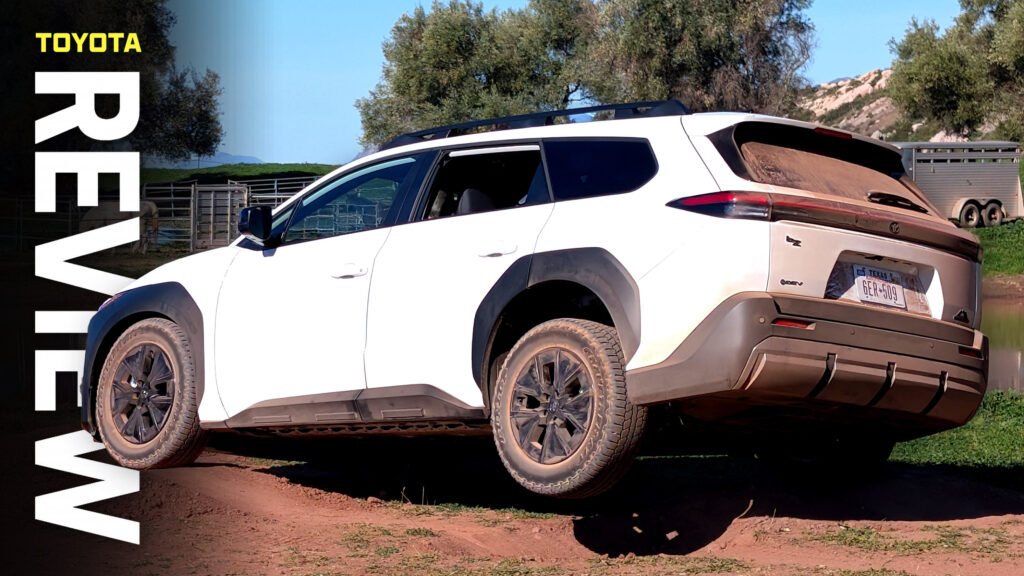
Pros: Versatility, genuine speed, quiet cabin.
Cons: Tight rear seat space, the Trailseeker model is cheaper, polarizing design.
New Electric Crossover from Toyota
Toyota remains one of the few brands that continues to delight enthusiasts. Models like the Land Cruiser, GR Corolla, and GR Supra prove this. However, for environmentally conscious buyers with families, there have been no similar offerings in the company’s electric lineup until now. The bZ Woodland model aims to change that.
It’s easy to think this is just another trim with black plastic cladding and roof rails that imitates capability more than it provides it. After all, Toyota is still far from a serious breakthrough in the fully electric vehicle market. This off-roader, which resembles more of a raised wagon reminiscent of old Subaru Outbacks, could seriously change that situation.
Technical Specifications and Capabilities
Positioned above the standard bZ, the Woodland version gained nearly 15 cm in additional length, unique wheel arches, standard all-wheel drive, and 213 mm of ground clearance. This is only 2.5 cm less than the base Tacoma pickup, and the pickup cannot boast standard 375 horsepower and a 0-100 km/h acceleration time of 4.4 seconds.
QUICK FACTS
Model: 2026 Toyota bZ Woodland
Starting Price: $45,300 (excluding delivery)
Dimensions: 4830 mm (length) x 1860 mm (width) x 1620 mm (height)
Wheelbase: 2850 mm
Weight: 1985–2020 kg
Powertrain: Two electric motors / 74.7 kWh battery
Power: 375 hp (280 kW)
0–100 km/h Acceleration: 4.4 seconds
Transmission: Single-speed
Efficiency: 21.0 kWh/100 km (test results)
Market Launch: First half of 2026
On paper, this could be the car that elevates Toyota’s electric ambitions to a new level. It’s a family car that also appears to be quite capable off-road. Clearly, the manufacturer has also thought about its on-road behavior. But does it live up to expectations in the real world?
Exterior Design
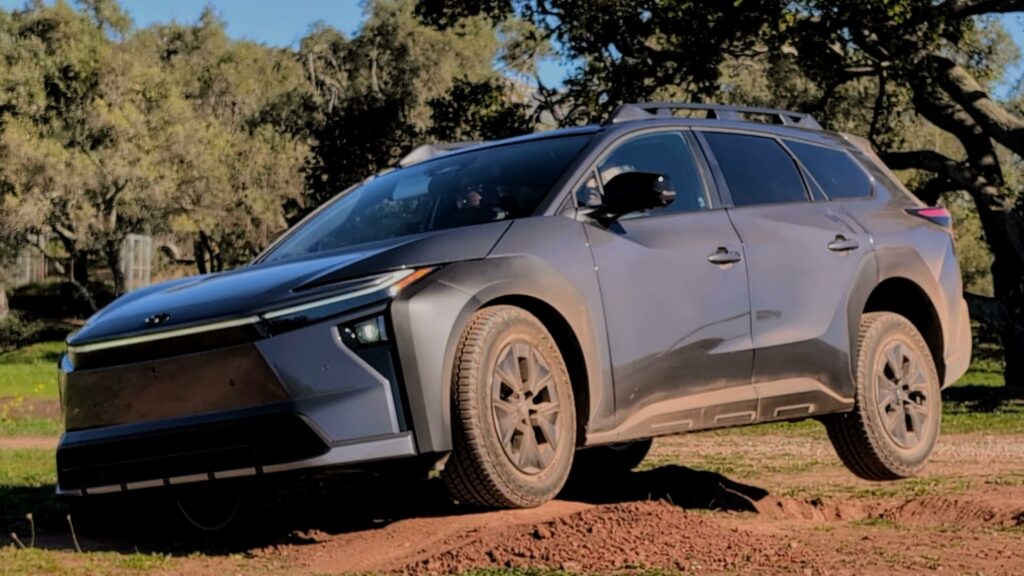
From a distance, the bZ Woodland looks restrained and utilitarian. Some will like its design, others will find it too imposing. The black plastic cladding might look better when the car gets dirty. Overall, the design is not a radical departure from Toyota’s previous work.
The distinctive “hammerhead nose,” first introduced on the new Prius, is present here and complemented by an LED light bar and daytime running lights. There’s also a lot of plastic on the sides and rear, even an imitation diffuser and another LED light bar.
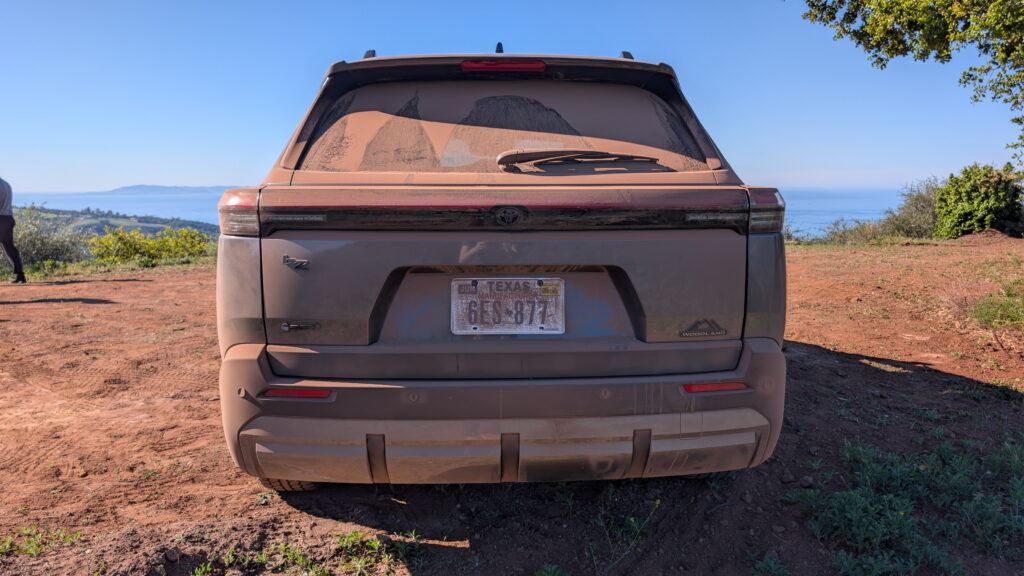

If the shape reminds you of a Subaru, it’s no coincidence. This off-roader rolls off the same production line as the Subaru Trailseeker. They share a common platform, but visually, the Toyota’s design looks more cohesive.
Interior and Ergonomics
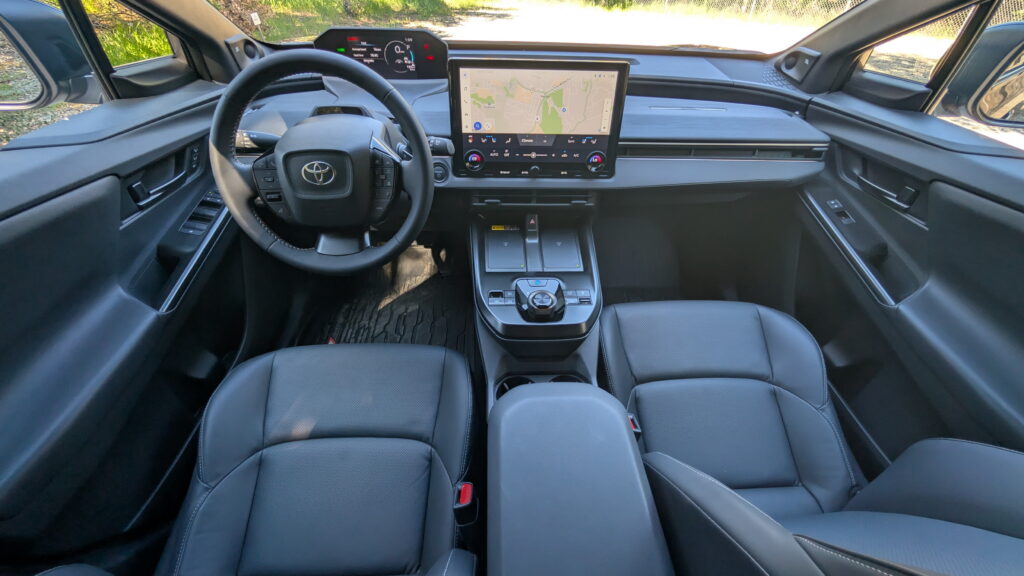
The interior strikes a balance between utilitarian and respectable. The materials feel quality, though not luxurious. The texturing on the edges of the dashboard and door cards adds visual interest to a space that could otherwise be very plain. The color palette is mostly monochrome—black, except for an optional brown shade.
The cabin layout is straightforward. The infotainment system with a 14-inch screen dominates the dashboard. It’s fast, intuitive, and, fortunately, supported by physical buttons for key functions. The steering wheel is equipped with many buttons, including regenerative braking adjustment, making it busy but logical.
A potential issue for shorter drivers is the limited steering wheel adjustment. It can block part of the instrument cluster. Another odd solution is the drive mode selector lever: you need to press a ring and then turn it. Up front, there are two wireless phone chargers—a nice touch for daily use.
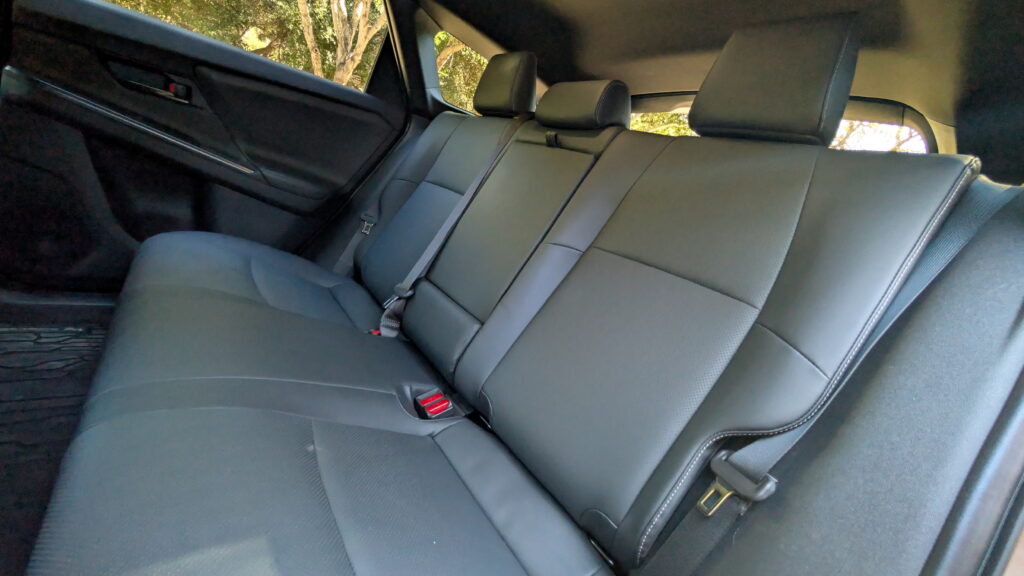
The rear seat space turned out to be unexpectedly tight for a car of this size. Passengers of average height will be comfortable, but taller people are better off sitting in the front.
The cargo area compensates for the rear seat’s shortcomings. With the seats folded, the volume is 74.9 cubic feet, which is a lot. For example, you can fit a full-suspension mountain bike inside without removing the front wheel. Furthermore, the car can tow a trailer weighing up to 1588 kg.
Technology and Charging
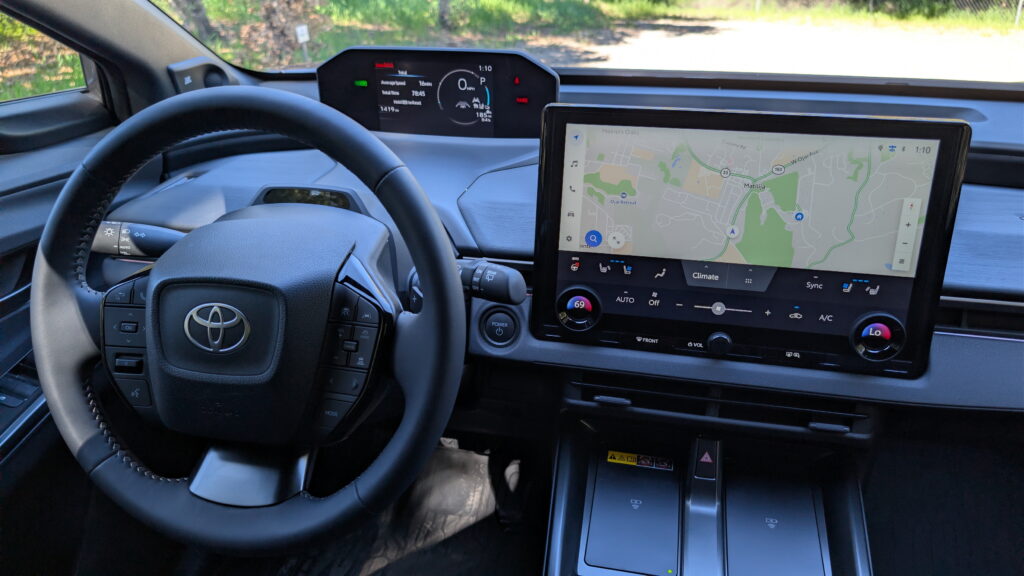
The Woodland trim is well-equipped. The 14-inch touchscreen runs the latest Toyota software with support for wireless Apple CarPlay and Android Auto. The system is fast. There’s also dual Bluetooth connectivity, a Wi-Fi hotspot, and an optional JBL audio system.
Charging is done via an NACS standard port, providing access to a wide network of fast charging stations. Under ideal conditions, charging from 10% to 80% takes about 30 minutes. There’s also a battery preconditioning function and Plug & Charge for simplifying the process.
Paddle shifters allow adjusting the intensity of regenerative braking on the fly. The Toyota Safety Sense 3.0 suite of safety systems is standard, along with blind-spot monitoring, rear cross-traffic alert, a panoramic camera with a monitor for different surfaces, and other features.
Driving Impressions
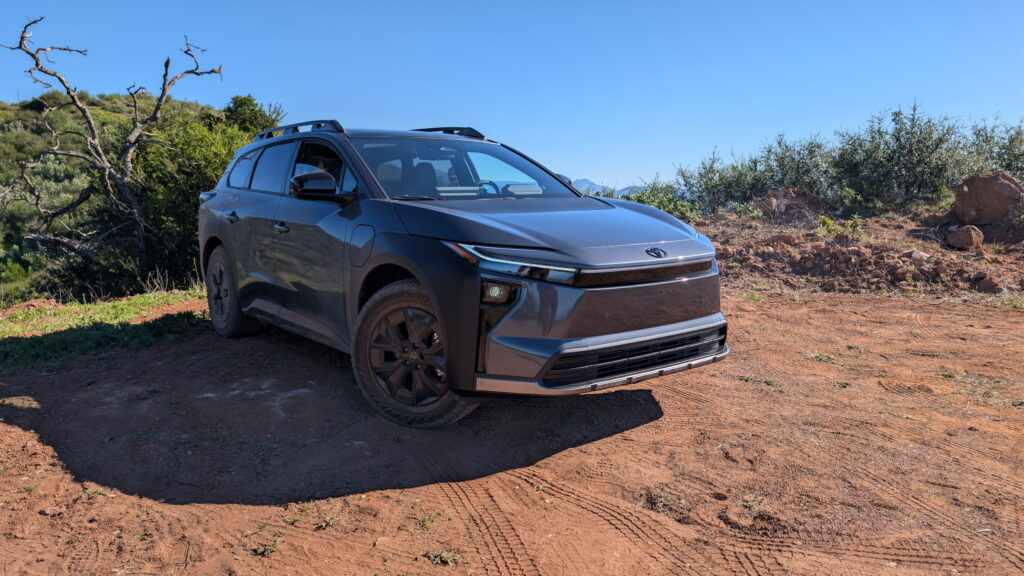
It’s behind the wheel where the bZ Woodland pleasantly surprises. It’s unusual for Toyota to emphasize a 0-100 km/h time of 4.4 seconds. For comparison, that’s faster than the GR Corolla (4.8 s), and almost as quick as the manual GR Supra (4.2 s). However, the real trick of this car is not its speed, but its versatility.
On steep dirt roads, it climbed confidently. On an off-road trail with deep ruts where a wheel often hung in the air, it slowly but surely found traction and moved forward. The traction control function works like low-speed cruise control for difficult sections, maintaining a slow crawl without constant pedal input.
On asphalt, it’s exactly what most buyers want: quiet, smooth, stable. Even on optional off-road tires, the noise level is impressively low. Is it exciting to drive? Not exactly. But it’s precise and predictable enough not to draw complaints. Visibility is good, handling is balanced, feedback is predictable.
Range and Efficiency
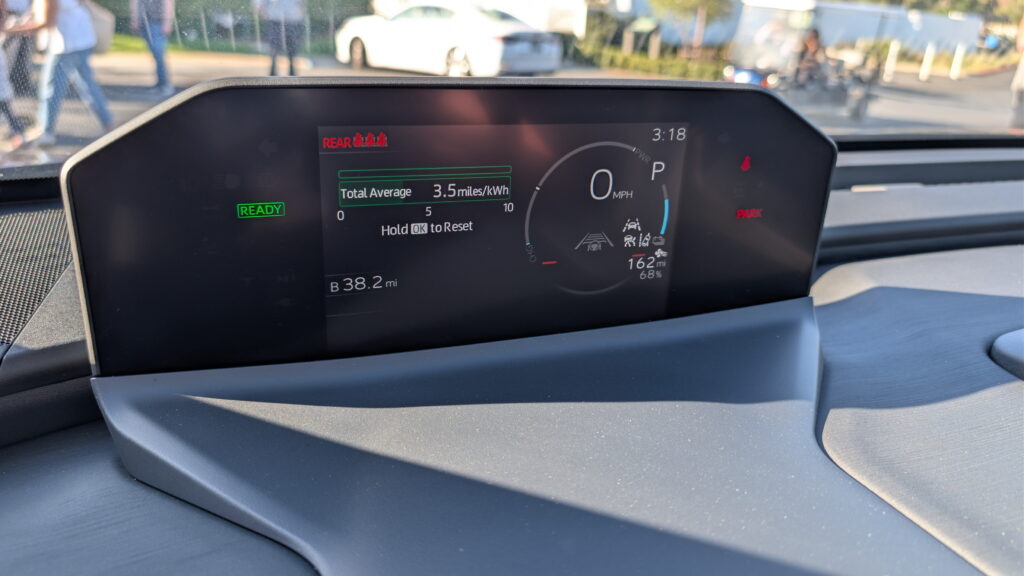
The claimed range is up to 452 km, or 418 km with optional off-road tires. During one of the test drives on a car with such tires, consumption of 3.5 miles per kWh was achieved. Considering the 74.7 kWh battery, this potentially gives 420 km on a single charge under the same conditions. This can be considered a success, given that the testing took place in real-world conditions on the winding roads of California.
Competitors and Market Positioning
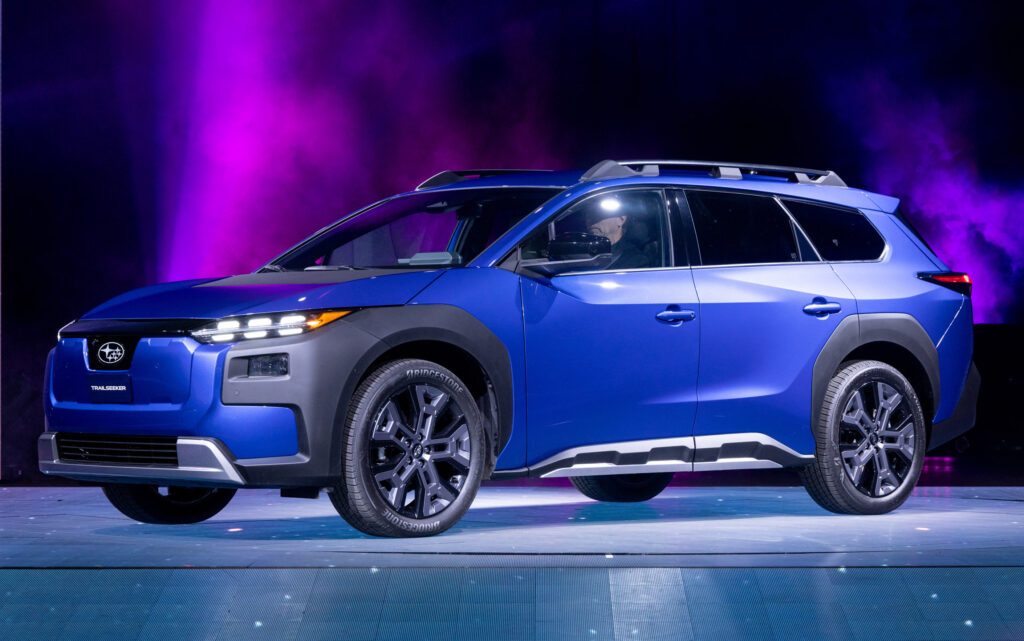

Undoubtedly, the main competitor for the bZ Woodland will be the Subaru Trailseeker. This model, positioned as an electric version of the Outback, costs about $5000 less ($39,995 vs. $45,300) and has the same core components, battery, and all-wheel-drive system. They are expected to be practically identical in how they drive.
Beyond this, there aren’t many electric off-roaders in this niche on the market. The upcoming $45,000 Rivian R2 will likely be the closest analog, as it also combines off-road capability with comfort. However, it lacks the brand recognition and loyalty that Toyota has, as well as a wide dealer and service network.
Other manufacturers like Tesla, Ford, Chevrolet, and Honda have electric crossovers, but none of them have the same emphasis on off-road capability. Some, like Tesla, also cannot match Toyota’s 1588 kg towing capacity.
Summary
The bZ Woodland is reminiscent of cars like the Ford F-150: it’s very capable, but few will ever use even 80% of its potential. It’s hard not to notice how much Toyota DNA has been successfully infused into this crossover. The original bZ4x didn’t feel like a true Toyota, whereas…