


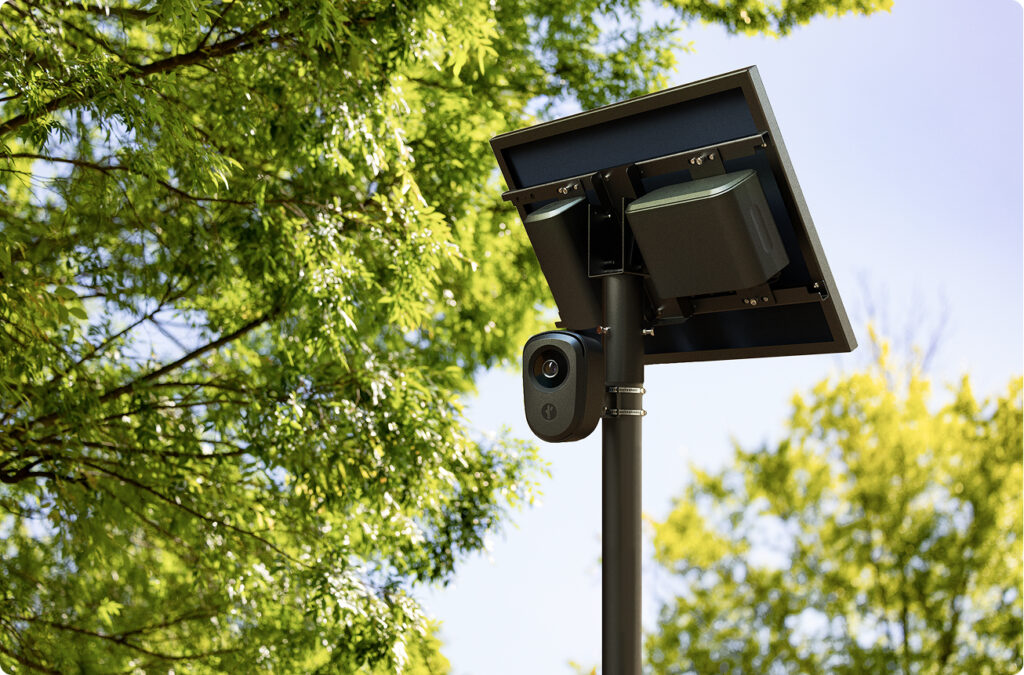
Oakland Police Received Over One Million Flock Camera Alerts
Last year, the Oakland Police Department received over 1 million alerts from Flock cameras. Officers were forced to turn off stolen vehicle notifications because they could not handle the volume. This situation raises questions about technologies sold as a means to increase police efficiency.
System that Overwhelmed the Police
When police departments purchase automated license plate recognition systems, one of the main advantages is that the technology helps officers do more with fewer resources. However, in Oakland, California, officials encountered a different problem. The system generated so many alerts that officers could not keep up with them.
According to a recently published report from the Oakland Police Department, the city’s Flock Safety camera network generated 1,099,837 “hot list” alerts during 2025. More than 620,000 of these flagged stolen license plates. The volume of alerts spiraled so far out of control that Oakland Police reportedly turned off stolen vehicle and license plate notifications because the department lacked the staff or resources to respond to them.
Sold as a “Force Multiplier”
This is significant given how automated license plate recognition systems are typically marketed. Police departments, elected officials, and Flock itself have repeatedly described the technology as a way to help understaffed agencies more effectively identify suspects and recover stolen vehicles. Theoretically, this sounds reasonable. Oakland Police simply disproved this by turning off the system.
This has not stopped Oakland Police from acknowledging the cameras as part of a broader crime-fighting strategy. During a recent meeting of the city’s Privacy Advisory Commission, Lieutenant Gabriel Urquiza stated that the technology is one element of larger efforts aimed at reducing violent crime.
What the Numbers Really Mean
Not everyone agrees on what these numbers actually mean. Some critics, reported by Oakside.org, argue that the total number of alerts can be misleading, as a single stolen vehicle can trigger multiple alerts as it passes numerous cameras over days or even weeks. In other words, the number of alerts does not necessarily reflect the number of unique stolen vehicles on the roads.
One critic, Brian Culbertson, noted:
“This Flock executive who misunderstands their own software is actually giving the perfect example of how useless Flock is. Only 3,000 cars were stolen in that time period, but Flock sent 70 times more alerts for Oakland Police to sort through. Flock is useless noise at that rate.”
Of course, this distinction became a point of debate after Flock’s Chief Strategy Officer, Rahul Sidhu, commented on social media that with such a volume of alerts, any department would struggle to cope with limited resources.
The Challenge of Modern Policing
Regardless of which side you are on, Oakland’s experience highlights a problem facing modern policing. Technology can generate vast amounts of information, but data collection is only useful when that data is actually correct, and if confirmed, only if local departments have enough officers to respond to it.

The situation in Oakland demonstrates that even the most advanced technologies cannot replace human resources. When a system generates over a million alerts per year, and most of them turn out to be false or duplicates, it not only creates a burden on officers but also undermines trust in the technology itself. By turning off the alerts, Oakland Police effectively acknowledged that the system was not fulfilling its promised function—to help, not hinder. This also raises questions about the cost-effectiveness of such systems, especially in cities with already limited budgets. Perhaps the future of such technologies lies not simply in increasing the number of cameras, but in smarter tuning of algorithms that would filter alerts and provide only truly important information that the police can process.