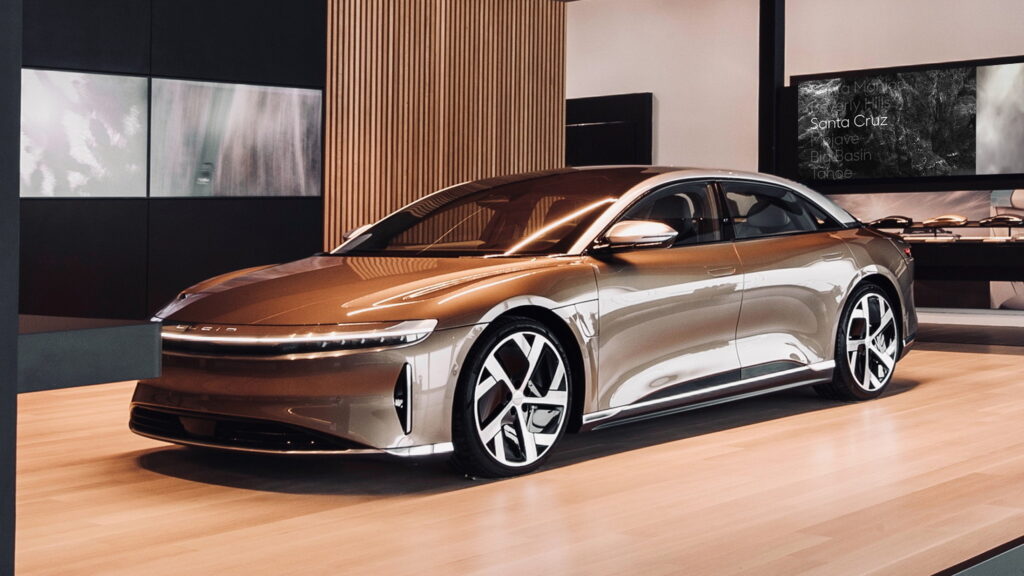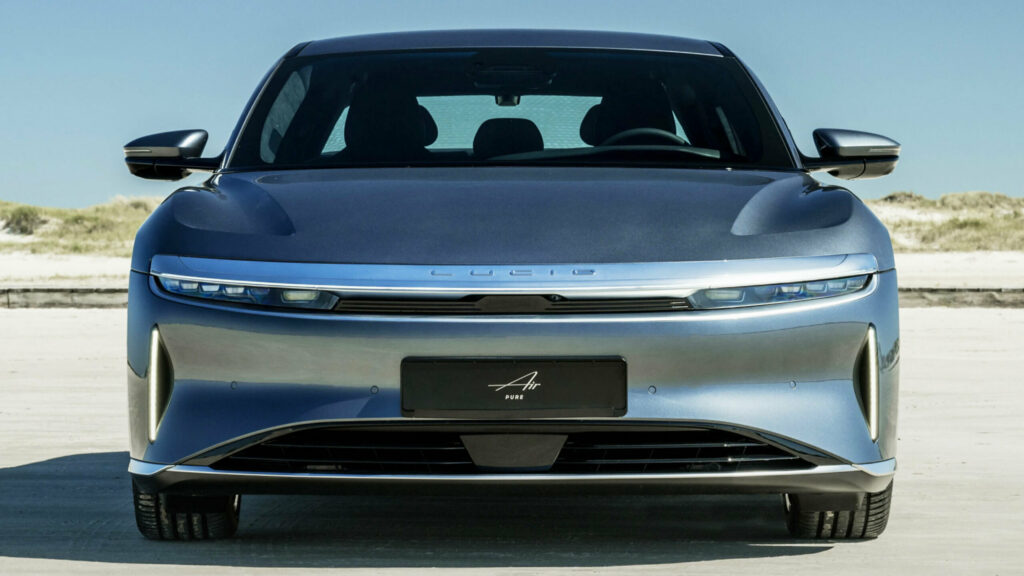
Lucid recalls over 2,000 Air electric vehicles due to risk of power loss
Lucid has once again found itself in the spotlight due to safety issues. In recent weeks, the electric vehicle manufacturer has faced a series of troubles: from the buyback of a car from well-known blogger Jason Fenske due to numerous malfunctions to recalls over improperly secured half-shaft bolts. Now, the company has announced a new recall, again involving the Air model.
Issue with Gen 4 inverters
As with the April recall, this one only affects rear-wheel-drive versions of the Air Pure. The manufacturer explains that these vehicles are equipped with fourth-generation (Gen 4) inverters, which may experience failures due to damage to internal connectors caused by friction.
If the connectors are damaged, this could lead to a complete loss of power, as the inverter will not be able to convert direct current to alternating current needed to run the motor. This is an obvious safety issue, especially if the failure occurs while driving.
In total, the recall covers 2,039 vehicles produced between September 13, 2023, and December 12, 2024.
Software update before replacement
Lucid first noticed inverter failures in March 2025 on vehicles operated by a fleet customer in the United States. Initially, it was believed the issue was related to intensive use in corporate fleets, as such cars accumulate mileage faster. However, this theory was not confirmed—soon, failures began to appear on privately owned Air Pure RWDs as well. By March 2026, the company had recorded 55 such incidents.
Instead of immediately replacing all inverters, Lucid plans to release an over-the-air (OTA) software update. It will detect potential failures and activate a warning on the instrument panel, which must be cleared by a dealer. Vehicles that receive such a warning will be eligible for an inverter replacement. Owners of cars without this warning will not be able to claim a replacement.
Additional context
This approach raises questions: instead of proactively solving the problem, the company is choosing a “detect first, fix later” strategy. This could create risks for drivers who do not receive a warning until the actual failure occurs. It is worth noting that Lucid has already had a similar incident with power loss, where the company simply alerted drivers to an impending problem rather than addressing it in advance. The situation is complicated by the fact that the Air Pure RWD is the base version of the model, which should be the most reliable due to its simpler design. However, it is becoming the source of the biggest technical issues for the brand, which could affect consumer trust in the young electric vehicle manufacturer.