


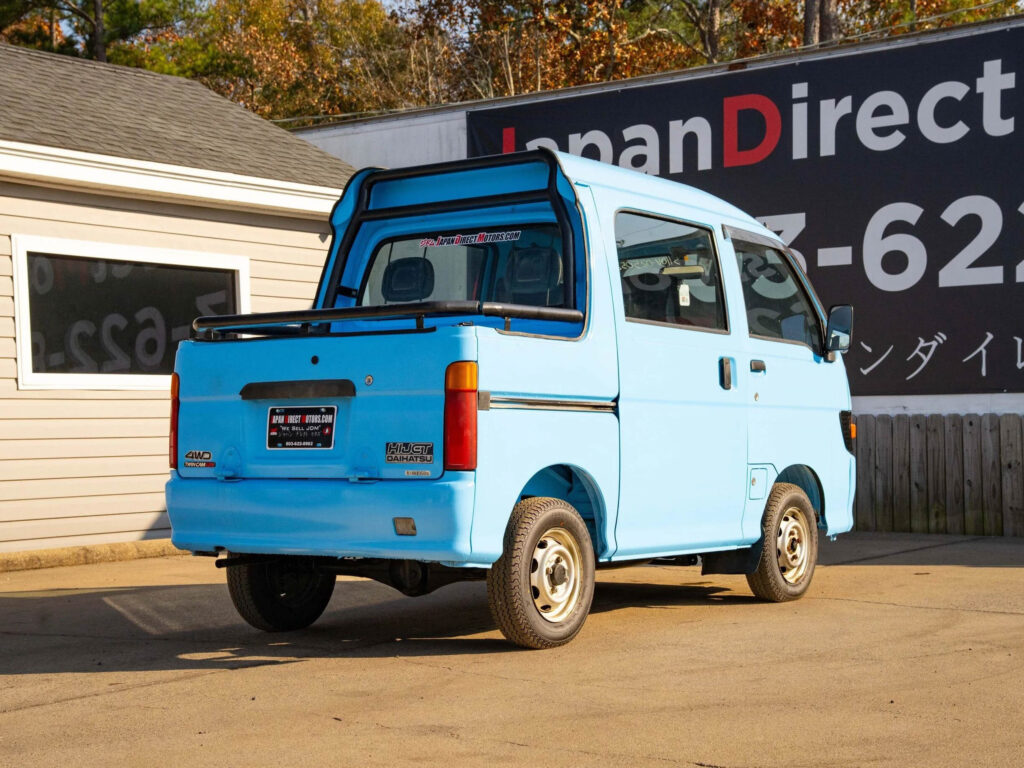
Miniature Japanese Hybrid: Daihatsu Hijet DeckVan
This 1998 model, the Daihatsu Hijet DeckVan, is a true representative of the Japanese domestic market (JDM). It is designed according to the strict norms of the ‘kei’ class, which limits both dimensions and engine power. Under the hood is a 660cc engine that delivers 44 horsepower to all four wheels via a 5-speed manual transmission.
Some vehicles clearly fit into a specific category: sports car, pickup, SUV, hatchback. However, this Daihatsu Hijet DeckVan seems to have wandered into a designers’ meeting somewhere in the middle, left before anyone made a decision, and somehow became both a van and a truck at the same time.
Currently listed for sale in the USA, this JDM Hijet is probably the smallest crew cab pickup we have ever seen. From the front, it looks like an ordinary eighth-generation Hijet van. There is seating for four, side windows behind the front doors, and all the visual appeal of a household appliance.
But move to the back, and everything changes. Instead of continuing into a conventional enclosed cargo area, the body ends abruptly and transforms into a tiny pickup bed. And we mean truly tiny. We don’t know the bed dimensions of this 1998 pickup, but its 2010s counterpart has a bed length of only 2 feet 10 inches (860 mm / 34 inches), and we are willing to bet the old one is just as miniature.
Compromise for Space
Traditional kei trucks are incredibly useful for their size, but most only accommodate two people. The 130-inch (3300 mm) long DeckVan sacrifices some cargo capacity to add a second row of seats with what seems like a generous amount of legroom. The rear bench seatback can also fold down. However, it seems Daihatsu missed an opportunity by not creating a pass-through hatch in the bulkhead for long items. You know, like huge 3-foot (910 mm) ones.
Since this is a kei-class vehicle, the three-cylinder engine hidden under the front seats has a displacement of just 660cc, the maximum allowed. Power was about 44 hp (44 PS) when new and is sent through a five-speed manual transmission to all four wheels. Wouldn’t want to have traction issues with all that power, would you?
Low Mileage and Neat Body
This example has about 69,000 miles (111,000 km) on the odometer and appears to be in surprisingly tidy condition for a commercial vehicle approaching its 30th birthday. The seller, Japan Direct Motors, claims the interior supposedly shows no significant wear, although we can spot a tear in the cushion under the reinforced seat covers. But the truly good news is that reportedly, there is no significant rust, dents, or scratches, and the paint looks sound.
At the price of $12,950, this Hijet DeckVan is not the cheapest imported kei car you will find, and it certainly offers less cargo space per dollar than other used trucks currently for sale in America. But how often do you get the chance to buy a vehicle that can carry four adults, haul a (small) load of mulch, squeeze into incredibly tight spaces, and start conversations everywhere it goes? Sometimes the most interesting vehicles are the ones that refuse to pick a lane.
This car is an excellent example of how Japanese manufacturers skillfully used the limitations of the kei class to create niche but extremely practical solutions. The combination of a cargo bed and a four-seat cabin makes it a unique tool for urban tasks or small farms where every centimeter of space is at a premium. Although its power seems laughable by modern standards, its light weight and all-wheel drive make it surprisingly capable in its element. The price may seem high, but it reflects the rarity of such a specific model on the American market, as well as its excellent condition for its age. For collectors or enthusiasts of unusual vehicles, this is not just a purchase, but a genuine piece of automotive history that can also be used as intended.