 by
by Launch of the First Malaysian Electric Car, Perodua QV-E
Malaysian automaker Perodua has taken a serious step towards electrification by introducing the QV-E model, which stands for Quest for Visionary Electric Vehicle. This subcompact crossover is the brand’s first zero-emission model and the first electric car developed in Malaysia itself. Competitors like Proton with its e.MAS models offer rebadged variants from Geely, while Perodua has invested significant funds in its own development.
The main features of the new model are:
This model also features a unique business model: buyers purchase the car but are obligated to lease the battery separately, which formally lowers the starting price but makes operation impossible without this key component.
The Path from Concept to Production Model
The development of the QV-E began in 2023, with total investment in research and engineering amounting to about $194 million. Initially, a large-scale concept model called EMO was presented, followed by hatchback and crossover prototypes. By May 2025, the design was finalized, and the public saw a prototype very close to the production version.
Design and Dimensions
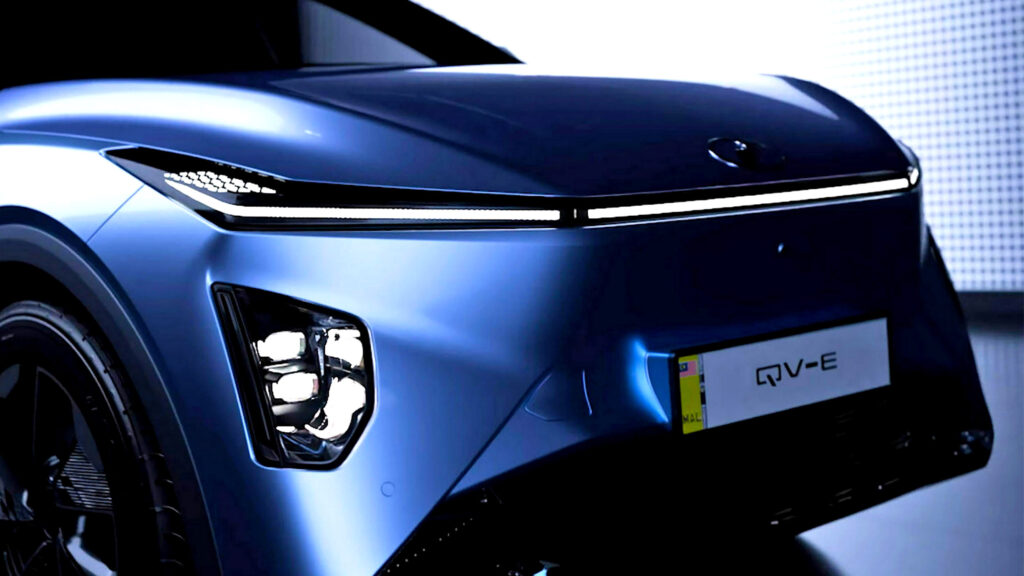
The Perodua QV-E is 4,170 mm long with a wheelbase of 2,680 mm, making it a compact crossover with a sporty stance. The front features split LED headlights, a sculpted hood, and muscular fenders. Its silhouette is reminiscent of the previous generation Toyota C-HR and the modern Nissan Juke, especially in the window line. The front door handles are integrated into the body, while the rear ones are hidden on the pillars.
The rear features a sloping roofline that flows into an LED light bar and an integrated diffuser. The car comes on 18-inch alloy wheels in two colors: Ice Blue and Caviar Gray.
Interior and Equipment
The interior is executed in a functional yet conservative style. Two 10.25-inch screens handle the multimedia system and instrument panel. A floating center console, ambient lighting, and aluminum-like trim attempt to liven up the atmosphere, but the overall impression remains quite economical. Safety is ensured by six airbags and a full suite of ADAS systems.
Technical Specifications and Purchase Conditions
The Perodua QV-E is built on a modular platform developed with the participation of Magna Steyr. A single electric motor with 201 hp and 285 Nm of torque drives the front wheels, accelerating the car from 0 to 100 km/h in 7.5 seconds. The lithium-iron-phosphate battery from CATL with a capacity of 52.5 kWh provides up to 445 km of range according to the NEDC cycle.
However, this battery is not included in the car’s price. Owners are obligated to sign a nine-year lease agreement, with a monthly fee of $67. Perodua’s CEO, Zainal Abidin Ahmad, notes that the Battery-as-a-Service (BaaS) model provides “a lifetime battery warranty for customer peace of mind” and reduces electric vehicle ownership anxiety.
Production and Market Prospects
Production will be deployed in Malaysia, starting with 500 units per month and increasing to 3,000 by the third quarter of 2026. It is planned that localization will reach 50% by early 2026 and increase to 70% by 2030. The Malaysian government aims to achieve a 15% share of electric vehicles in new sales by the end of the decade, creating a favorable environment for models like the QV-E.
The emergence of the Perodua QV-E demonstrates how developing countries can participate in the global transition to electric vehicles by offering their own developments. The battery lease model, although it raises questions about long-term savings for the buyer, is an attempt to make electric cars more affordable at the initial stage. The success of this strategy will depend on how convenient and cost-effective consumers find such a scheme compared to the traditional purchase of a full-fledged electric car. The development of domestic production and increased localization could also positively impact the country’s economy and create new technological competencies.