 by
by Tesla Robotaxi Crash Statistics
As might be expected, the Tesla Robotaxi autonomous taxi service is not developing as quickly as Elon Musk predicted and is not operating as flawlessly as the company hoped. New data indicates that Tesla’s autonomous vehicles operating in Austin, Texas, are involved in accidents significantly more often than human-driven vehicles.
According to figures submitted to the National Highway Traffic Safety Administration (NHTSA), Tesla robotaxis were involved in nine accidents from July to November of last year. During this period, the fleet covered about 500,000 miles, meaning an incident approximately every 55,000 miles.
Comparison with Human Drivers
This rate may not seem catastrophic at first glance. However, NHTSA data shows that human drivers report one police-involved accident approximately every 500,000 miles. If unreported incidents are taken into account, estimates suggest a more realistic figure—one accident every 200,000 miles.
Even by these more lenient measures, humans still significantly outperform Tesla’s current autonomous system.
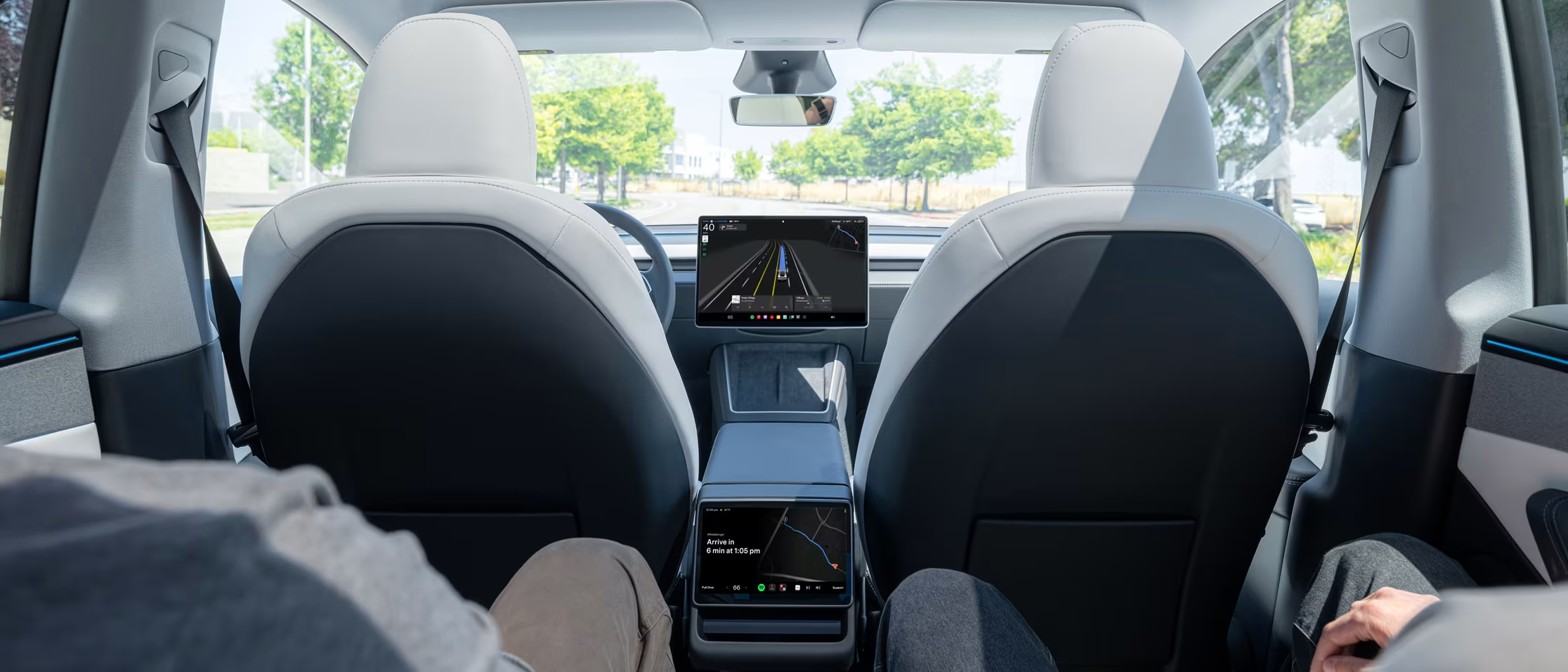
What is more concerning is that each robotaxi has a safety observer in the front passenger seat. Even with a human on board to intervene, the vehicles still get into more accidents per mile than human drivers typically do alone.
Data Transparency Questions
Tesla does not appear to be fully transparent about these accidents. Reports submitted to the NHTSA are heavily redacted, leaving only limited details accessible.
In one case from September 2025, it was reported that a robotaxi “collided with an animal at 27 mph,” but there is no information on how or why it happened. That same month, another vehicle was involved in a collision with a cyclist, although again, specific details are missing.
In total, Tesla reported nine accidents involving its Robotaxi fleet in Austin from July to November 2025. Here is a list of these incidents:
Slow Service Expansion
In July of last year, Musk made a rather absurd statement that the Tesla Robotaxi service would reach “half of the U.S. population” by the end of 2025. It is now 2026, and the service is still limited to just one city: Austin, Texas.
Tesla has expanded its service to the San Francisco Bay Area in California, but since it does not have a permit to operate fully autonomous vehicles in the state, each Model Y is equipped with a human driver. This can hardly be called a robotaxi service; it is more like a regular taxi-hailing service.
Nevertheless, Tesla is not abandoning the idea. During quarterly earnings calls this week, the company confirmed plans to expand the program to seven new cities, including Dallas, Houston, Phoenix, Miami, Orlando, Tampa, and Las Vegas, all in the first half of the year.
This safety data points to a critical stage in the development of autonomous technologies, where promises of rapid scaling collide with technical and regulatory realities. The gap between stated ambitions and current crash statistics could affect not only consumer trust but also future regulatory decisions regarding the deployment of such systems in urban environments. The success of further expansion will depend on the company’s ability to significantly improve safety performance, as operations in new cities will be under increased public and regulatory scrutiny.