


Teenagers used a driverless taxi to shoot toy guns, but the robot ‘turned them in’ to the police
Two 15-year-old teenagers from San Mateo, California, got into trouble after deciding to shoot toy guns while inside a Waymo driverless taxi. The robotic car independently called the police and parked in a lot, waiting for law enforcement to arrive.
How the robotaxi exposed the offenders
According to local media, the incident occurred on Monday afternoon. The teenagers were driving around the city, leaning out of the windows and shooting toy guns that looked real with small polymer Orbeez balls. Additionally, they were consuming alcohol inside the vehicle.
It is still unknown how Waymo became aware of the violation: whether the car independently detected suspicious activity, whether internal cameras triggered a signal to the dispatch center, or whether a passerby reported it. In any case, the driverless taxi independently pulled into a parking lot so that the police could safely detain the offenders.
Waymo’s technical capabilities
Waymo vehicles are equipped with internal cameras and microphones that can be used in emergency situations or for ‘enhanced safety,’ as stated on the company’s support page. However, the company assures that it does not use facial recognition or other biometric tools to identify passengers.
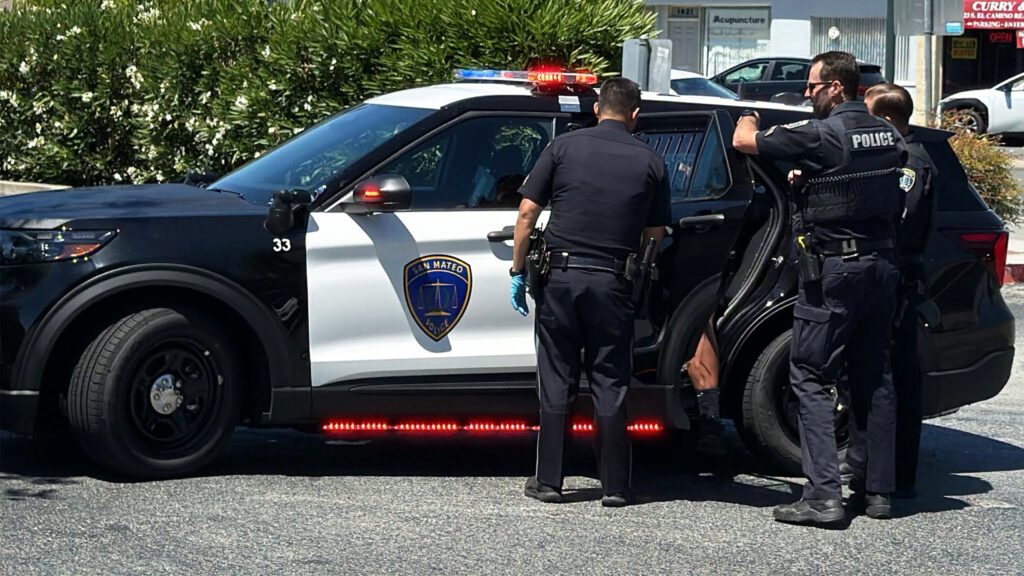
The San Mateo police arrived at the scene and approached the driverless vehicle with weapons drawn before making the arrest.
Dramatic arrest
‘There was a certain ingenuity in this scheme, but toy guns, water pistols, and air guns pose a real danger, especially to the untrained eye. Simply brandishing them can cause fear in passersby or those who cannot see them well. Shooting projectiles at speed can cause real harm. And let’s not forget underage drinking. Today, everything was a bad idea for these two,’ the police wrote on Facebook.
Law enforcement also addressed parents with an ironic remark: ‘Parents, do you know where your teenagers are? Waymo knows!’ At the same time, they acknowledged that ‘Waymo may have been the smartest choice because driving a car while intoxicated would have made everything much worse.’
Further actions and context
Local authorities have not yet reported whether the teenagers will face charges or if they will simply be warned. This incident occurred a few months after an unknown Waymo passenger used a driverless taxi to flee after stealing expensive sportswear from a yoga studio in San Francisco. In that case, Waymo had already deleted all camera recordings before the police contacted the company, so the perpetrator managed to avoid punishment.
This story demonstrates how autonomous driving technologies can not only ensure road safety but also act as a ‘witness’ to offenses. Although Waymo does not use biometric data, internal cameras and microphones allow for real-time monitoring of passenger behavior. It is worth noting that such incidents raise questions about the boundaries of privacy in autonomous vehicles and how companies should balance safety and user confidentiality. Furthermore, this case shows that even the most advanced technologies cannot fully prevent reckless teenage behavior, but they can help minimize its consequences.