


Incident with geese on the highway: what is known so far
Video of an Arkansas State Police officer allegedly running over two goslings was puzzling in itself. However, the public response from Arkansas State Police (ASP) Director Mike Hagar may have turned this story into a broader discussion about road safety, police discretion, and legal protection for wildlife. Hagar not only defended the officer’s actions, he provided details intended to explain them, and those details are now raising questions of their own.
Witness testimony and police actions
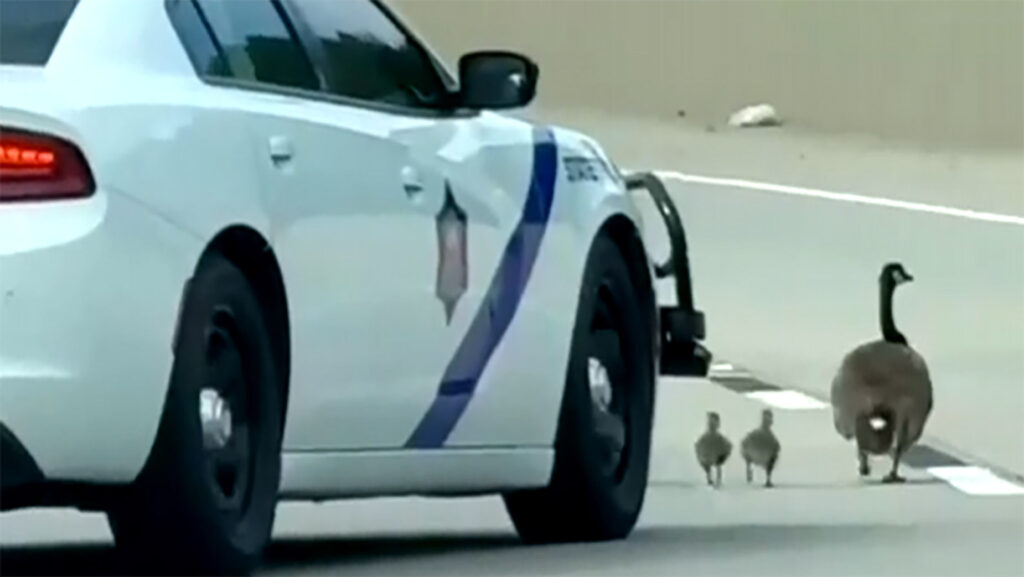
According to local media reports, witnesses filmed a family of geese crossing US Highway 67 between Cabot and Jacksonville. The video shows a state police car marked A-75 activating its emergency lights and moving toward the birds, after which at least one gosling was struck. Witnesses later claimed a second gosling was injured when the officer stopped and reversed.
Official version of events
ASP later provided additional details, stating the officer was called around 9:30 a.m. after the geese became trapped on Highway 57 near mile marker 15. According to the agency, barriers on both sides of the road made it difficult for the birds to leave the highway.
Warning: Some viewers may find the following video shocking.
ASP reported that the officer “made every effort to lure the geese off the roadway” as traffic slowed and stopped, which, according to the agency, created a potential crash hazard. The agency added that two goslings died, and that officers regularly respond to wildlife incidents, attempting to preserve animal lives and protect drivers.
This statement adds additional context while also introducing details that may become important as new records emerge. The time of the call, the duration of the response, and the description of efforts on scene are details that may later appear in CAD logs, dispatch audio recordings, dashcam video, and body camera footage.
Comparison with 2017 tragedy raises questions
Hagar also referenced a fatal 2017 crash on Interstate 40 near Mayflower, Arkansas, which killed three people due to sudden braking. This comparison highlights the danger associated with sudden slowdowns on major roads, but whether the circumstances of this incident were similar to the conditions of that tragedy may become another question.
Witnesses claim that emergency equipment was already activated and traffic was already slowed or regulated when the geese were crossing the road. This detail could be significant, as emergency vehicles are typically used to warn approaching drivers and create safer working conditions around roadway hazards.
Another part of Hagar’s statement may also come under scrutiny. According to him, the Arkansas Department of Fish and Wildlife was unavailable, and someone suggested shooting the birds. This raises additional questions that records or communications may eventually answer: who made that suggestion, was it documented, were supervisors involved, and did wildlife officials provide any guidance.
Why federal bird law matters
Canada geese are not just wild animals crossing the road. They are protected under the federal Migratory Bird Treaty Act, which generally prohibits the unauthorized killing or taking of protected species. Exceptions exist under certain rare circumstances, including hunting seasons, wildlife management activities, agricultural situations, and permitted control programs.
A review of publicly available federal wildlife regulations did not reveal a broad exception specifically covering routine law enforcement activities regarding protected migratory birds. This does not mean a violation occurred. Intent, circumstances, and legal authority may matter.
Witness testimony also introduces another distinction that could become important. If the birds were accidentally struck while attempting to remove a road hazard, the legal and factual analysis may differ from a case where investigators establish intentional action.
This incident may ultimately pose a question already on the minds of many observers: How would authorities assess a similar incident involving a regular driver rather than a patrol vehicle?
FOIA request already filed
Hagar’s comments may also create a roadmap for understanding what happened next. If the officer spent 26 minutes resolving the incident, there may be additional records documenting this, including dashcam video, body camera video, dispatch audio, CAD logs, communications with the Arkansas Department of Fish and Wildlife, communications with supervisors, incident reports, and internal reviews.
An official FOIA request for these materials has been filed and acknowledged by ASP.
Currently, the public record includes witness video, eyewitness testimony, and ASP’s explanation of what happened. But the agency has now provided a specific timeline, confirmed the call for service, described the road conditions, and stated that the officer “made every effort” to safely remove the geese.
These are the kinds of details that typically leave records behind. And if those records exist, they may ultimately determine not only what happened on Highway 57, but also whether the public explanation and the evidence tell the same story.
Source: KATV
As the official investigation continues, this story highlights the complexity of decision-making on the road, where human safety and animal protection can come into conflict. Importantly, the police themselves acknowledged the incident and provided their report, allowing it to be compared with witness testimony. The further development of events will depend on whether the official records (video, audio, reports) align with the public version, and whether a legal assessment will be made of the officer’s actions, especially given the federal protection of these birds. This case could set a precedent for future situations where law enforcement encounters wild animals on the roads.