


Truck Owners Receive Warnings from Police
Commercial vehicle drivers who operate their own trucks often like to personalize them, as the cab is a kind of mobile office for them. However, the problem is that this “office” is always in plain sight, and some style elements may contradict the law.
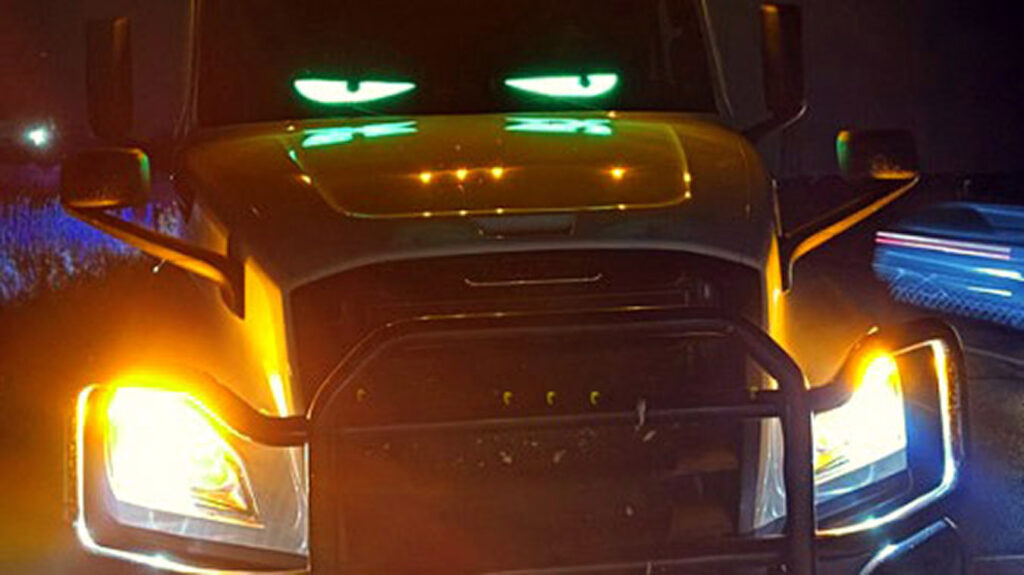
This is why law enforcement officers are drawing long-haul drivers’ attention to the fact that fashionable green LED “eyes” sold for decoration are not permitted for use on public roads. Recent incidents involving stops of such drivers have raised a number of additional questions.
Is Such Lighting Dangerous?
On December 2, a Wisconsin State Patrol officer stopped a truck driver who had installed green LED lights resembling eyes. In their post, the patrol noted: “We see you. Distractions come in many forms. This driver was recently stopped and reminded why this is dangerous – not just for him, but for other road users.”
In conclusion, the organization emphasized that according to regulations, only white and amber (yellow) lights are permitted on the front of a vehicle. No others.
The most common reaction in the comments was: “So, if I change the green color to amber, then it’s all good, right?”
Identical Warnings in Other States
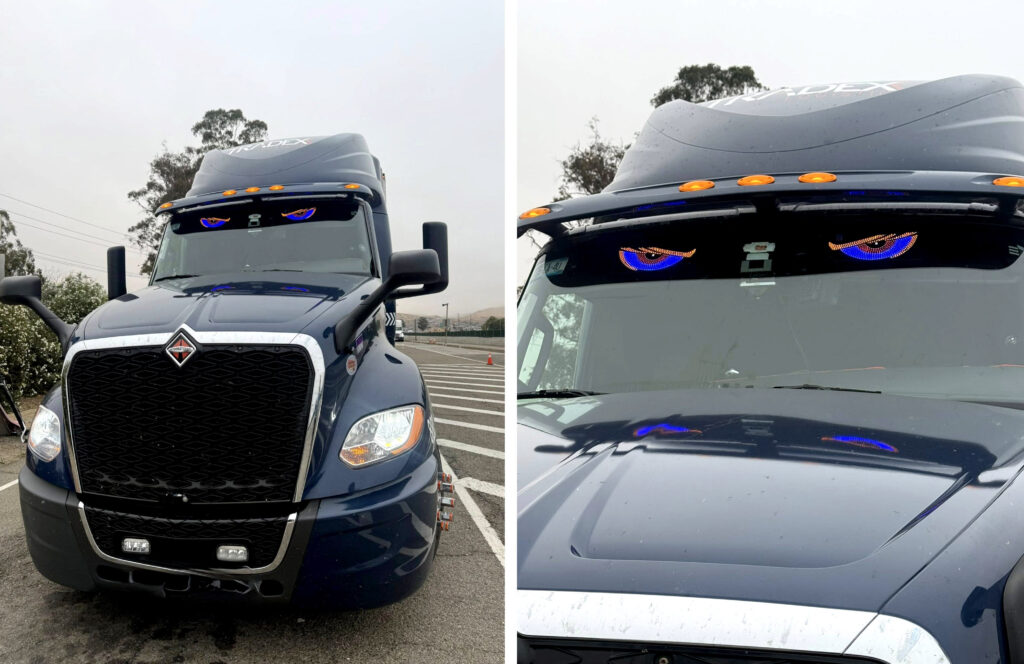
A few months ago, the California Highway Patrol published an almost identical incident with the same warning: “Attention, commercial drivers! A reminder that the only permitted lights on the front of your vehicle are white and amber. ‘Angry eyes,’ while they look cool, are not legal for the road. Let’s keep it safe and legal!”
The reaction in the comments under both posts was predictable and unanimous. One commenter joked: “So switch my green eyes to amber? Got it,” while another added: “That’s why the police at Automotion didn’t bother me – I changed the ‘eyes’ color to yellow before hitting the highway.”

Technical Nuances and Additional Questions
Users also raised important technical questions. One person asked whether small “Uber lights,” often mounted on the lower part of the windshield, could violate color restrictions.
This is a valid point: even if such lights are small and informational, Wisconsin law does not provide exceptions for commercial logos or ride-hailing service indicators. In fact, there are several documented cases where Uber or Lyft drivers have received fines for similar lighting.
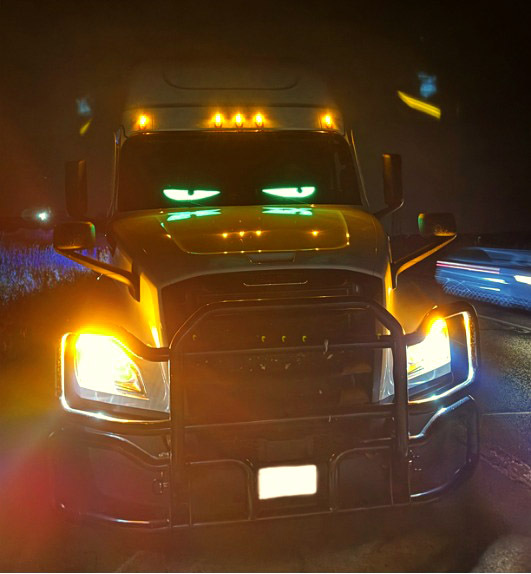

These incidents raise a broader question about the balance between driver self-expression and road safety. While personalizing a vehicle is common, lighting regulations exist for a reason – they are aimed at preventing confusion and accidents. Amber color, for example, is clearly associated with turn signals or clearance lights, while green can be perceived ambiguously, especially in poor visibility conditions. Perhaps it is time for accessory manufacturers to more clearly inform buyers about the legal restrictions regarding colors intended for use on roads.