


An Unexpected AI Error
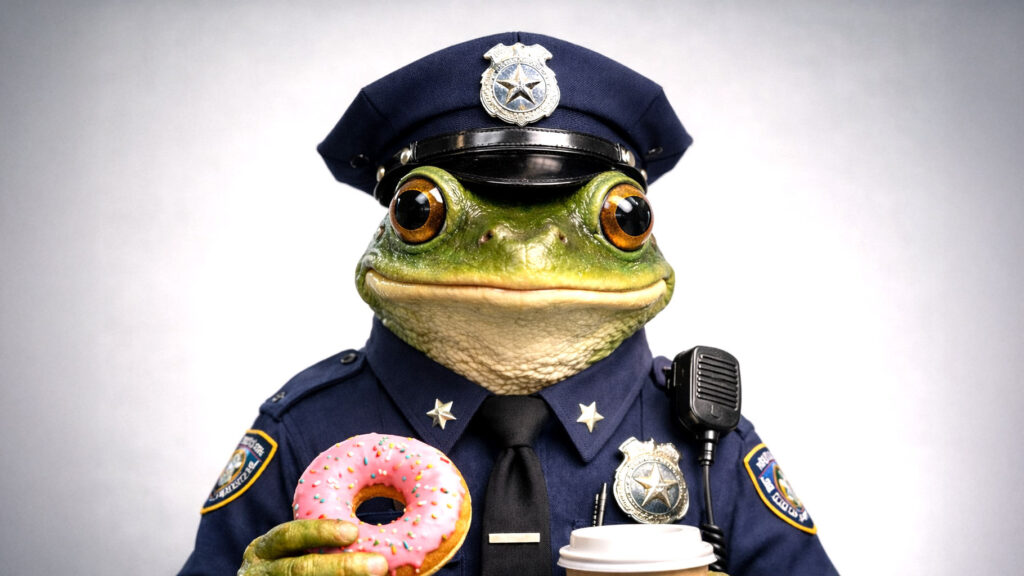
Traffic stops are rarely enjoyable, but a new issue has emerged that sounds as unreal as the police-frog in the featured image. In December, the Heber City Police Department in Utah had to explain why an AI-generated report claimed the officer literally turned into a frog. The culprit was not a malicious internet prank or a rogue officer, but AI hallucinations.
The body camera software and AI-based report writing software picked up a movie playing in the background, which turned out to be ‘The Princess and the Frog.’ That’s when we realized the importance of correcting these AI-generated reports.
The department was testing AI-based report writing software that listens to body camera recordings and automatically compiles police reports. Unfortunately, the system picked up audio from the cartoon ‘The Princess and the Frog’ playing in the background and confidently included it in the official report.
When Software Writes the Story
This is undoubtedly funny, but also concerning. According to journalists, these AI tools are designed to save officers’ time by converting body camera audio into written reports. Theoretically, this means less paperwork and more time for patrol.
In practice, it also means an algorithm is now interpreting conversations, tone, and background noises during roadside encounters, including traffic stops, which can have long-term consequences for drivers.
Long-Term Consequences of Errors
It’s easy to perceive a traffic stop as a brief interaction, but records of these stops can be permanent. Such a report can influence future stops, court cases, insurance matters, driver’s license suspensions, and even employment background checks.
In other words, when AI gets something wrong, it’s not just a typo or a funny anecdote. It’s misinformation inscribed in an official document.
‘Almost Correct’ Is Not Good Enough
In the Heber City case, the error was so obvious it could be laughed off. But what happens when AI misunderstands who said what, misinterprets a driver’s tone, or incorrectly summarizes the reasons for a conflict escalation? Such errors are far more problematic.
They may not only be harder to detect, but a question arises: will every officer correct phrasing that is similar but possibly harsher than necessary if it is ‘almost correct’?
Protection for Drivers
For now, it seems the best step for ordinary drivers is to start using dash cams and other recording devices to ensure there is an independent record that AI cannot interfere with.
Requesting body camera footage and reports through Freedom of Information Act requests can also prove vital. A frog in a report is funny, but your permanent law enforcement profile is not a game.
This incident vividly illustrates the broader problem of integrating technology into critical spheres where accuracy is an absolute priority. Implementing AI for automation must be accompanied by robust verification mechanisms and human oversight, especially when it comes to legal documents affecting people’s lives. The frog story serves as a kind of warning that technologies designed to make work easier can create new, unforeseen risks if applied without a proper understanding of their limitations and context.