


The Return of Sedans: Are Buyers Really Tired of SUVs?
It’s no secret that sedans have been gradually disappearing over the past twenty years. Automakers have been discontinuing low four-door cars one after another, replacing them with an endless stream of crossovers, SUVs, and pickups. Consumers followed this trend, sales shifted, and eventually the idea of buying a traditional sedan began to seem almost old-fashioned. However, some industry observers now believe the pendulum may finally swing back.
Why Are SUVs Losing Popularity?
According to analysts and executives who spoke with Detroit Free Press, buyers are increasingly showing signs of what could be called ‘SUV fatigue.’ The numbers help explain why.
Compact cars are significantly cheaper than SUVs
Data from Cox Automotive shows that the average price of compact cars is about $27,590, while compact SUVs cost an average of $37,514. In the midsize segment, the difference becomes even larger: midsize sedans cost an average of $34,069, and midsize SUVs cost over $50,000. Edmunds data from the first quarter also showed that compact and midsize sedans accounted for 14% of purchases in the mass market segment, roughly one in seven cars sold.
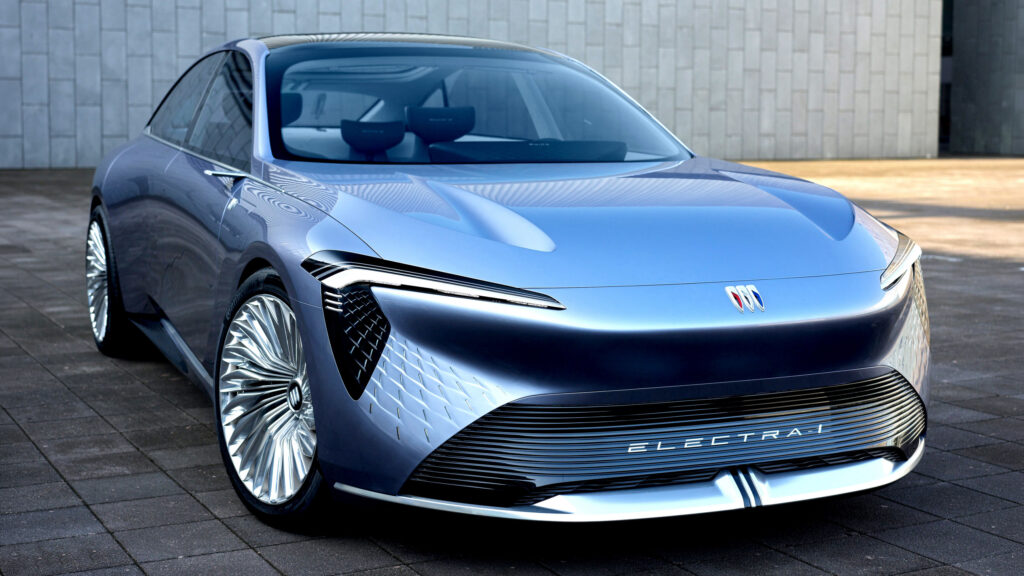
Buick Electra L Concept.
Unsurprisingly, given the Iran war, fuel economy also remains a key factor. Sedans generally have aerodynamic advantages and less weight compared to larger utility vehicles. According to the report, gasoline sedans can average about 10 miles per gallon better combined fuel economy than large gasoline SUVs.
Read: Honda unveils a new fast sedan and next Acura RDX, and neither is an EV
Younger buyers are also showing interest. A recent Escalent EVForward 2025 Teenagers DeepDive study, published in February 2026, surveyed over 1,000 teenagers aged 14 to 19. The results showed that 51% envision themselves behind the wheel of sedans in the future, 31% choose SUVs, and 14% pickups.
A familiar pattern emerges here. A world oversaturated with SUVs itself was a rejection of the sedans and minivans that Generation X grew up with. Each generation tends to want the opposite of what filled the family driveway, and for teenagers who grew up on crossovers, SUVs are now beginning to look like the automotive equivalent of inheriting their parents’ taste.
Executives Admit Their Own SUV Fatigue
Voices from industry representatives increasingly sound like people who have eaten the same dish for years and suddenly realized they are ready for something else. iSeeCars’ Karl Brauer described consumers and designers as experiencing ‘SUV fatigue,’ and Stellantis design chief Ralph Gilles admitted earlier this year that even he is tired of SUVs. It seems automakers are listening.
Also: Lexus ES chief engineer ‘not satisfied’ that SUVs are taking over the market
Jim Farley has repeatedly hinted at the possibility of future Ford sedans. Reports have emerged that GM might consider producing another Buick sedan. Honda recently showed a hybrid sedan prototype. Even Mitsubishi is rumored to be discussing a strategic rethink. Nissan’s Infiniti brand is also preparing to return to this segment with a new sporty Q50S sedan, expected next year. And this could have another underestimated advantage.
‘So many automakers have now left the sedan segment that it can almost be considered a white space—a category where new or returning players can enter and make a big impression,’ said Aaron Bragman, head of Cars.com’s Detroit bureau, to Detroit Free Press. ‘The stalwarts are still here, like Toyota, Honda, Hyundai, and Kia, but others, like Mazda, Nissan, Ford, Chevrolet, Chrysler—they would all make news with their return to the segment.’
The Argument for Driving Feel
Sedans are not only cheaper and more fuel-efficient. They also tend to handle better. A lower center of gravity, less body roll, and more direct responses make them more connected to the road than taller crossovers and pickups. This is not just enthusiast talk. The more engaged a driver is in the driving process, the less likely it is that steering two tons of metal becomes a background activity.
According to Edmunds, sedans also often attract buyers with no trade-in, partly because their lower prices make them more accessible to first-time buyers or those on a tight budget.
Crossovers made driving easier. Sedans, meanwhile, might subtly help make it more exciting. On busy city streets, highways, and crowded neighborhoods, that is not a bad thing at all.
Interestingly, this trend toward the return of sedans may not be just a short-lived fad but evidence of deeper changes in consumer preferences. If SUVs once symbolized status and practicality, now, amid economic instability and rising fuel prices, rationality and efficiency are coming to the fore again. Additionally, the growing generation that came of age in the era of SUVs may be seeking individuality and distinction from their parents’ choices, making the sedan not just an economical but also a stylish choice. The revival of sedans, therefore, may not be just a return to the past, but an evolution where a classic form receives new, modern content.