


New Porsche CEO prepares massive staff reduction
Porsche’s new CEO, Michael Leiters, has been tasked with leading the brand out of crisis. The company, which was once one of the most profitable within the Volkswagen Group, is now facing serious financial difficulties.
Volkswagen is not the only one cutting staff within Europe’s largest automotive group. According to new reports, Porsche is preparing its own round of layoffs, and the supervisory board has already approved a broader restructuring package that will accompany these cuts.
The German sports car manufacturer is now led by Michael Leiters, who spent nearly three years as CEO of McLaren before taking this position. He replaced Oliver Blume, who previously split his time between leadership roles at Volkswagen and Porsche.
As part of his efforts to save the company, Leiters could cut between 5,000 and 6,000 jobs by 2035, on top of the 3,900 layoffs already announced under Blume’s leadership. Reuters news agency reports that the plans could be presented to employees next week.
Porsche has long been one of the most successful brands in the Volkswagen Group, consistently showing high profits thanks to its more expensive models. However, last year the company’s operating profit fell by 93 percent, driven in part by costs associated with international tariffs, as well as falling sales in China and an excessive focus on electric powertrains.
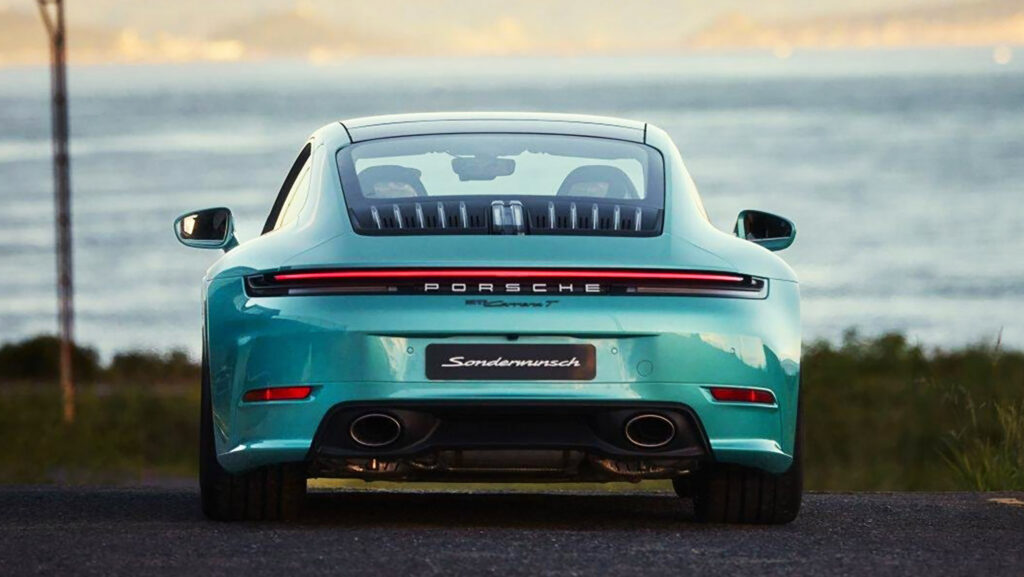
Earlier this year, Leiters stated that Porsche would rely more on high-margin models such as the 911, and would also simplify its model lineup. Importantly, the brand does not plan to increase production volumes as part of the restructuring.
Where did it all go wrong?
Significant funds were lost on the electric 718 Boxster/Cayman and the electric K1 projects. Porsche not only abandoned plans to produce the next generation of Boxster and Cayman exclusively as electric vehicles, but its flagship K1 SUV will also not be sold solely with an electric powertrain. Instead, it will switch from the VW scalable systems platform to the Premium Platform Combustion, which will support several V6 and V8 engine variants, as well as numerous hybrids.

These changes indicate that the company is trying to correct previous strategic mistakes by returning to traditional internal combustion engines, which are still in high demand, especially in key markets where electric vehicle infrastructure is underdeveloped. Job cuts, though painful, are part of a broader strategy aimed at restoring profitability and adapting to changing market conditions, where competition from Chinese manufacturers and uncertainty about the future of electric vehicles create new challenges for traditional automotive giants.