


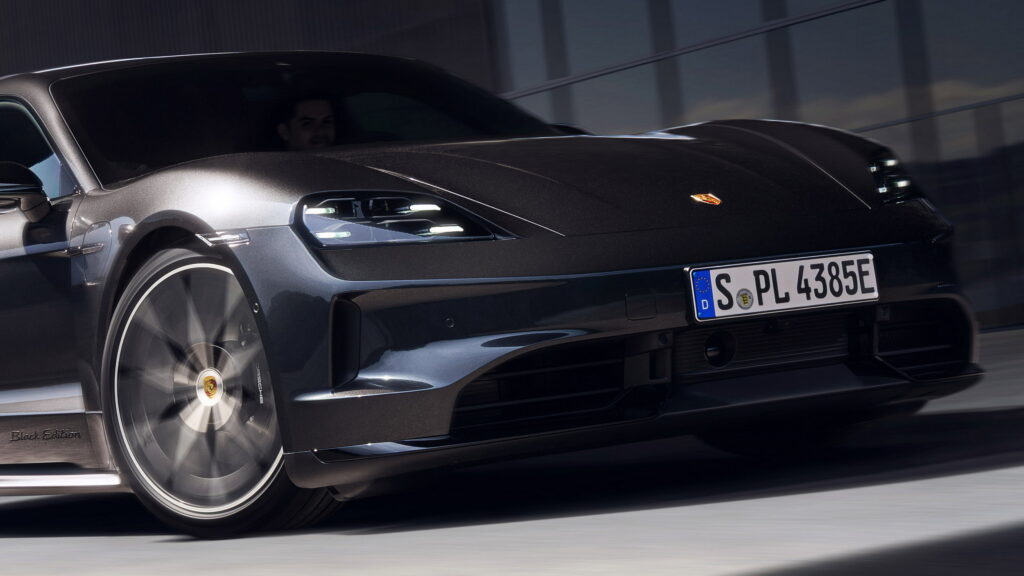
Panic among Russian Porsche owners: hundreds of cars across Russia have suddenly turned into immobile ‘monuments’. The cars stall immediately after starting, the alarm behaves like crazy, and some cars refuse to start at all. The most likely cause is the factory VTS satellite monitoring system, which blocks the engine in case of signal loss.
On December 1st, a wave of complaints literally swept across the entire country — from Moscow to Krasnodar. Porsches manufactured since 2013, equipped with that same VTS unit, were affected. The idea of the system is simple: signal lost — engine blocked so a thief can’t drive away. But now it’s not thieves being blocked, but the owners themselves.
The problem has affected absolutely all models and all engine types. Service stations are receiving thousands of complaints with identical symptoms. Some are trying to ‘resuscitate’ their cars by disconnecting the battery for 10–12 hours, others are already ripping out alarm connectors — the effect is either zero or temporary. Porsche’s representation in Russia is silent, and the central office is also in no hurry to provide explanations.
There are many versions: from server failure to incorrect update. Some Russian dealers even hint at ‘deliberate interference’, but there is zero proof. One fact remains: hundreds of Porsches can now only be delivered to service centers by tow trucks, and owners are nervously googling ‘how to disable VTS without burning half the car’.
The incident fits perfectly into the overall picture of the degradation of the Russian car market after the sanctions. The country has already banned the import of right-hand drive cars, limited the availability of Japanese cars, and from December 1st, increased the recycling fee several times. For example, the owner of a Toyota RAV4 with a 2.5-liter, 205 hp engine now has to pay about 2 million rubles just for this fee. A Volkswagen Tiguan with 201 hp — 794 thousand. Previously, it cost 3,400 rubles.
The market in Russia is still holding on, but exclusively on ‘gray’ imports, resales, and supplies from Kazakhstan and China. Spare parts are getting more expensive, service quality is declining, and incidents like the mass ‘shutdown’ of Porsches only emphasize the level of chaos in which the Russian automotive sector finds itself.