


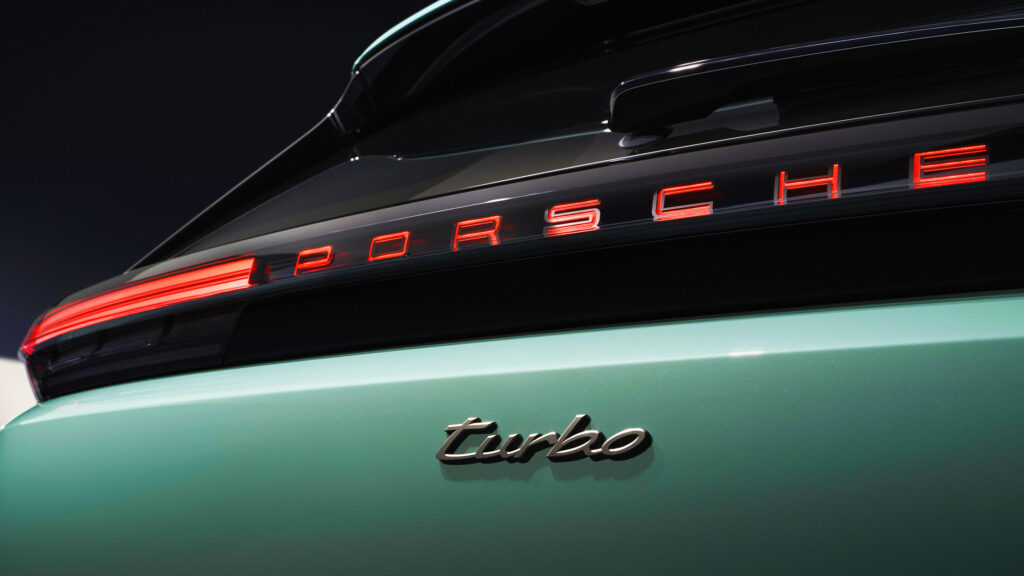
Change of Course for the Flagship
The future flagship Porsche K1 SUV was intended to be a quiet, fully electric contender for leadership. However, it is now set to debut with familiar internal combustion engines and hybrid systems. This indicates that the brand’s electric strategy is not progressing as smoothly as planned.
According to reports, the seven-seat K1, initially developed exclusively as an electric car on the Volkswagen Group’s Scalable Systems Platform architecture, will now be a technological sibling to the future Audi Q9. This means a switch to the Premium Platform Combustion, designed for ICE vehicles.
Stuttgart clearly looked at softer-than-expected EV demand in the global luxury market and tanking Taycan sales in particular, and realized that the world isn’t ready for a jumbo zero-emissions SUV with a Porsche badge.
This also means that instead of a fully electric powertrain, the model will receive gasoline V6 and V8 engines with various hybrid options. Stuttgart clearly analyzed softer-than-expected demand for electric vehicles in the global luxury market and, in particular, falling Taycan sales, and realized that the world is not yet ready for a jumbo zero-emissions SUV with a Porsche badge.
Delays in the development of the Scalable Systems Platform, especially concerning software, also played a certain role in the revision of plans.
Competition with Segment Leaders
The launch of the K1, which will position itself above the Cayenne, is tentatively scheduled for 2028. This could mean we will see its public premiere in static form as early as the end of next year. The competitor to the BMW X7 and Mercedes-Benz GLS is expected to offer four-, five-, and seven-seat interior configurations.
The technical PPC platform is capable of working with six- and eight-cylinder gasoline engines, as well as with a new generation of plug-in hybrids. Therefore, the K1 will likely receive a 4.0-liter bi-turbo V8 and a 3.0-liter V6. The power range, according to reports, will likely mirror the wide spectrum of the Cayenne—from 348 hp to 729 hp. This is not a car for winning at the Nürburgring, but top versions will not suffer from a lack of power.
Savings Through Joint Development
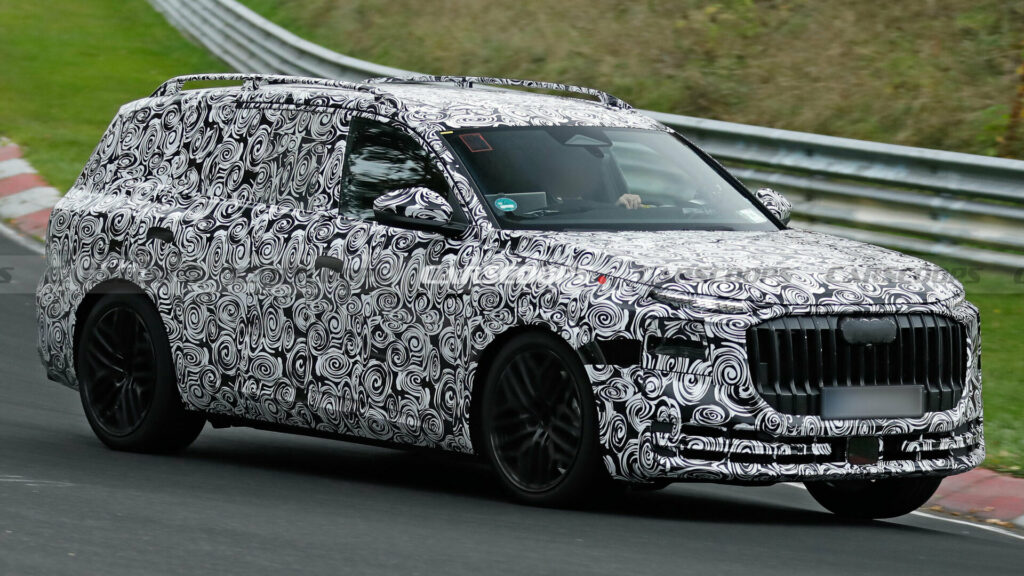

The turn towards internal combustion engines makes financial sense. The Volkswagen Group likes to share technologies between brands, and borrowing the basics from the Audi Q9 allows for the distribution of development costs. This helps offset the rising costs of Porsche’s next wave of electric models.
The first gasoline and hybrid K1 models are expected approximately a year after the Q9’s debut. The United States and China are considered critically important markets. Both models will be assembled together in Bratislava, where production costs are lower than in Germany.
However, there is also a surprise: despite moving away from the electric concept, Porsche has apparently not abandoned the idea of a fully electric K1 and still plans to introduce such a version in the future when the market is ready for it.
The Future of the Electric Version
Demand for premium electric vehicles remains unstable worldwide, forcing even innovators like Porsche to adjust their long-term strategies. The decision to launch the model first with traditional powertrains is seen as a practical step to ensure sales and profitability while infrastructure and customer preferences mature for a full-scale transition. Joint development with Audi not only reduces costs but also accelerates time to market, allowing Porsche to focus resources on refining its own electric technologies for future generations. This situation clearly demonstrates how the dynamics of the global automotive market can influence products developed years before their release.