 by
by Porsche Classic has brought back to life three iconic interior upholstery materials: Pasha, Pepita, and Tartan. The new fabric precisely matches the originals and is of high quality. This decision will be a true gift for car owners who value authenticity and strive for the most accurate restoration of their classic models.
Revival of Historical Materials
Few car manufacturers treat their history with as much reverence as Porsche. The brand regularly releases special series and versions with heritage design. Although they vary greatly, many modern models have already received retro-style upholstery. This has been well-received by enthusiasts, and now Porsche is going further by officially “re-releasing” fabrics in the Pasha, Pepita, and Tartan patterns. However, this time they are intended not for new cars, but specifically for the restoration of classics.
“By re-releasing these fabrics, we are closing a gap, as most customers want to restore their historical or newer classic cars to their original condition as accurately as possible,” explained Porsche Classic Director Ulrike Lutz.
The Quality Problem and Porsche’s Solution
Such demand is understandable; however, car owners often faced problems because many imitations on the market were either completely unsuitable for seat upholstery or quickly lost their appearance. It was precisely the lack of quality alternatives that prompted Porsche to offer its own high-quality versions. The company states that attention to quality extends not only to the feel and durability but also to the accuracy of often extremely complex patterns and color combinations.
Availability and Historical Context
The “new” fabrics are already available for order online and at dealerships. They are supplied in cuts measuring 1.5 by 2 meters. The palette includes a wide spectrum of colors and patterns, with even more options planned for the future.
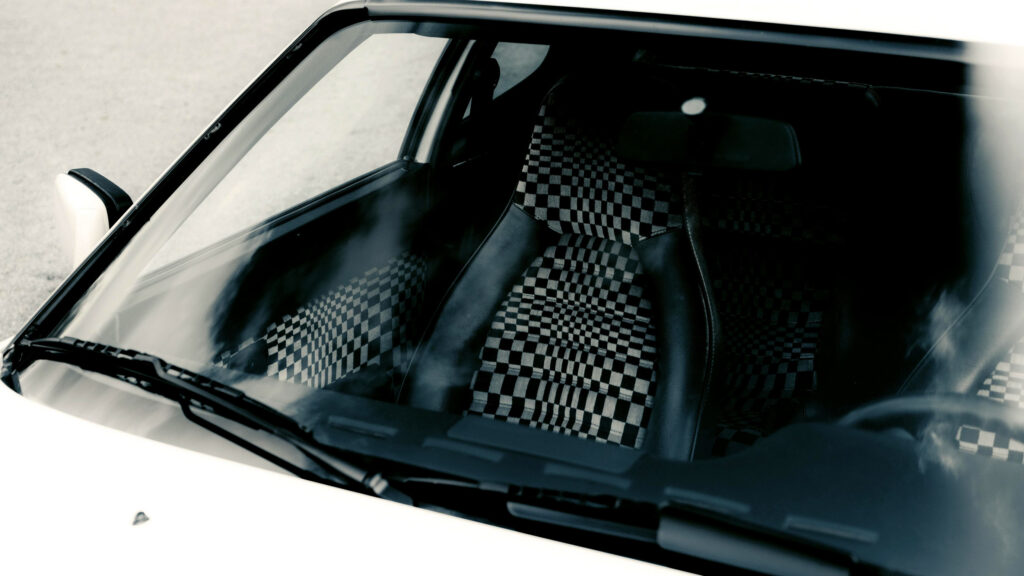
As for history, Porsche first introduced the Pepita fabric back in 1963. Its popularity had grown over the preceding decades thanks to designer Christian Dior. The Tartan fabric appeared in 1974 and was initially exclusive to the 911 Turbo. The Pasha pattern, inspired by a checkered flag, debuted in 1977 and recently returned in the 911 Spirit 70 model.
Table of Available Upholstery Options from Porsche Classic
| Fabric | Car Models | Part Number |
| Pasha fabric white/black | 928 (1978-1979) | PCG000000AS79A |
| 964 Multicolour Cobalt Blue fabric | 928 (1991-1993) 944 (1991) 964 (1991-1994) 968 (1992-1993) |
PCG000000AS9YD |
| Tartan fabric red/blue (McLaughlan) | 911 G-Model (1975-1980) 924 (1980-1982) 928 (1980) |
PCG551081AS8AB |
| Tartan fabric green/blue (Black Watch) | PCG551082AS2AC | |
| Porsche lettering fabric Olive Green | 911 G-Model (1985-1987) 928 (1985-1987) |
PCG000000AS1JK |
| Pepita fabric black/white | 356 (1963-1965), only 356 C 911 F-Model (1965-1973) |
PCG551531AS730 |
| Pepita fabric red/black/white | PCG551531AS005 | |
| Pinstripe velour black/white | 911 G-Model (1977-1989), 964 (1989-1990), 924 (1977-1988), 928 (1978-1990), 944 (1982-1990) |
PCG000000107BN |
| Porsche lettering Midnight Blue | 911 G-Model (1987-1989), 993 (1994-1998), 924 (1986-1988), 928 (1987-1995), 944 (1985-1991) |
PCG000000004GP |
| Porsche lettering black | 911 G-Model (1987-1989), 993 (1994-1998), 924 (1986-1988), 928 (1987-1995), 944 (1985-1991) |
PCG043204902CZ |
This step by Porsche Classic clearly demonstrates how the brand can monetize its heritage while simultaneously supporting a genuine restoration culture. Providing official, certified materials not only makes life easier for collectors but also increases the overall value of original cars on the market. It shows a deep understanding that for true enthusiasts, even details like the exact shade of thread in a seat are important. Such initiatives can also stimulate interest in older models among new generations of car enthusiasts, showing that a classic is not just an old car, but a living history that can be felt by touch.