 by
by Maserati’s financial results for 2025 turned out to be very disappointing for the Italian luxury car brand. The company faced a serious decline in sales and revenue.
Key Failure Indicators
This sales figure is the lowest for Maserati since 2012 and represents a 30% drop compared to 2024, when 11,300 cars were sold. The situation looks particularly awkward against the backdrop of competitors: Ferrari sold 13,640 units, and Lamborghini sold 10,747, despite their even greater exclusivity and high price.
The direct competitor Porsche found itself in a completely different league, selling 279,449 cars. This means that Porsche managed to sell more cars in about 10 days than Maserati did in an entire year.
The Path from Success to Crisis
Maserati’s modern peak of success was in 2017, when 51,500 cars were sold, thanks to the success of the Ghibli sedan and the Levante SUV. After the pandemic, sales stabilized at around 25,000 units annually in 2021-2023. However, a sharp decline then occurred: by 57% in 2024 and another 30% in 2025.
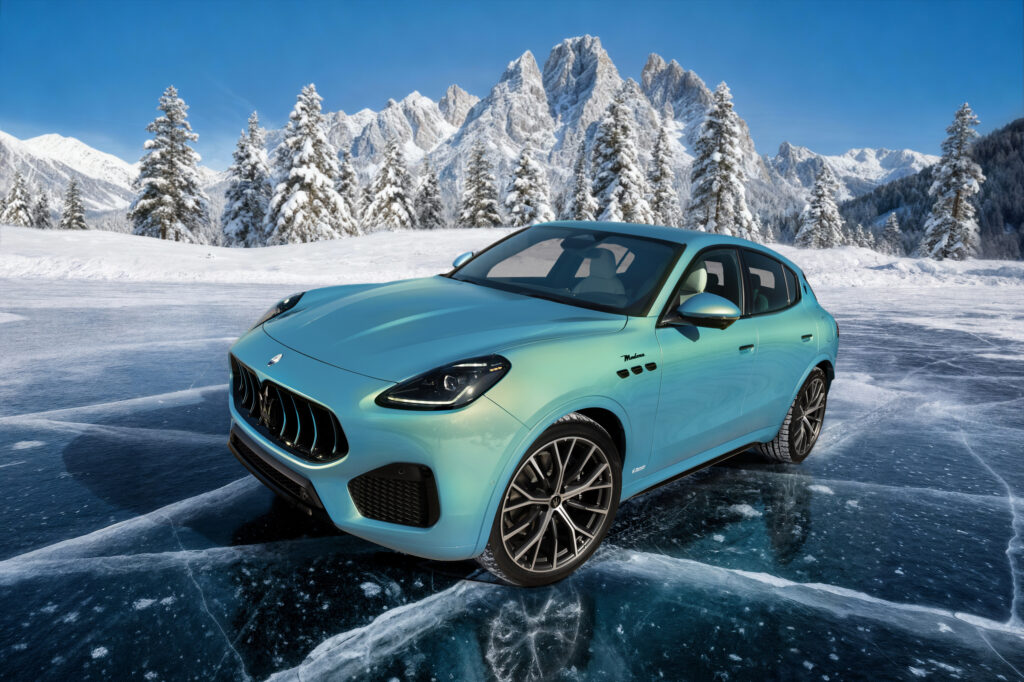
The Grecale SUV, introduced in 2022, was supposed to become the new sales locomotive. However, after its first full year on the market with a figure of 14,500 cars in 2023, demand for it plummeted. Currently, Maserati’s model range is very limited: besides the Grecale, it includes only the MC20 and MCPura supercars, as well as the GranTurismo and GranCabrio cousins.
Financial Consequences
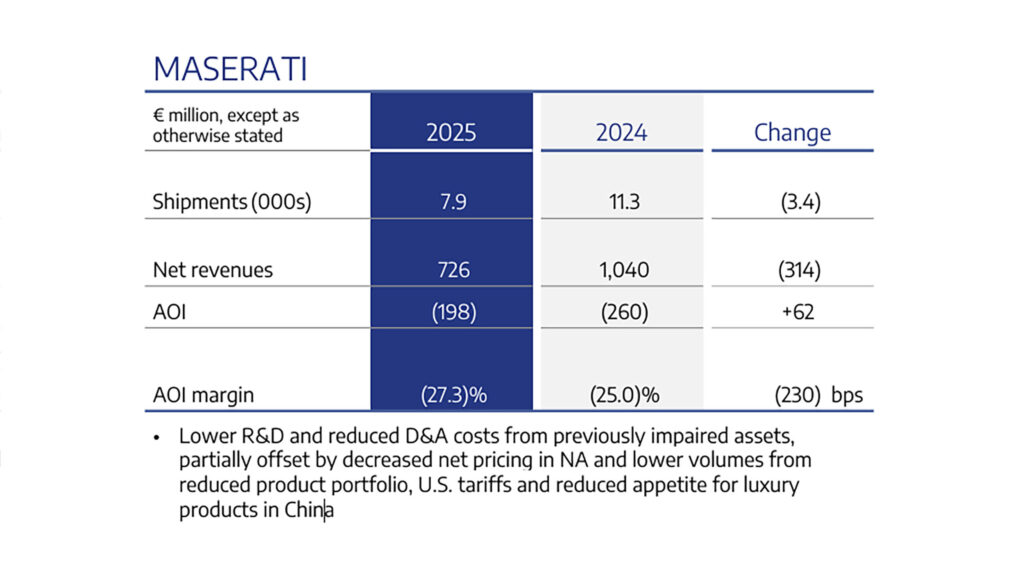
According to Stellantis, Maserati’s annual revenue fell from 1.04 billion euros in 2024 to 726 million euros in 2025. The Adjusted Operating Income (AOI) formally improved, and losses were reduced to 198 million euros, partly due to lower research and development costs. However, the profitability by this indicator worsened to -27.3%, indicating price reductions, especially in the North American market, and active use of sales incentives.
Searching for Reasons and the Brand’s Future
Stellantis management cites the reduction of the model range after the discontinuation of the Levante and Ghibli as the main factor in the decline. Also mentioned among the reasons are tariffs on imported cars in the USA and cooling demand for luxury goods in China.
Since no large-scale new projects are planned in the near future, Maserati’s future will largely depend on special products and limited series. Stellantis recently launched the Bottega Fuoriserie program for Maserati and Alfa Romeo, the goal of which is to attract collectors with exclusive models and offer a high level of personalization to support profitability.
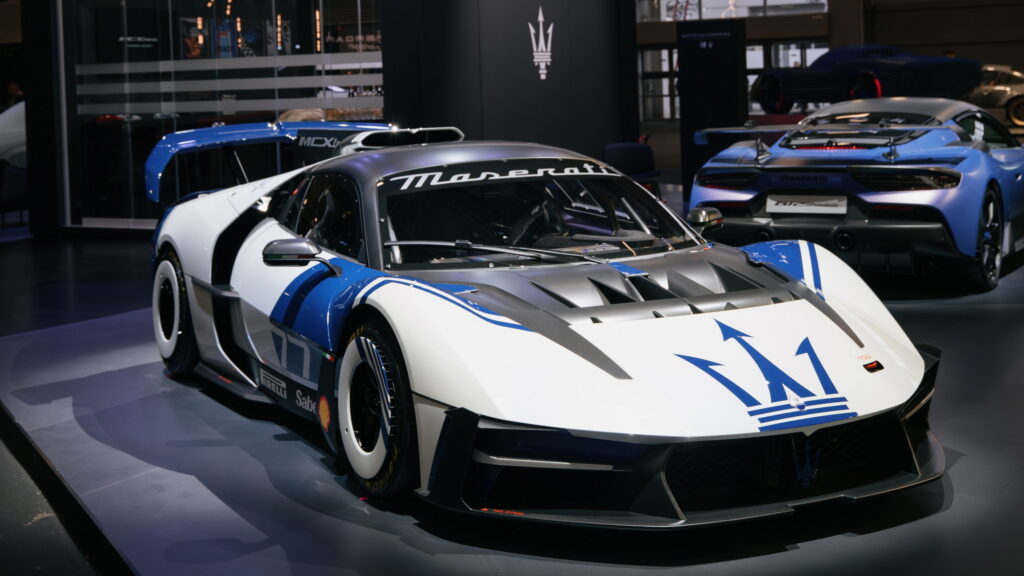
The strategy of a complete transition to the ultra-luxury car market seems to have failed, as the brand lost a significant part of its former customer base without winning enough new one. Positioning between mass premium brands and exclusive manufacturers like Ferrari has proven to be a difficult task. The success of the Bottega Fuoriserie program and similar initiatives will become critically important for Maserati’s survival in its new, even more niche role. Increasing profit from each unit sold could compensate for meager volumes, but this requires restoring the value and desirability of the trident in the eyes of buyers.