


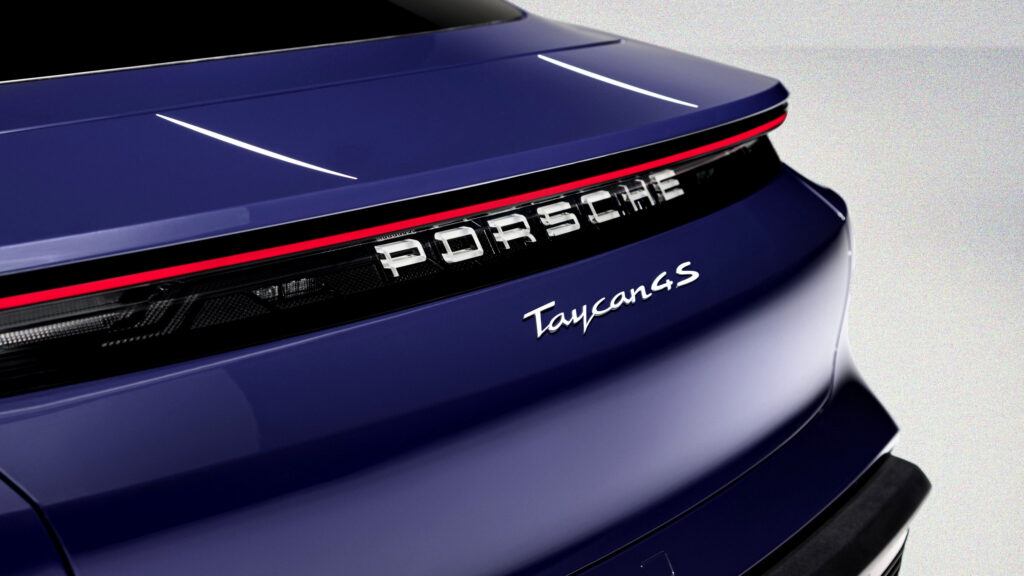
Rumors about the model’s discontinuation intensify
Given the sharp drop in sales and the fact that synthetic gear shifts are unlikely to stop the decline in demand, recent reports have suggested that the Porsche Taycan is nearing the end of its life and will be discontinued by 2030. Porsche denied these claims, however, while avoiding a direct answer on whether the Taycan will remain in the model lineup in the long term, and whether a second generation of the model might be created.
German publication WirtschaftsWoche reported earlier this month that Porsche executives allegedly agreed to gradually phase the Taycan out of the market by 2030, and at one stage of the discussions even considered the possibility of immediately removing the model from the lineup. Given that Taycan sales fell from a peak of 40,629 units in 2023 to just 16,339 in 2025, dropping the model looks like a perfectly reasonable step.
Porsche’s official position
Reacting to the publication in a comment to Carscoops, Porsche representatives acknowledged that “optimizing model ranges” does not always mean “discontinuing entire model lines.”
“With regard to the Taycan, we will continue to reduce the number of variants to reduce complexity.”
A Porsche spokesperson also emphasized that the company currently has no plans to take the Taycan out of production in the short term. The company notes that significant investments have already been made in the model, so its development will continue to be closely monitored.
“We do not plan to take the Taycan out of production in the short term. We have invested significantly in this model and will continue to monitor demand.”
What happens next?
The fact that Porsche avoids commenting on the long-term future of the Taycan, despite assurances that the model will not disappear in the “short term,” is very telling. It is no secret that Porsche overestimated the real demand for electric vehicles. That is why the brand abandoned its initial decision to make the future flagship SUV “K1” exclusively electric. Likewise, the 718 Cayman and Boxster models, as confirmed, will receive internal combustion engine versions in addition to electric versions.
Presumably, instead of creating an entirely new second-generation Taycan, it would be financially more advantageous to offer a fully electric version of the Panamera already in the next decade. Using shared components and a platform among different Panamera modifications would speed up development and allow the German automaker to adjust production plans more flexibly depending on demand fluctuations.
Interestingly, the fate of the Taycan largely mirrors the overall trajectory of the electric vehicle market, which after the euphoria of the early decade is returning to a more sober assessment. Even brands like Porsche are forced to adjust their electric strategy, balancing investments in new technologies with real demand. Abandoning radical decisions in favor of gradual adaptation seems like the most sensible approach — the Taycan appears likely to remain in the production program as long as it is economically feasible, and then its place will most likely be taken by a more versatile electric Panamera.