


A New Contender for the Best Porsche 911 Title
While the official Porsche is reportedly working hard on an all-new 911 GT2 RS as the pinnacle of the 992.2 generation, the German company is not alone in its quest to take the 911 to a new level. SSR Performance has been implementing its own ambitious project over the past two years.
What is Project Leo?
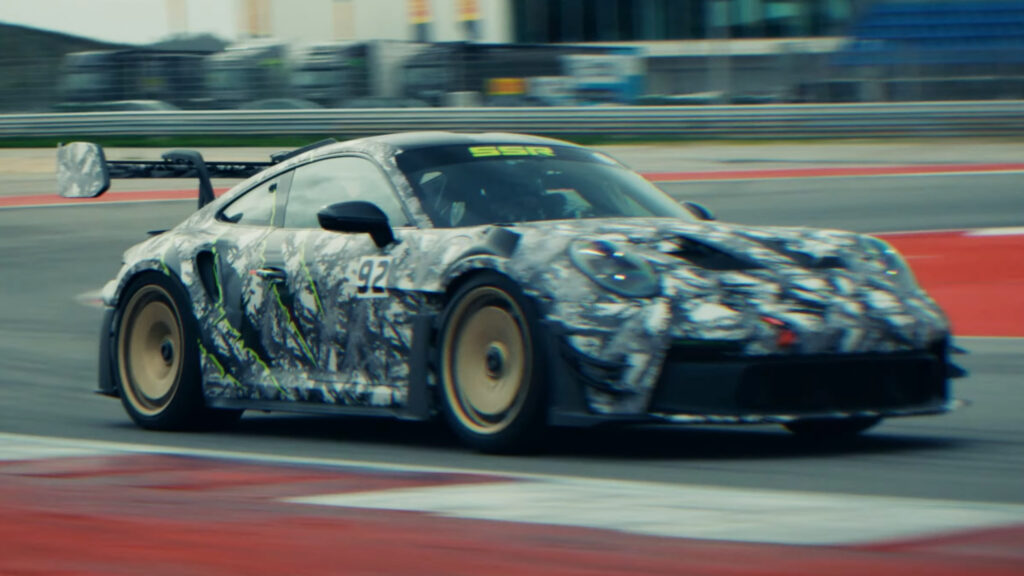
Similar to Manthey Racing, SSR already offers its own aerodynamic kits for the track-focused GT3 RS. However, their new development, known under the codename Project Leo, is something much more significant. The German firm describes it as a fully-fledged, from-scratch developed car, not merely a modification or a tuning package. This car is conceived as a true track monster.
Project Leo is a complete, from-scratch development of a car, not just a modification or a tuning package.
The Secret Weapon Under the Hood
It is known that SSR Performance has equipped the Porsche flat-six engine with two turbochargers. This is confirmed by prototypes tested on the Nürburgring—their sound is significantly more muted compared to the roar of standard GT3 and GT3 RS models. What the car may lack in an exhilarating soundtrack, it more than compensates for with performance. Reportedly, Project Leo can deliver over 800 horsepower.
Ambitious Goals and Features
In a recent teaser, SSR Performance began revealing development details and hinted at a goal: to lap the Nürburgring Nordschleife in under 7 minutes. Visually, the car has many familiar elements, including a rear wing similar to the GT3 RS and aerodynamic add-ons resembling those offered by Manthey.
The company particularly emphasizes that the car will have no electrification and will also be devoid of particulate filters, ensuring the engine breathes with maximum efficiency. This creates an interesting contrast with rumors that the new official 911 GT2 RS from Porsche might receive a hybrid powertrain. Thus, SSR’s development could become the perfect alternative for enthusiasts of pure mechanics.
The emergence of bespoke projects like Project Leo demonstrates a vibrant ecosystem of high-performance car building around platforms created by major manufacturers. This is not just a competition for seconds on the track, but an experiment in engineering and philosophy, where small firms can afford radical solutions that a mainstream brand might not pursue. The success of such a car could indicate that the market still values highly specialized, uncompromising machines, even if they are produced in limited numbers.