


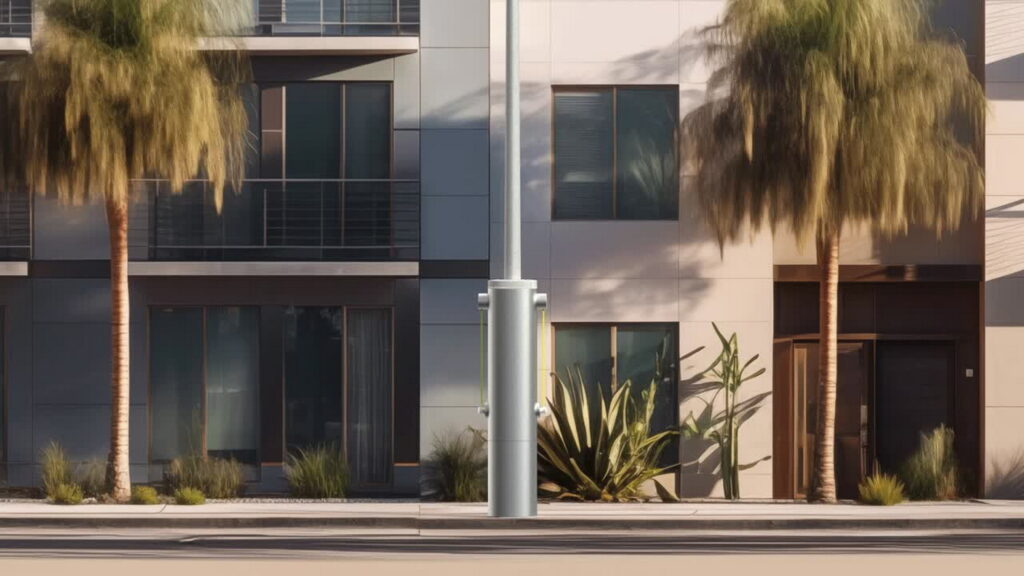
In Washington, D.C., funding has begun for new projects to install electric vehicle charging stations right on city street curbs. Voltpost will modernize existing lampposts and utility poles, turning them into Level 2 chargers. Local authorities hope that simplifying access to charging will encourage more residents to switch to electric vehicles.
How the New Charging System Works
Undoubtedly, the biggest challenge for popularizing electric vehicles remains range anxiety, specifically the speed and convenience of going from a low battery charge to a full one. If you can charge your car at home at night, owning an EV is quite easy. However, for those who don’t have such cheap daily access to electricity, the situation is drastically different. Now one company is trying to offer a solution using existing street infrastructure.
Project Funding and Participants
Instead of digging up sidewalks and installing entirely new charging stations, Washington is funding a project that turns ordinary lampposts and poles into charging points. According to WJLA, the local Department of Energy and Environment (DOEE) recently awarded grants totaling $609,500 to three companies. One of the biggest winners was Voltpost, a startup specializing in retrofitting existing poles with Level 2 charging equipment.
According to the company, its chargers can be installed in just a few hours using existing electrical infrastructure. This means no major construction work, no trench digging, and potential savings of tens of thousands of dollars compared to traditional charging stations. The company plans to deploy up to 16 chargers across the city, although exact locations are still being determined in coordination with local authorities and utility provider Pepco.
Funding Source: “Dieselgate”
Voltpost was not the sole recipient of funds. PowerUp America also received funding to expand its charging network, and street charging specialist “It’s Electric” also secured a grant. Together, these three companies are expected to significantly increase access to public charging in the district. Importantly, none of the funding comes from local taxpayers. The money actually comes from funds allocated to Washington, D.C., as part of the settlement of the Volkswagen emissions scandal (the so-called “Dieselgate”) and an agreement with the EPA.
Potential for Other Cities
If this approach proves successful, it could become a blueprint for how urban areas across the country can add relatively inexpensive public charging stations without major infrastructure changes. This could significantly ease the transition to electric vehicles for those who otherwise have no way to charge their car where they live.


Photo: Voltpost
This approach not only saves budget funds but also addresses a key problem for city residents who don’t have their own garages or parking spots with an outlet. Using penalty funds from an automaker for an environmental crime to develop “green” infrastructure creates an interesting precedent. If similar projects scale up, it could radically change the landscape of urban mobility, making electric vehicles accessible to a much wider range of people, not just owners of private homes.