


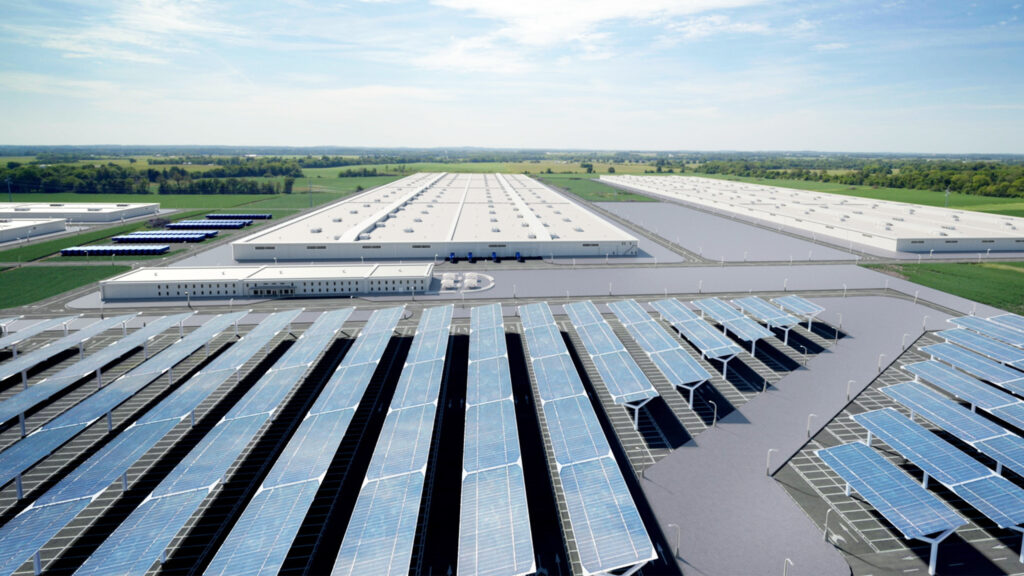
Sudden Closure of Ford’s Kentucky Plant
In December, Ford unexpectedly terminated its multi-billion dollar partnership with the South Korean battery manufacturer SK On. This decision was made just four months after production began at the joint battery plant in Kentucky, resulting in 1,600 people losing their jobs.
Key facts of the situation:
This move came as a surprise to employees and local residents, with many placing the blame squarely on Ford. However, the political context, particularly the electric vehicle policy adopted during the Trump presidency, which limited Ford’s opportunities, played a significant role in how this situation unfolded.
Impact of the $7,500 Tax Credit
The government’s decision to cancel the federal tax credit, which amounted to up to $7,500 for new electric vehicles, harmed all brands selling EVs in the US. While some criticized this program as artificial support for the industry, it cannot be denied that it played an extremely important role in convincing many Americans to buy such cars.
Due to decreased demand for electric vehicles and the relaxation of government CAFE fuel economy standards, Ford acknowledged that the “operational reality has changed.” This is why the company canceled a number of its most ambitious and important EV projects. The company stated that it is “listening to customers and assessing the market as it is today, not as everyone predicted it would be five years ago.”
Kentucky’s Democratic Governor Andy Beshear stated: “1,600 Kentuckians lost their jobs solely because Donald Trump pushed through that big, ugly bill, canceling the credits that sparked people’s interest and excitement about buying electric vehicles. I bet many, if not most, of those 1,600 people voted for him, and he essentially fired them.”
Unexpected Closure and Worker Reaction
The production site manufactured batteries for electric vehicles for only four months before its closure. Joe Morgan, who shared his story, left a job he had held for 24 years to start working at the plant, confident that the popularity of electric vehicles would grow.
Morgan, a registered Republican, acknowledges that “the cancellation of tax credits played a role in electric vehicles not selling,” but believes that Ford itself bears the primary responsibility. “I just think Ford made a bad decision when it decided to release a fully electric F-150.”
Derek Doherty holds a similar view. Getting a job at the battery plant was a turning point for him after a period of homelessness, especially with a second child on the way for his family. Like others, he believes Ford may have misjudged the market and bears greater responsibility than the government. “Ultimately, whatever the government’s policy, the decision was made by the company,” he said.
The Plant’s Future on a Reduced Scale
Fortunately, the facility will not close completely. Now under Ford’s full control, it will be retooled to produce battery energy storage systems and is expected to employ approximately 2,100 people. This figure is significantly lower than the 5,000 jobs initially projected when the plant was intended for EV battery production, but it ensures at least some continuity for a site that had just promised much more.
This story vividly illustrates the complex interplay between corporate strategies, government regulation, and market forces during a transitional period for the automotive industry. The repurposing of the plant for energy storage production may indicate a shift in focus within the company itself, adapting not only to fluctuations in EV demand but also to broader trends in the energy sector. The situation in Kentucky also raises questions about corporate social responsibility and the longevity of corporate commitments to employees and regions, especially when large-scale investments suddenly change course. The future of the plant, albeit in a different format, remains important for the local economy, but its story serves as a warning about the volatility of new technological sectors dependent on political circumstances.