


An Unexpected Turn in the Electric Vehicle Market
Electric vehicles were supposed to smoothly take over the world, but the global EV market and new car buyers have introduced unexpected adjustments, and automakers are hastily adapting to the new conditions.
According to new data from Benchmark Mineral Intelligence, approximately 1.1 million electric vehicles were sold worldwide in February. This figure is impressive, but upon closer examination, the situation looks less optimistic: sales fell by 11% compared to the same month last year and by 11% compared to January.
Demand for electric vehicles is still high. But it is not as high as it was, and it varies sharply from region to region.
European Boom Amid Global Decline
For example, Europe is still experiencing a boom. EV sales there have grown by 21% since the start of the year, largely due to subsidies and government incentives. Germany (up 26%) and France (+30%) are leading this charge, and Italy’s market has almost doubled thanks to generous EU-backed incentives.

Complex Situation in North America and China
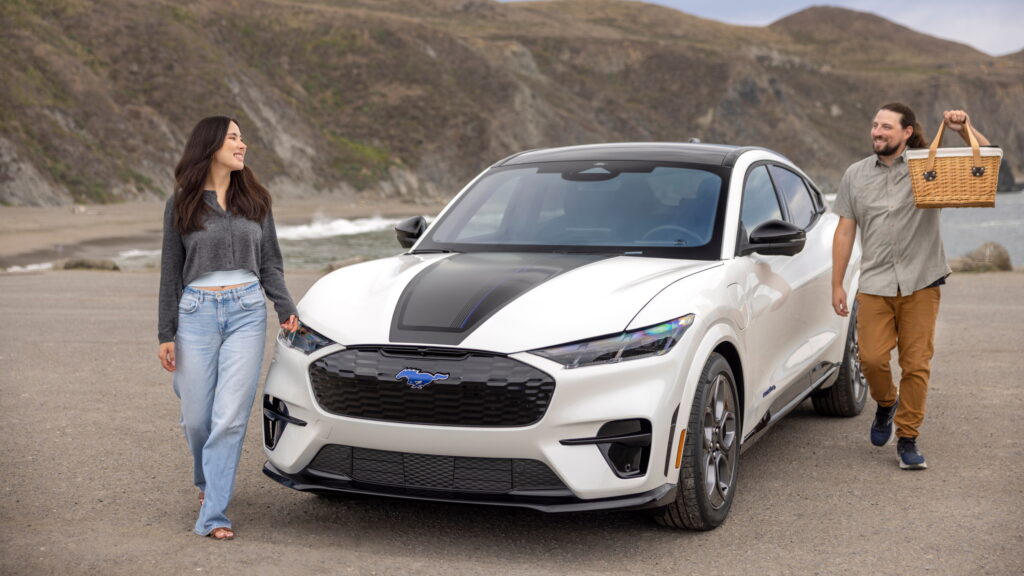
Meanwhile, North America is moving in the opposite direction. True, sales in February increased by 8%, but since the start of the year they have fallen by a striking 36% due to weakening demand. Some automakers are feeling the pain more than others. For example, Ford’s electric vehicle sales reportedly fell by 70% since the start of the year.
China, which remains the largest EV market, finds itself somewhere in the middle. Domestic electric vehicle sales have decreased by 26% since the start of the year after the country reintroduced purchase taxes and adjusted scrappage programs. But Chinese brands are compensating for this by exporting more electric vehicles than ever. In just the first two months of 2026, exports of Chinese EVs more than doubled and exceeded half a million units.
Sales Statistics for January-February 2026
Here is how the electric vehicle sales picture looks in key regions for the first two months of 2026:
- Globally: 2.2 million (-8%)
- China: 1.1 million (-26%)
- Europe: 0.6 million (+21%)
- North America: 0.17 million (-36%)
- Rest of the world: 0.37 million (+84%)
New Direction: Energy Storage Systems
For automakers, the slowdown creates a practical problem. Billions have been invested in battery manufacturing plants designed to meet a huge wave of EV demand. And when that demand weakens, those batteries still need work.
This is why more and more automakers and suppliers are turning to energy storage. Large-scale grid battery systems are suddenly becoming a convenient way to absorb excess production, as well as help stabilize power grids.
Volkswagen Example
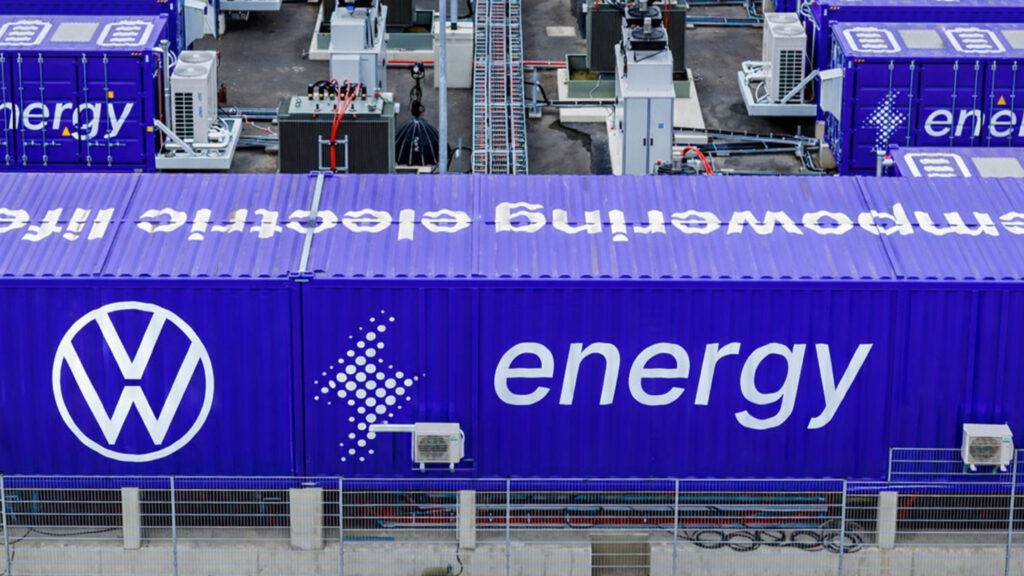
Volkswagen, for example, recently commissioned its first large-scale battery energy storage system in Germany. In Salzgitter, the VW Group’s energy subsidiary, Elli, connected a storage system with a capacity of approximately 20 megawatts (MW) and 40 megawatt-hours (MWh) to the grid.
Instead of powering cars, these batteries help store renewable electricity and release it when the grid needs extra power. Other automakers, including Tesla, BYD, GM, Ford, Renault, Mercedes, and Hyundai, are also either already selling energy storage systems or working on them.
This shift towards energy solutions could become key for the auto industry, which has invested in the future of electric transport. It demonstrates the industry’s flexibility and its ability to respond to market fluctuations by finding new ways to use its technologies. The development of energy storage systems not only helps utilize production capacity but also contributes to stabilizing power grids, which is becoming increasingly relevant with the growing share of renewable energy sources. Thus, the temporary decline in electric car sales may accelerate the development of another important component of the energy transition.