 by
by Expectations vs. Reality for Volkswagen
Volkswagen introduced an updated model range, including facelifted Golf, Jetta, and Taos. Furthermore, the company recently launched the fully updated Tiguan.
One might have expected these new offerings to boost sales, but reality turned out to be the opposite. The only cars that showed growth last year were fully electric models.
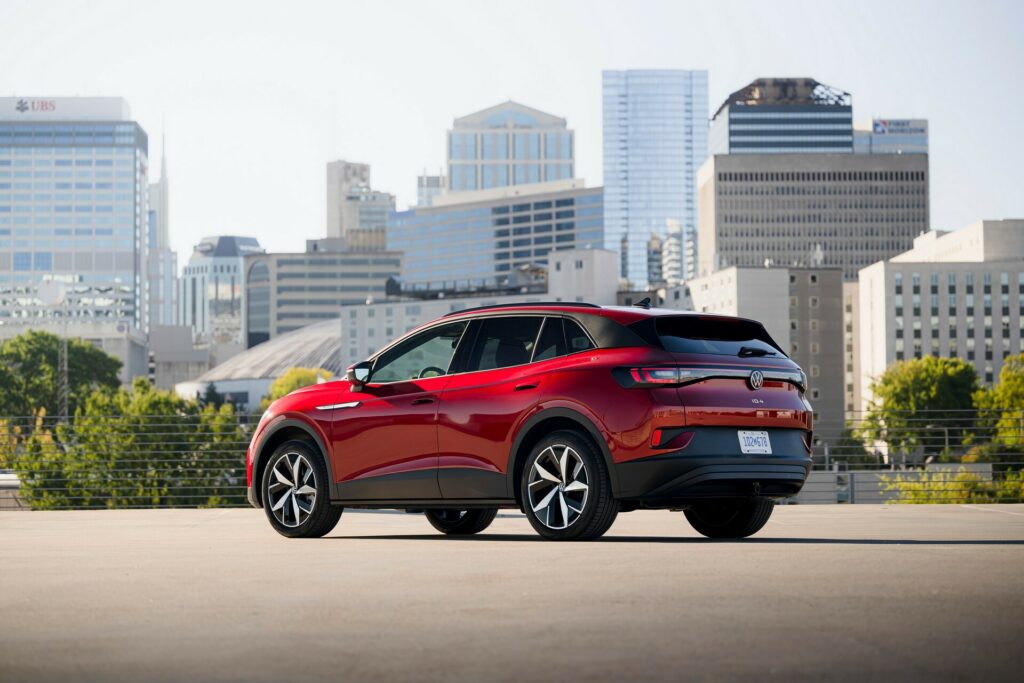
This is somewhat unexpected, but consumers rushed to take advantage of the expiring tax credit. This led to significant growth in the third quarter, when ID.4 sales soared by 176% – to 12,470 units.
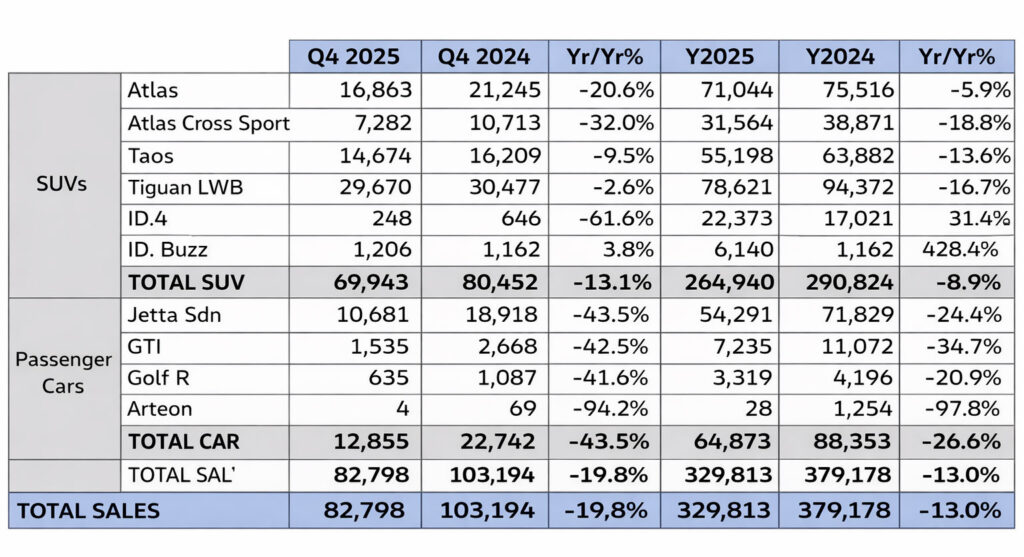
Now that the tax credit has ended, sales of the electric crossover have fallen by 61.6% to just 248 cars. This is a sharp drop of 12,222 units in just half a year.
Year-End Results for VW Electric Models
Although sales dropped sharply, the ID.4 ended the year with a 31.4% increase. However, this pales in comparison to the ID. Buzz, whose sales skyrocketed by 428.4%. Yet, Volkswagen sold only 6,140 electric vans and has already announced that this model will skip the 2026 model year.
The picture becomes quite gloomy from here, as sales of all other models declined last year. Jetta sales fell by 24.4%, and Golf GTI and R – by up to 34.7%.
Crossovers and Brand’s Overall Results
Even the brand’s crossovers struggled: the Atlas and Atlas Coupe together generated only 102,608 sales. The Taos showed a 13.6% decline, and the Tiguan fell by 16.7%, likely because some buyers were waiting for the updated model.
For the year, Volkswagen sold 329,813 cars in the United States. This is 13% less, meaning the brand sold fewer than Mazda (410,346).
A Tough Year for Audi
The situation at Audi was even worse: sales fell by 16% – to 164,942 units. This means they were overtaken by Cadillac (173,515), Lexus (370,260), and BMW (388,897).
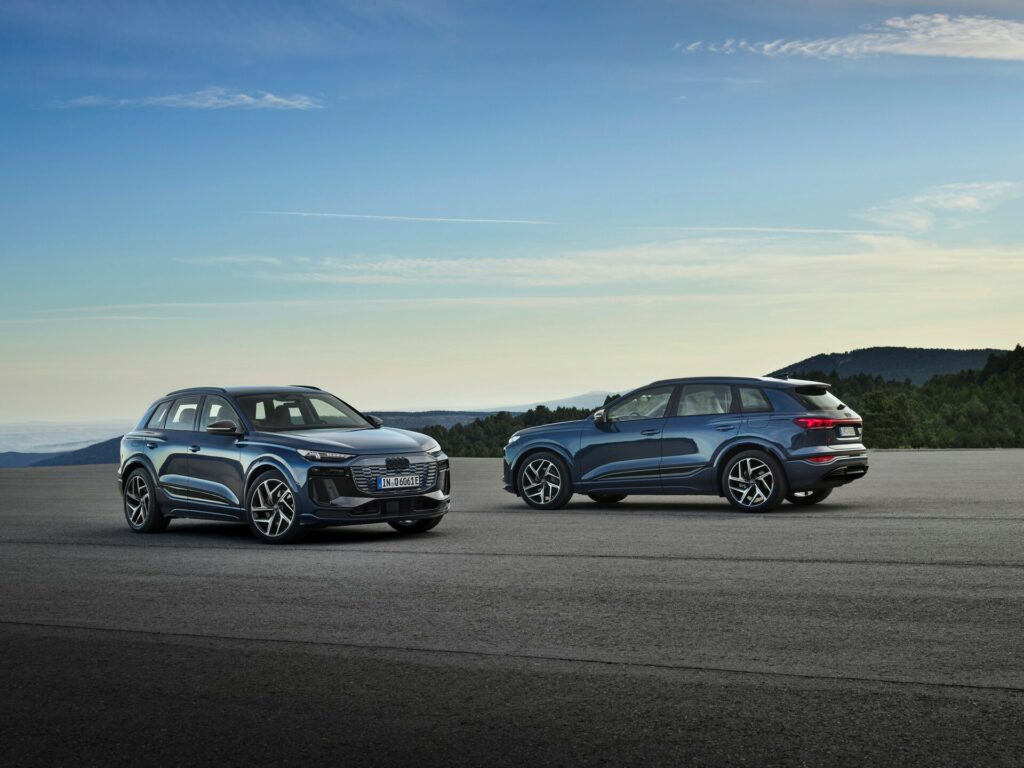
The figures are striking, as the only models that showed growth were the outdated A7 (5%) and Q8 (5%). Sales of the Q6 e-tron soared by 1,681%, although this is largely due to its late launch and limited supply last year.
However, the model seems to have become a hit, as consumers snapped up 17,207 units. This is more than triple the number of Q4 e-trons sold, whose sales fell by 38% to a modest 5,264.
Electrification and Audi Model Line Update
Regarding electric cars, e-tron GT sales fell by 59%, while the new A6 e-tron Sportback found 3,931 buyers. The discontinued Q8 e-tron line is also becoming quite rare, which explains the sharp sales drop.
The remaining figures should be viewed in context, as Audi is in the process of a major product refresh. Consequently, new A5, A6, Q3, and Q5 models have appeared. Most of these models are already arriving in US dealerships, with the Q3 coming soon.
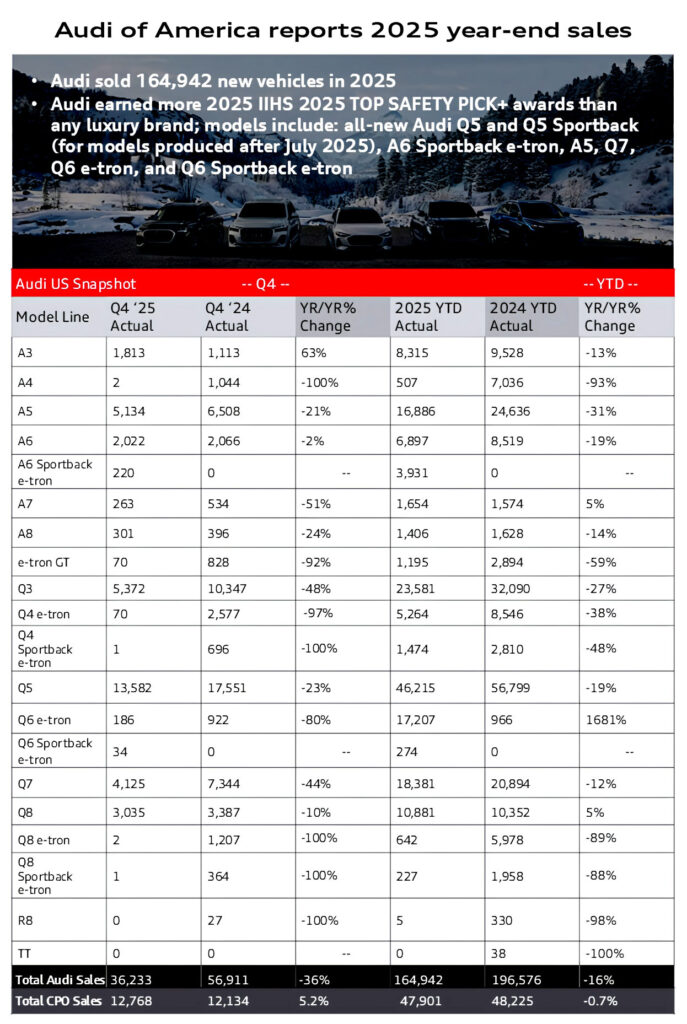
However, there remains a number of outdated models dragging sales down. One of the worst examples is the Q7, whose sales fell last year by 12% – to a disappointing 18,381 units. For comparison, Lexus sold 57,346 TX crossovers.
The overall sales picture of the Volkswagen Group in the US last year vividly demonstrates a transitional period for the automaker. The sharp spike and subsequent collapse in sales of electric models, particularly the ID.4, is directly linked to government incentive policies, creating market instability. At the same time, the decline in sales of most traditional models indicates fierce competition and possibly buyers’ anticipation of updates. The situation at Audi further underscores the importance of timely model line updates in the premium segment, where outdated products quickly lose ground to competitors’ fresh offerings. The success of new electric models like the Q6 e-tron suggests that the future of the group’s brands will depend on their ability to effectively combine launching attractive electric vehicles with keeping the entire car line-up relevant.