


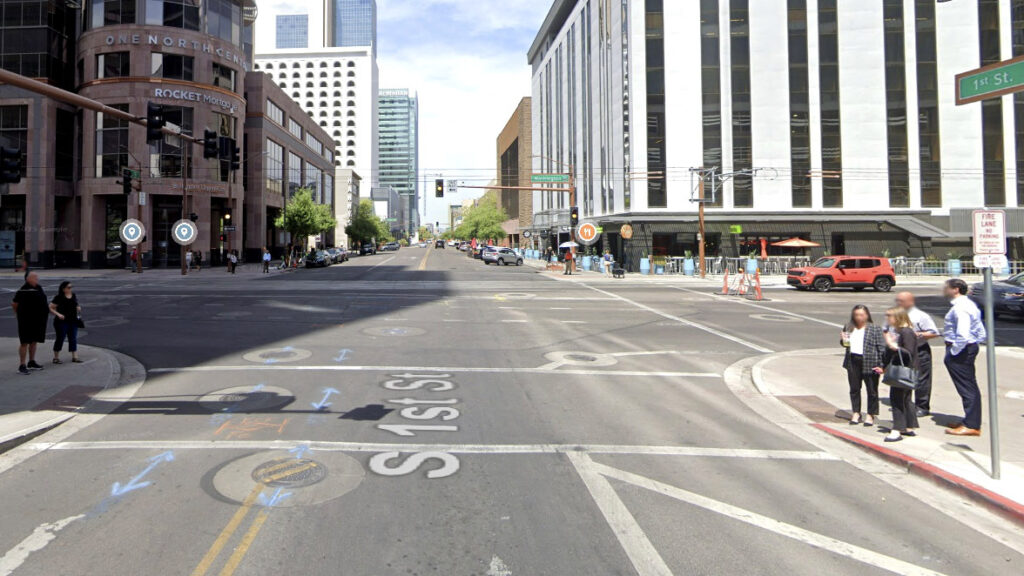
Phoenix, which ranks fourth among the most dangerous cities for pedestrians in the USA, is implementing new measures to improve the situation. The authorities plan to simultaneously strengthen control over jaywalking violations and invest millions of dollars in new infrastructure.
Strengthening Control Over Violations
Pedestrian safety has not always been a priority in America, but the situation may be changing. Phoenix, the country’s fifth most populous city, is allocating millions for new infrastructure to protect those who travel on foot. Simultaneously, control over crossing the street in an unauthorized location is being tightened, and it is now being taken much more seriously.
Pedestrians often dart across the street at practically every busy intersection, often far from marked crosswalks. One resident, who has lived on such a corner for seven years, noted that people cross the road constantly, and she herself has done so. The city authorities hope that the new rules will curb such behavior.
New Fines for Crossing in an Unauthorized Location
According to the revised city code, crossing the street in an unauthorized location now entails stricter penalties. Previously, police were required to issue a warning first. Now, the first violation results in a civil penalty, similar to a speeding ticket. A second violation already qualifies as a class 1 misdemeanor. Other residents believe such measures will help significantly reduce the number of violations, although the final effect will only become clear over time.


Investments in Safe Infrastructure
These measures are accompanied by a $5.6 million investment in pedestrian infrastructure. The installation of ten new pedestrian crossings with call buttons in high-traffic areas is planned. The goal is to make pedestrians more visible and give drivers more time to react. Studies show that such crossings can reduce pedestrian collisions by almost 70%, as happened in Tucson.
Road safety researcher Rob Bhatt notes that the risk of dying in a traffic accident for a pedestrian in Arizona is almost twice the national average. He explains that Phoenix is designed for fast car movement, which creates conflicts with pedestrians, and every safety tool, including fines, draws people’s attention. The full impact of these measures will become apparent in months, if not years.


For now, Phoenix residents should be more careful about the place and time of crossing the street. Avoiding crossing in an unauthorized location will not only help avoid a fine but, much more importantly, may prevent a serious and potentially tragic accident. The city’s approach, combining infrastructure changes with administrative measures, reflects a comprehensive understanding of the problem. The success of such a strategy will depend not only on rule enforcement but also on further adaptation of the urban environment to the needs of all road users, as the long-term solution lies precisely in the realm of human-oriented urban planning.