


An Unusual Left Turn: Why the “Michigan Left” Became a Safety Model
First encounters with this interchange are confusing. You want to turn left, but the road forces you to go straight, then make a U-turn through a special gap in the median, and finally turn right. On paper, it looks inefficient, but traffic engineers have been proving the opposite for over sixty years. The “Michigan Left” is not a whim but an infrastructure solution that prioritizes safety.
According to the Michigan Department of Transportation (MDOT), this unconventional intersection design reduces crashes and fatalities by 30–60% and increases capacity by 20–50% compared to traditional intersections with left turns. So the design improves safety and, as an added bonus, boosts throughput. Now other states are also beginning to adopt it.
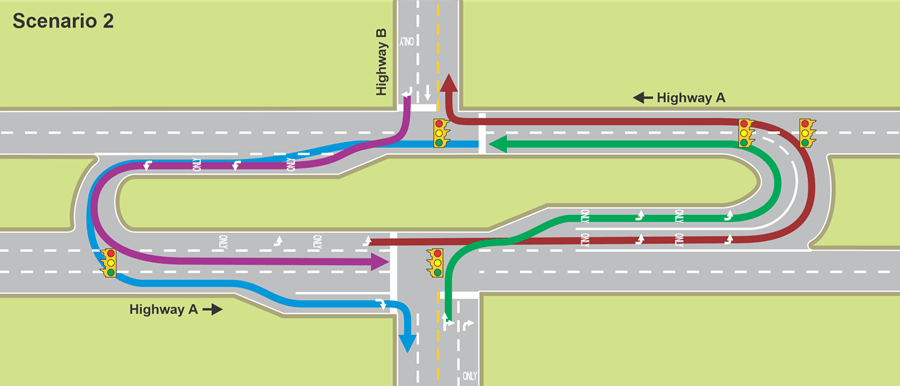
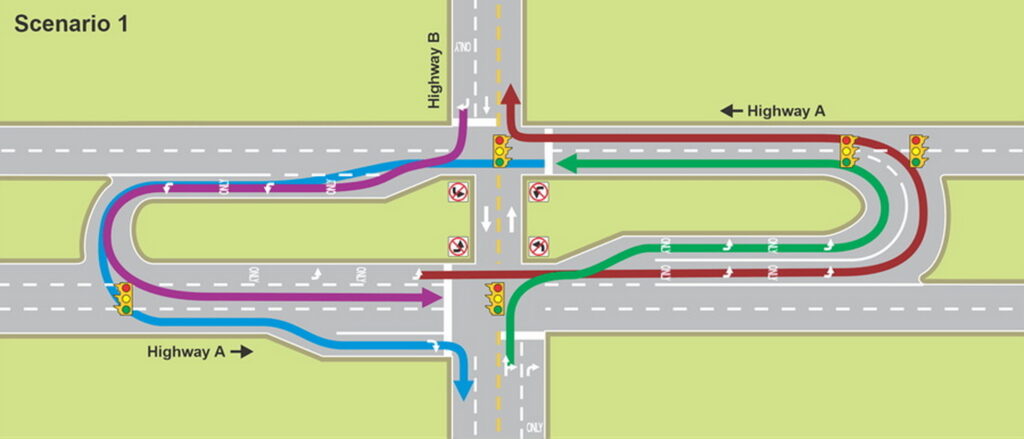
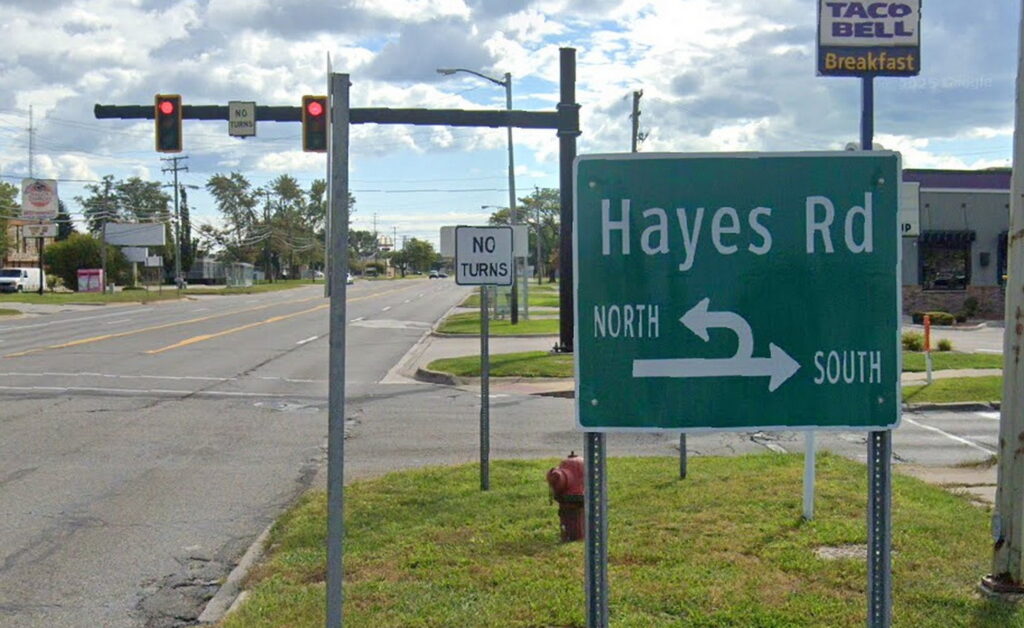
Instead of allowing drivers on a divided highway to make a left turn directly across oncoming traffic, the “Michigan Left” forces them to go straight through the intersection. About 200 meters past it, they enter a special gap in the median, perform a U-turn, and return to the intersection, where they simply turn right onto the cross street.
Drivers approaching from the side road follow the opposite procedure: instead of a left turn onto the highway, they first turn right, then drive to the gap, make a U-turn, and proceed in the desired direction. As a result, at the main intersection, all maneuvers are reduced to going straight or turning right.
Why It Works

Turning across multiple lanes of oncoming traffic may seem familiar to many, but it is one of the most dangerous maneuvers. According to MDOT, about 30% of all crashes in Michigan occur at intersections, and nearly 58% of those are head-on collisions during left turns or angle impacts. Such collisions are usually the most severe due to high speeds.
By eliminating direct left turns, engineers virtually remove this hazard. Road signs are fine, but as has been proven time and again, people make mistakes behind the wheel. Quality road and infrastructure design accounts for human error—that is exactly how the “Michigan Left” works.
Most interestingly: instead of slowing traffic down for safety (as often happens), this method actually improves traffic flow. Since separate left-turn phases are not needed, traffic lights operate on simpler cycles, passing more cars per green signal, which reduces congestion.
Origin of the Concept

The idea is not new. According to MDOT history, the first modern “Michigan Left” appeared in 1960 along Telegraph Road (US-24) in Wayne County. Engineers Joseph Hobrla and Joseph Marlow modified an existing divided highway, dissatisfied with its capacity.
The experiment proved so successful that hundreds of such gaps were later built on Michigan’s state highway system. Today, the state has over 425 km of roads with this specialized design.
Growing Popularity
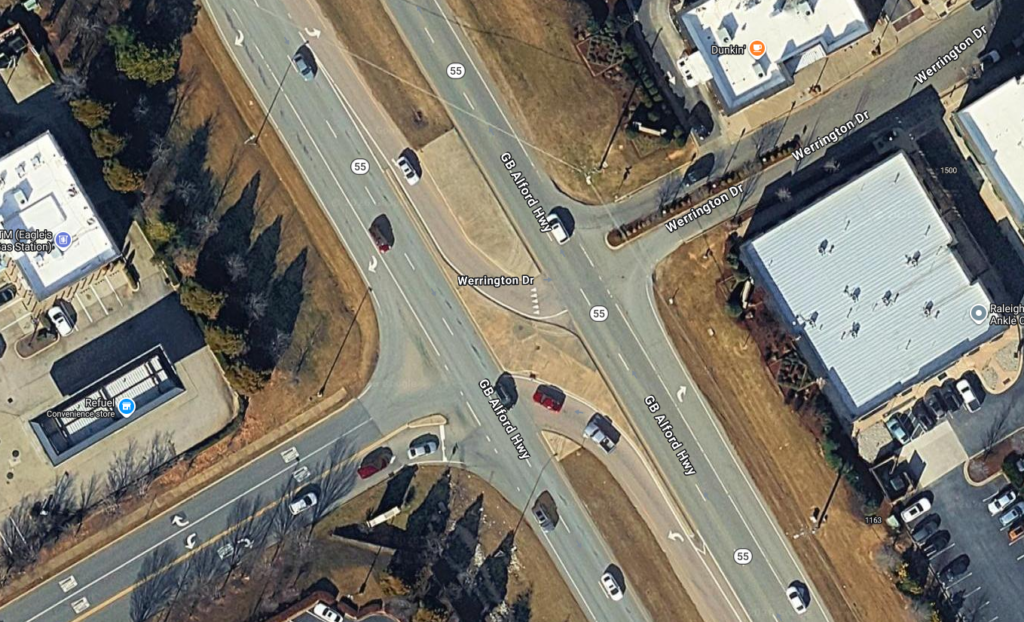

The concept quietly spread beyond the Great Lakes State. North Carolina implemented similar layouts in its “Superstreets,” and Arizona under the name “Arizona Boulevard.” The reason is simple: besides safety and improved traffic flow, such a solution is cheaper than building a traditional interchange.
Yes, you will have to drive an extra hundred meters, but according to decades of research, this small detour is more than compensated by fewer severe crashes, shorter queues at traffic lights, and overall smooth traffic flow. Sometimes the longer route really is the fastest.
Thus, the Michigan experience once again confirms that proper infrastructure can radically change road safety without sacrificing convenience. And although the scheme initially seems illogical, statistics and real-world practice convince us that sometimes it is worth going a little farther for safety—it saves lives.