


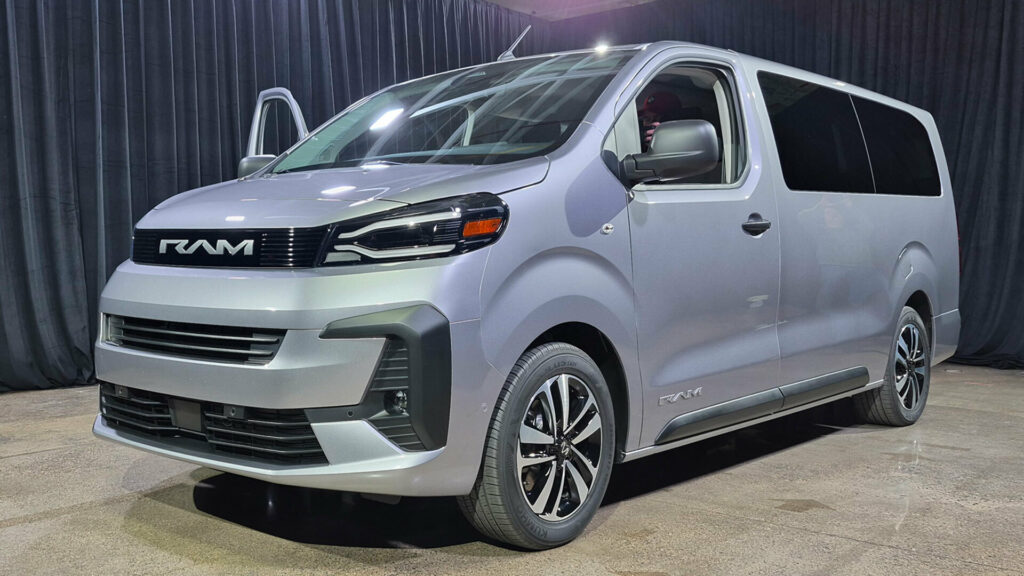
Ram is bringing the ProMaster City commercial van back to the market after discontinuing it in 2022. The new model is significantly different from its predecessor and offers businesses a compact and affordable option for transportation.
Key Features of the New Model
Filling a Market Niche
Commercial vans, while not glamorous, play a vital role for millions of businesses. In recent years, many manufacturers have left this segment or reduced their lineups, leading to market consolidation around three key players: Ford Transit, Mercedes Sprinter, and Ram ProMaster. These models are reliable, but they are also quite large and expensive, making them less than ideal for everyone. Ram sees a major opportunity here and is bringing back a more compact model.
The new ProMaster City is no longer based on the Fiat Doblò platform like its predecessor. Instead, it has moved to the larger K0 platform, which underpins a whole range of European vans such as the Citroën Jumpy, Peugeot Expert, Fiat Scudo, Toyota Proace, and Opel/Vauxhall Vivaro.
Ram now gets its own derivative version, which closely echoes its European counterparts.
However, the American version received a unique front end with a fully enclosed grille that uses a new font for the “RAM” lettering. This design will later be used on other models from the brand. The grille is flanked by swept-back headlights with distinctive daytime running lights.

Design and Configurations
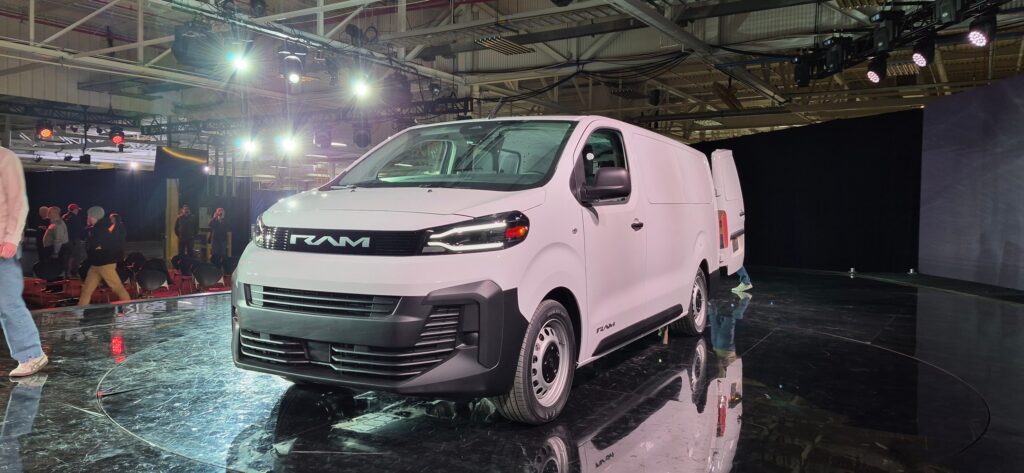
Further along the body, you can see rounded wheel arches, plastic body cladding, and 17-inch steel wheels. The designers also equipped the van with vertical rear lights and rear swing doors that open 180 degrees. A rear liftgate with glass and a wiper is available as an option.
Customers will be able to choose between Tradesman and SLT trim levels. The latter adds body-colored bumpers, fog lights, and 17-inch alloy wheels. Cargo and Passenger versions will also be available, along with six window and panel options. A total of 11 different configurations are planned.
All models are 210 inches (5334 mm) long with a wheelbase of 129 inches (3276.7 mm). The van’s height is 76.7 inches (1948 mm), allowing it to fit in garages and multi-story parking lots. For comparison, the larger ProMaster is available with wheelbases of 118, 136, and 159 inches and low, high, and extra-high roofs.
The Perfect Size for the City
Ram states that the ProMaster City was “right-sized” and will be the only mid-size commercial van in the United States.
This will fill the niche left by the discontinued Mercedes Metris. The van offers 167.1 cubic feet (4732 liters) of cargo space. The cargo floor length is 111.1 inches (2822 mm), and the distance between the rear wheel arches is 48.9 inches (1242 mm). This allows for transporting standard 4×8-foot sheets of drywall and plywood, as well as pallets.
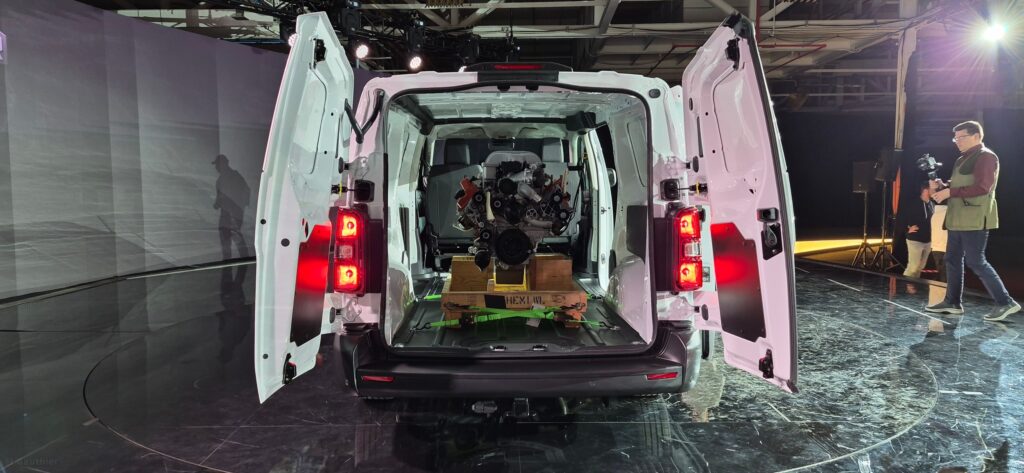
Access to the rear is provided by a large sliding door on the passenger side, which offers an opening over 36 inches (914 mm) wide and 48 inches (1219 mm) high. There is also an integrated step for convenience. The minimum turning radius is over 42 feet (12.8 m), which is impressive considering the new model is 22.9 inches (582 mm) longer than the previous one. The payload capacity is expected to be over 2000 lbs (907 kg), and with an optional tow hitch, the van can tow up to 2000 lbs (907 kg).
Function-Focused Interior
Since the ProMaster City is a work van, its interior is relatively simple and made of plastic. However, the cabin looks surprisingly modern for a vehicle whose platform is essentially ten years old.
The driver sits behind a steering wheel with a flat bottom and gets a 10-inch digital instrument cluster. It is complemented by a 10-inch multimedia system with support for Android Auto and Apple CarPlay. The heated front seats are upholstered in durable Curtiba Grey fabric. The passenger version offers five- and eight-seat configurations, with both rows of seats being removable.
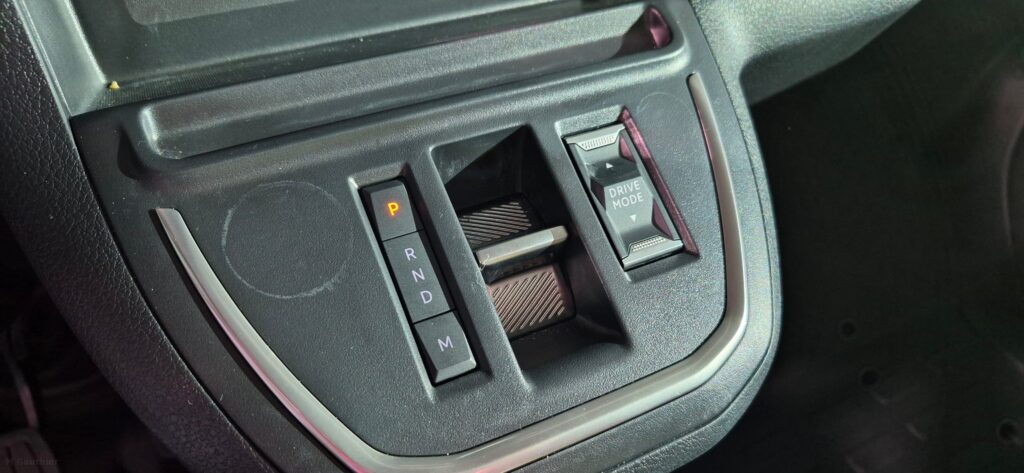
The interior also features a minimalist gear selector, a drive mode selector, and separate climate controls. The model is also equipped with a digital rearview mirror, a four-speaker audio system, and a push-button start. Options include a heated steering wheel, wireless smartphone charging, and for the cargo version, a partition between the cabin and the cargo area.
Safety and Powertrain
Standard safety features include automatic emergency braking, forward collision warning, and driver attention monitoring. There are also automatic headlights, parking sensors, a rearview camera, and an electronic stability control system. The model also has a programmable speed limiter that companies can use to monitor drivers.
The heart of the van is a turbocharged 1.6-liter four-cylinder engine producing 166 horsepower and 221 lb-ft (299 Nm) of torque.
This may seem insufficient, especially compared to the previous model, which had a 2.4-liter engine with 178 horsepower, but the new unit offers significantly more torque, and Ram aimed to balance power and efficiency.
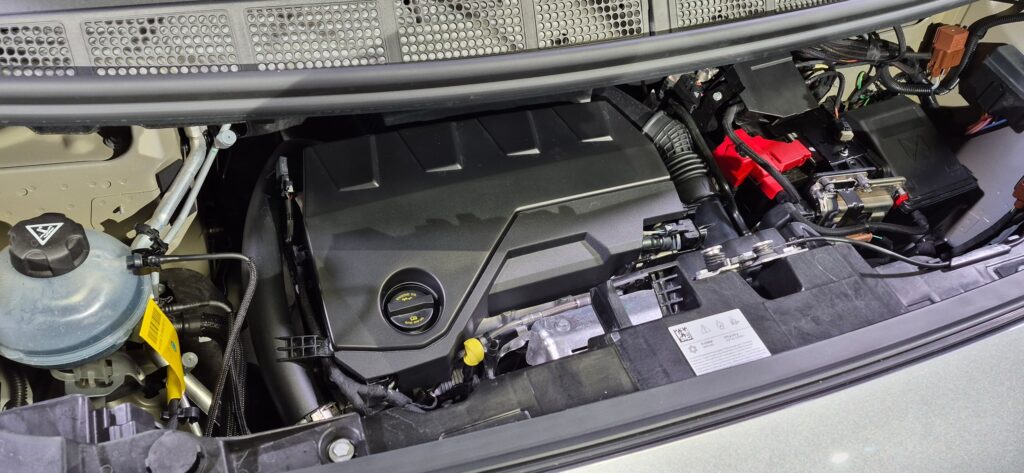
This is the only version of the van with such a gasoline engine, as its European counterparts are focused on diesel and electricity. The engine is paired with an eight-speed Aisin automatic transmission that sends power to the front wheels. The manufacturer promises “lively, smooth, and reliable acceleration.” There are even paddle shifters on the steering wheel. The suspension is McPherson at the front and an independent trailing arm setup at the rear.
Price and Availability
The ProMaster City will be manufactured in Turkey and will arrive on the US market early next year. Orders will open in the second half of 2026, and the price is expected to start at less than $40,000.
This promises to make the ProMaster City the most affordable commercial van on the market.
It should also be at least $6,370 cheaper than the larger ProMaster.
The return of the Ram ProMaster City comes at a time when many small and medium-sized businesses are looking for economical and maneuverable logistics solutions for urban environments. Its European origin and shared platform with proven models could be an advantage in terms of reliability and parts availability. The success of this model in the US market will largely depend on how well the brand manages to position it as a golden mean between overly large and expensive vans and vehicles too small for commercial needs. The emphasis on affordability and compact dimensions could attract those who previously considered using pickups or SUVs for business tasks.