 by
by French Brand Sets Unique Record at the Nürburgring
Some records are about incredible speed. Others, like this one, are more about patience and a healthy sense of humor. If you’ve ever wondered which car holds the title of the slowest vehicle ever to lap the Nürburgring Nordschleife, there is now an answer. A new champion of leisurely pace has emerged, and it comes from the small French company Ligier.
The brand, once known for its own Formula 1 team, now focuses on tiny, accessible four-wheeled vehicles classified as quadricycles. These vehicles are so simple to operate that they don’t even require a driver’s license, and in France, the law allows them to be driven from the age of 14.
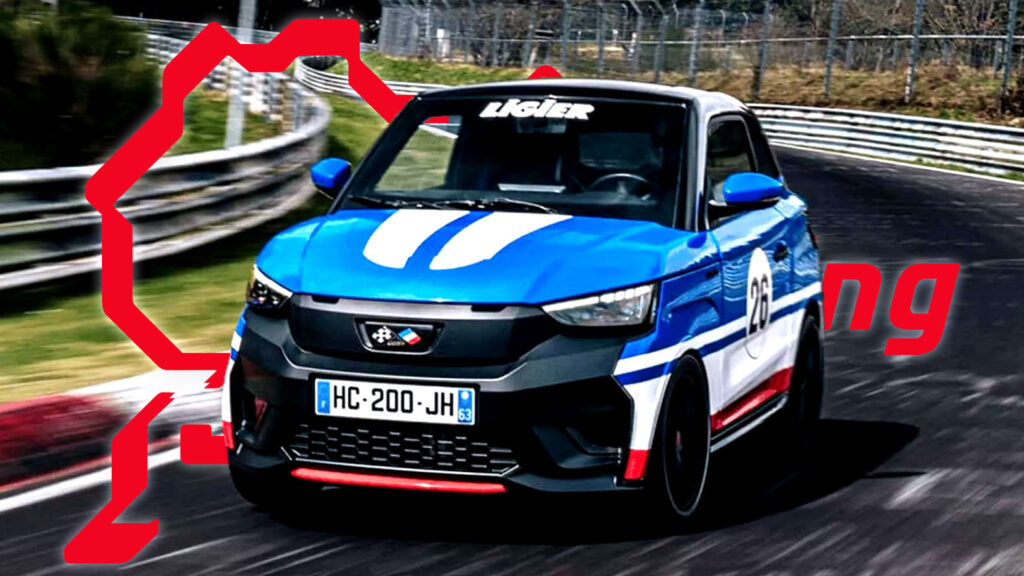
It was a pair of French journalists who took on the unlikely challenge of setting a lap record in a Ligier JS50, driving the diesel microcar all the way from Paris to the legendary German track.
A Record for the Most Patient
The JS50, a chunky two-door car with a mere 8 horsepower, is electronically limited to a top speed of 45 km/h (28 mph). At the Nürburgring, it completed one lap in a full 28 minutes and 25.81 seconds. This figure may not impress on paper, but it is guaranteed to go down in history.
For comparison, the previous slowest recorded lap was 16 minutes and 1 second, set by a Trabant P50 back in 1960, making the Ligier’s time almost comically slow. At the other end of the spectrum, the fastest production car on the Nordschleife is the Mercedes-AMG One, which posted a staggering 6 minutes and 29.1 seconds.
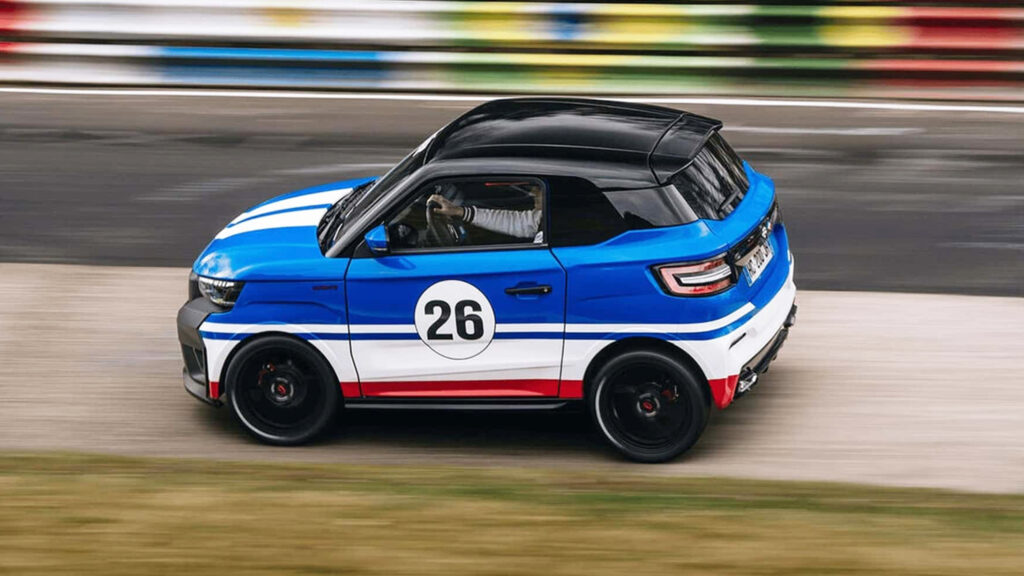
Not content with just one participant, the team also brought two electric versions of the JS50. The first, like the diesel, falls under the L6e classification and has the same limited speed of 45 km/h. It managed a lap in 27 minutes and 55.58 seconds. The more powerful L7e electric version with a top speed of 75 km/h (47 mph) posted a slightly better time of 19 minutes and 53.36 seconds.
Special Edition for an Unusual Lap
Ligier has not released video of its incredibly slow laps at the Nürburgring, but the company prepared a special version of the JS50 just for this event, known as the Ultimate Racing Experience edition. This model will be sold in Europe during 2026.
The special edition features a tricolor paint scheme in blue, white, and red, complemented by new black 16-inch wheels with Nankang RC semi-slick tires. Ligier added exclusive details both outside and inside. These include new front and rear emblems, unique upholstery themed after the French flag, an aluminum gear knob, Alcantara on the handbrake cover, and blue seatbelts.
The steering wheel also has matching blue accents, and the dashboard has gained a set of celebratory stickers to complete the transformation.
This unusual record vividly illustrates that car manufacturing and motorsport are not only about maximum performance. Sometimes it can be about creativity, brand promotion, and the ability not to take oneself too seriously. Such actions broaden the notion of what can be considered an “automotive event,” drawing attention to niche market segments like quadricycles, which offer mobility for a wide range of people, including teenagers. It is also a kind of tribute to history and a contrast between modern supercars and the modest yet functional vehicles of the past, like the Trabant.