



Repair of Lamborghini Aventador Fuel Filler Cap Revealed Unexpected Detail
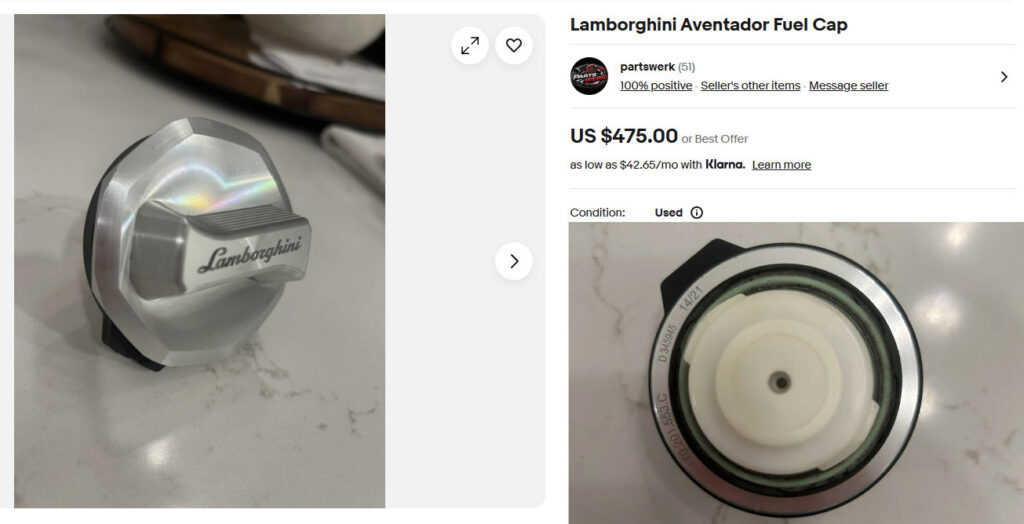
Lamborghini owners know that owning such a car brings not only pleasure but also significant costs. Replacing any part is often very expensive, however, the high price does not always mean unique engineering. A prime example is the ordinary fuel filler cap on the Aventador model.
Diagnosis and Shocking Replacement Cost
As one Reddit user recounted, a white 2015 Lamborghini Aventador was brought to a workshop in the USA. The reason for the visit was a detected malfunction in the Evaporative Emission Control (EVAP) system, the source of which turned out to be the fuel cap itself. Although the diagnosis was simple, the solution proved unexpectedly expensive. Official replacement of the part through the dealer network was estimated at over $1200.
Prices for the original cap with part number 470201553C indeed exceed a thousand dollars excluding delivery and taxes. Even used options on the secondary market cost hundreds of dollars, which is a large sum for such a seemingly simple part.
Unexpected Discovery Inside the Premium Part
The mechanic, examining the faulty cap, noticed the FoMoCo logo on the plastic internal components — the abbreviation for Ford Motor Company. Further search led to a discovery: the internal plastic part from the fuel filler cap of a second-generation European Ford Focus turned out to be identical to the one used in the Lamborghini. The cost of a new cap from Ford was only $40.
Lamborghini wanted $1300 for a fuel filler cap, so I repaired it using a Ford Focus cap for $40.
Savings and the Logic of Premium Brands
The secret is in the presentation. Lamborghini installs these plastic components inside a housing machined from an aluminum billet, which creates a sense of a high-quality product and partially justifies the markup. However, from a functional point of view, the difference between the parts is minimal.
The repair consisted of simply replacing the internal plastic parts from the Ford cap into the original Lamborghini aluminum housing. This allowed the original appearance of the part to be preserved. The total repair cost for the owner was only $100, meaning a more than tenfold saving compared to the official replacement.

A Lesson for Owners of Expensive Cars
Although most drivers will never face the need to replace a cap on a supercar, this story contains an important lesson. Owners of premium brand cars such as Porsche, Audi, or BMW should always check if the needed part is used in more affordable models of the concern, for example, in Volkswagen or Seat. Often it will be the same part, but without the brand markup, allowing significant savings.


This case clearly demonstrates the complexity of logistics and production in modern automotive manufacturing, where platforms and components are often shared between different brands of the same group. For the end consumer, this can be both a disadvantage in the form of high prices for “exclusive” spare parts and an advantage, opening the way for smarter and more economical repairs. Such stories make one think about the real cost of the brand and marketing in the sum we pay for premium products.