


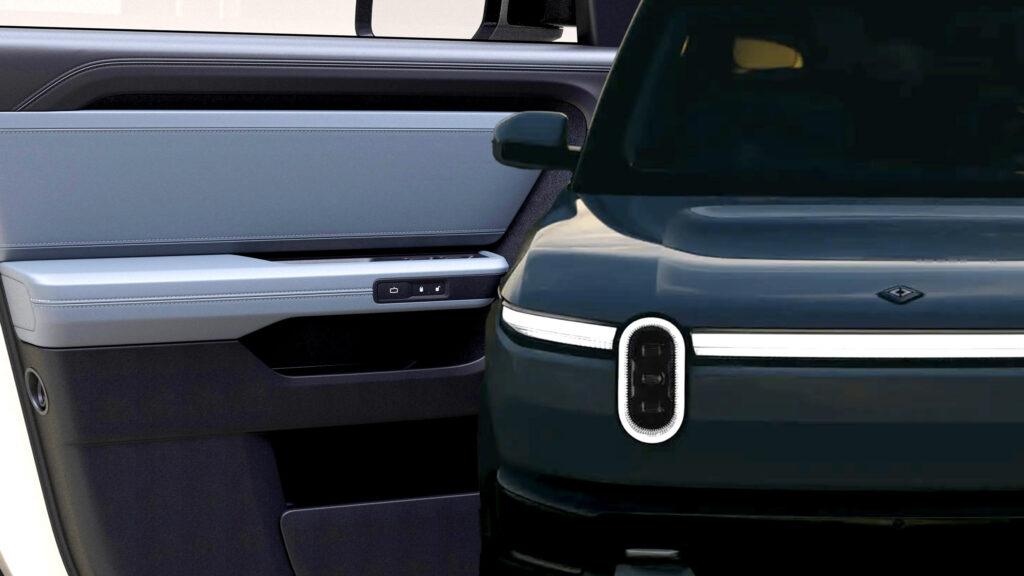
The new Rivian R2 electric SUV, expected on the market by June, has already become the focus of attention for tech bloggers. They gained access to pre-production samples of the vehicle. Among the key points they noted are the use of electronic door handles, as in many modern electric vehicles, and an estimated starting price of around $45,000.
The Problem with Emergency Door Opening
After a series of high-profile accidents in the US and abroad, automakers have come under increased scrutiny over even such basic things as door handle design. A common mechanical part has become overly complicated with the advent of electronic systems. Companies Tesla and Rivian are receiving serious criticism for the placement of emergency mechanical door release levers inside the cabin in case of electronic failure.
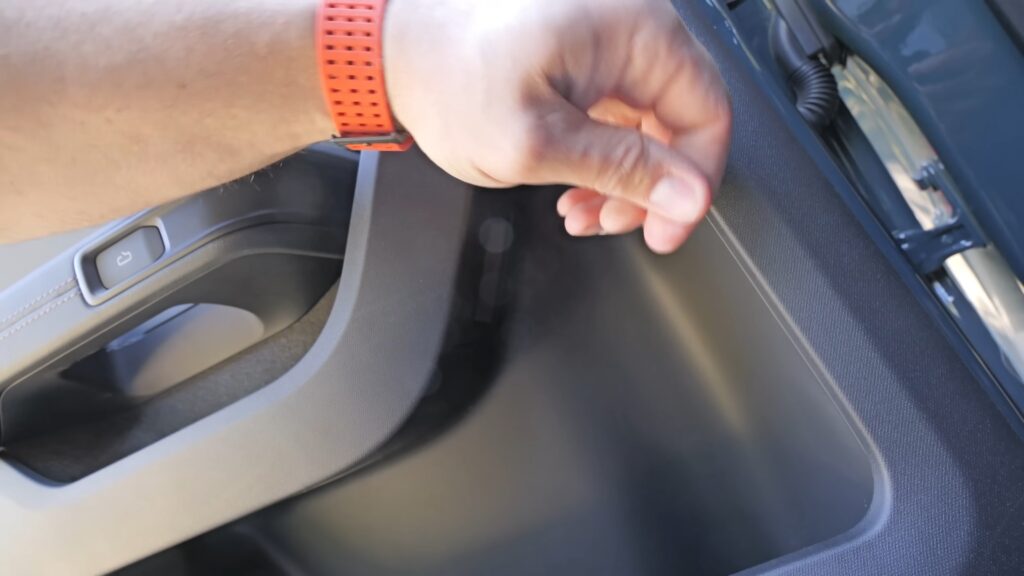
In Rivian’s R1T and R1S models, the solution for second-row passengers proved particularly unfortunate: they need to remove a large black plastic panel and then reach inside to pull a cable and open the door. The question arises: has the new R2 become better in this regard?

Complexities in the Rear Seats
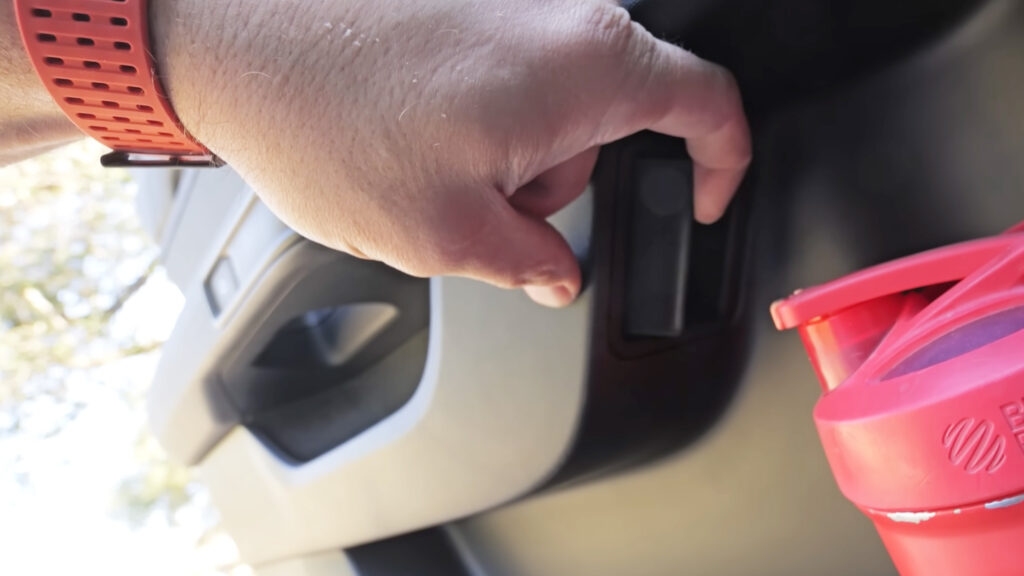
According to bloggers who explored the R2, there are no significant improvements. The emergency lever for the front seats is quite simple: a small black plastic handle is located on the underside of the floating storage bin. It is similar to the one installed in the older models, although in the R1T and R1S the emergency levers are larger and more noticeable.
The rear seats are a different story. The lever is in the same position as in the front, but, surprisingly, passengers will again have to remove a small plastic cover and then pull a cord, just like in the R1 models. The only positive aspect is a slight change in placement for the better.
If you have to instruct rear-seat passengers on such a basic action as opening a door in an emergency, it’s not smart design, it’s a flaw.
Why Rivian didn’t adopt the simpler system from the front doors for the rear doors remains a mystery. This can be perceived as unnecessary complexity or cost-saving by reusing the same flawed design.
Can Updates Be Expected?
It was previously reported that Rivian might redesign the emergency door opening mechanisms for the R2 in response to incidents where drivers were trapped in burning Tesla cars. However, judging by this early review, no serious improvements compared to the R1 models have been made.
Since this was a pre-production sample, there is a possibility that changes will be made before the start of production. At least, observers hope so.
The Broader Context of the Problem
Rivian is not the only company facing such criticism. Besides Tesla, long known for its controversial design decisions, even Ford encountered problems with door latches on the Mustang Mach-E.
Concerns are raised not only by the mechanisms inside the cabin. Exterior pop-out door handles have caused so much controversy that China has decided to ban their use on all electric vehicles starting in 2027.
The story of the Rivian R2 door handles is a reminder of the importance of intuitive and safe design in conditions where seconds can cost lives. The implementation of new technologies, such as electronic systems, should not come at the expense of basic safety requirements and ease of use in emergencies. It is telling that regulators are already intervening in this area, as seen in the example of China, which may set a trend for the entire global auto industry. The success of new models, especially in the mass-market EV segment, will depend not only on price and range, but also on how reliable and understandable such seemingly simple elements will be for every passenger.